
Magh Mela 2027 is on until 6 March 2027. Magh Mela 2027 is on See packages & dates See dates
Pitru Paksha 2027 is on until 29 September 2027. Pitru Paksha 2027 is on See packages & dates See dates
Sarva Pitru Amavasya is today. Sarva Pitru Amavasya is on See packages & dates See dates
Varanasi ritual guidance
Asthi Visarjan in Varanasi
Where Shiva himself whispers the mantra of liberation
At Manikarnika ghat, the Skanda Purana records what every Kashi family knows — Shiva himself whispers the Taraka Brahman into the ear of the dying (Kashi Khanda). Bringing the asthi to this ghat is bringing them to the one tirtha where Yama has no jurisdiction.
- Verified pandits
- Clear package details
- Vedic vidhi
- All samagri included
- Rated 4.8/5 · 500+ reviews
- 2,263+ families served
- Serving since 2019
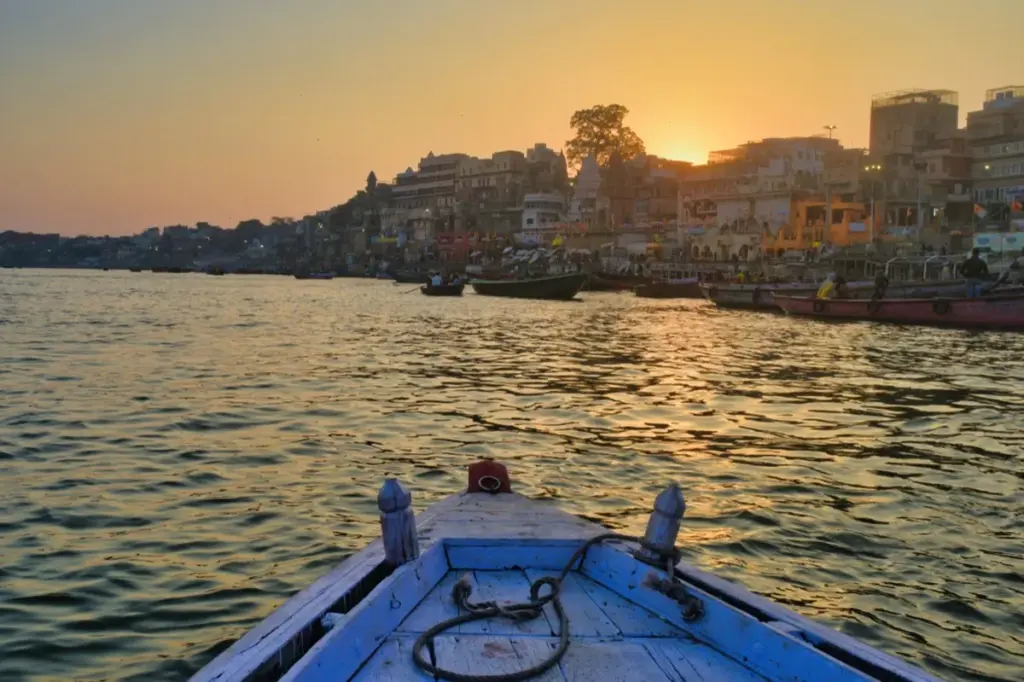
Find your package
Three short questions, the right ceremony
Tell us your situation — we will suggest the package that fits the family. No booking pressure; we will explain the choice on WhatsApp first if needed.
Recommended for you
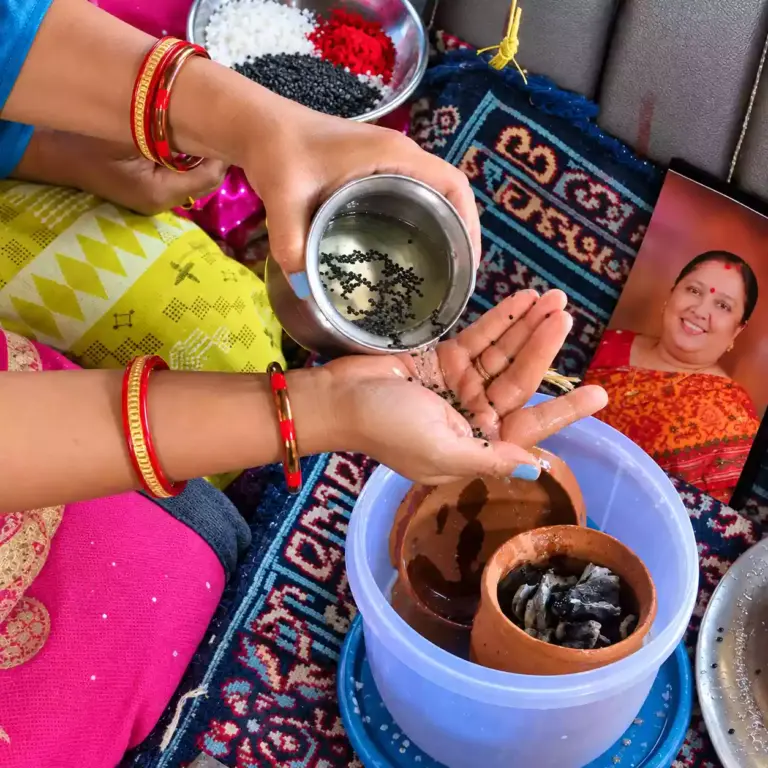
Asthi Visarjan in Varanasi (Kashi)
Price ₹5,355
- Asthi Visarjan at Ganga Ghat / Manikarnika Ghat, Varanasi
- Experienced Kashi-trained pandit (complete ceremony)
Recommended for you
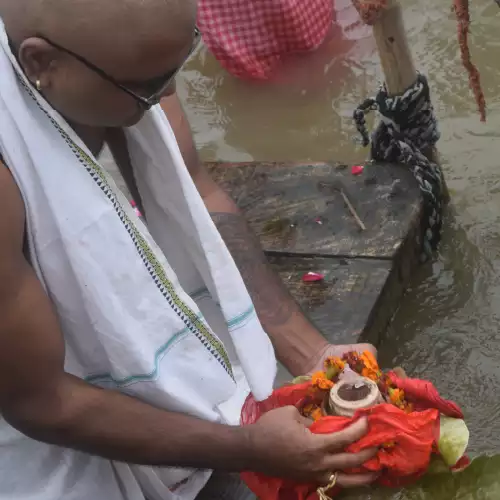
Varanasi Asthi Visarjan Package (2D/1N)
Price ₹15,000
- Hotel accommodation (1 night, centrally located near ghats)
- Asthi Visarjan at Ganga Ghat
Recommended for you
Online Asthi Visarjan in Varanasi
Price ₹7,100
- Online Asthi Visarjan at Ganga Ghat, Varanasi (live video)
- Experienced Kashi-trained pandit
Choose your package
Choose the arrangement that fits your family
Every package includes an experienced Vedic pandit and the required puja samagri. The difference is in boat, location, stay, and tradition.

Online Asthi Visarjan in Varanasi, View & book
- Online Asthi Visarjan at Ganga Ghat, Varanasi (live video)
- Experienced Kashi-trained pandit
- All samagri (sesame, Gangajal, flowers, incense, diyas)
- Sankalp with departed's name, gotra & lineage
Price ₹7,100
More rites at Varanasi
Pind Daan, Shradh, Tarpan and Tripindi Shradh, with pandits at Varanasi.

Asthi Visarjan in Varanasi (Kashi), View & book
- Asthi Visarjan at Ganga Ghat / Manikarnika Ghat, Varanasi
- Experienced Kashi-trained pandit (complete ceremony)
- All samagri (sesame, Gangajal, flowers, incense, diyas)
- Sankalpa with departed's gotra & nakshatra
Price ₹5,355

Varanasi Asthi Visarjan Package (2D/1N), View & book
- Hotel accommodation (1 night, centrally located near ghats)
- Asthi Visarjan at Ganga Ghat
- Experienced Varanasi pandit
- Complete puja samagri (til, kusha, flowers, diyas, Gangajal, milk, honey, sindoor, roli)
Price ₹15,000
Asthi Visarjan at Varanasi with Tarpanam, View & book
- Asthi Visarjan at Ganga Ghat in Varanasi
- Tarpanam Included
- Experienced Vedic pandit fluent in Sanskrit shlokas
- Complete samagri (white flowers, sesame, kusha, Gangajal, ghee lamp, incense)
Price ₹7,100
Varanasi
More rites at Varanasi
Pind Daan, Shradh, Tarpan and Tripindi Shradh, with pandits at Varanasi.
- 2,263+families served
- 10+ yearspandit experience
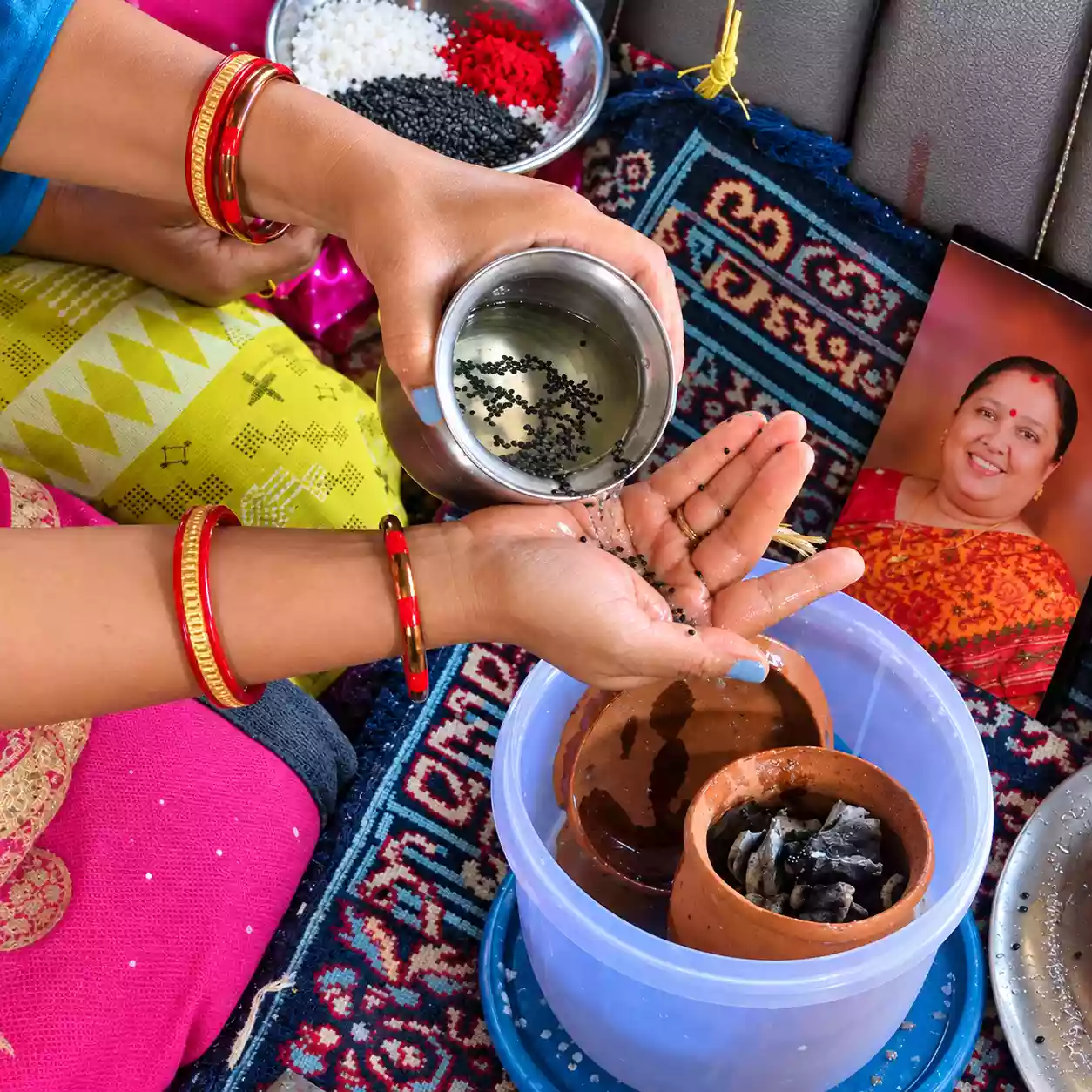
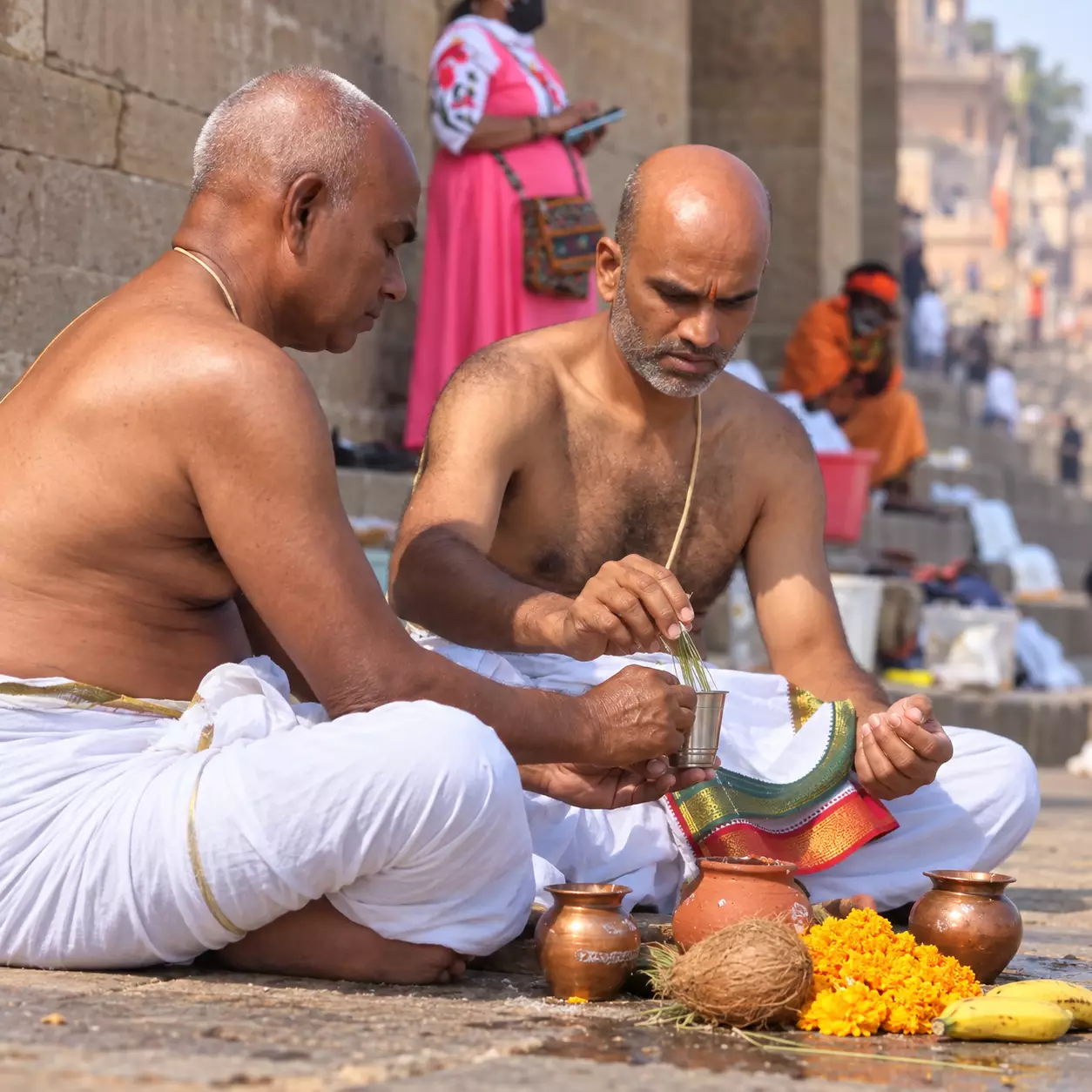
Why families choose Prayag Pandits
- Families served
- 2,263+
- Serving since
- 2019
- Average rating
- 4.8/5
- GST registered
- Registered
Manikarnika ghat access
Coordinated with hereditary Kashi pandits
Kalash & samagri prepared
Asthi handover & Gangajal arranged same-day
Tarak mantra recited
Per the Skanda Purana, Kasi-Khanda
Same-day confirmation
WhatsApp message from the pandit with offerings detail the same evening
Voices from families
What families say after the rite
Rated 4.8 out of 5
500+ reviews
Our pandits







- 2,263+ families served
- Serving since 2019
- GST registered
We did asthi visarjan pooja at the manikarnika ghat with pandit ji. He did everything very calmly and did not hurry. Very good pandits these people have
Booked online Asthi Visarjan from Canada. The team arranged everything perfectly. We watched the entire ceremony via video call. It was emotional but the pandit's prayers brought comfort to the whole family.
Performed Asthi Visarjan in kasi through Prayag Pandits. They arranged everything in advance as promised. I was surprised to see professionalism in this service sector as well. Nicely managed and done.
अस्थि विसर्जन कराने के बाद पूरे परिवार को शांति मिली। प्रयाग पंडित्स ने सब कुछ बहुत अच्छे से संभाला। स्टेशन से पिकअप, घाट तक व्यवस्था, और पूजा – सब उत्तम था। Dhanyavaad.
The Asthi Visarjan service was conducted with dignity and proper Vedic rituals. The pandit explained the spiritual significance of each step. The team also helped with accommodation recommendations. Om Shanti.
Booked this service for my uncle's asthi visarjan. Everything was arranged from our pickup at the station to the ceremony at the ghat. Smooth and hassle-free experience. Jai Shri Ram.
मेरे बेटे ने वाराणसी में ये पूजा बुक की थी। पूरा कार्य बड़ी सरलता से हो गया और हमे वाराणसी दर्शन में अन्य सहायता भी कराई गई। स्वयं और मनीष ने पूरी तरह से सहायता की।
Being abroad makes it difficult to perform these rituals in person. The online asthi visarjan option was perfect for our family. We could participate from three different countries via the video call. 🙏
ऑनलाइन अस्थि विसर्जन सेवा बहुत अच्छी है। हम विदेश में रहते हैं और आ नहीं सकते थे। वीडियो कॉल पर सब कुछ देख सके। पंडित जी ने सम्मानपूर्वक सारी विधि पूरी की।
They helped us with station pickup, hotel booking and pooja booking. All was done properly. We stayed at the elegance hotel whose staff was amazing. Puja was done professionally and private. We got the best services.
The team was very sensitive to our emotions during this difficult time. The pandit performed every ritual with care and explained the significance in simple language. Truly grateful for this service. Dhanyavaad.
We had been carrying the asthi for months not knowing what to do. Prayag Pandits guided us through the entire process from courier to the actual visarjan. Very professional and caring team.
Not sure which package fits?
Talk to a family advisor — free, no obligation. We reply on WhatsApp within 1–2 hours.
What's included
Every package lists exactly what is included no surprises at the ghat
We've seen too many families face hidden boat fees, samagri costs, and "dakshina" pressure on the day. Here's exactly what's covered, and what isn't.
Included in your package
- Experienced Kashi Pandit Vedic pandit qualified in Manikarnika and Harishchandra ghat vidhi, with gotra-pravara verified.
- All Puja Samagri Til, kusha, Gangajal, kalash, white cloth, dhoop, sindoor, sandalwood — prepared for asthi handover the same day.
- Package add-ons available Optional package upgrades include the Special boat-included tier, the 2D/1N stay bundle, Tripindi Shradh combination, and online ceremony with video proof.
- Family Coordinator One person on WhatsApp through your entire booking — fluent in Hindi, English, and major regional languages — before and after the ceremony.
- Same-day Confirmation WhatsApp message from the pandit the same evening, with details of all offerings made on your behalf.
- Manikarnika ghat coordination Direct ghat access at Manikarnika or Harishchandra. Boat or ghat-side immersion at the family’s preference; included in all in-person packages.
Not included in your package
- Travel to Varanasi Train, flight, or road travel. Varanasi Cantt + Babatpur airport well-connected; we can recommend trusted operators.
- Hotel / Accommodation Only included in the 2D/1N package.
- Brahmin Bhojan donation Optional add-on — feeding pandits & needy families is meritorious but not required.
How it works
Four steps. We carry the rest.
From your first call to same-day confirmation — we handle every coordination, so the family can focus on what matters.
Book & confirm
Choose a package and complete payment online. We confirm details on WhatsApp within 1–2 hours.
Share family details
Provide gotra, the departed soul’s name, preferred ghat (Manikarnika or Harishchandra), preferred date, and any special vidhi requirements.
Ceremony at Kashi
Pandit performs the complete asthi visarjan vidhi at the family-chosen ghat — Sankalp, mantra recitation per Skanda Purana Kasi-Khanda, samagri offering, immersion of asthi in the Ganga.
Confirmation & report
Pandit sends a same-evening WhatsApp confirmation with offerings detail. Online poojas include video delivery (online) within 48 to 72 hours.
- We respond within 1–2 hours · No commitment required
When to perform
When you can perform asthi visarjan — and why late carries no penalty at Kashi
The Garuda Purana Preta Khanda prescribes bone collection on the 3rd, 7th, or 9th day after cremation, with immersion before the 10th. Kashi is Avimukta — the Mahabharata Vana Parva names it the one kshetra Shiva pledged never to leave — so for ashes preserved beyond this window through migration, war, or generations, a short Prayaschitta (expiation) rite restores the offering to scriptural propriety and the asthi visarjan carries full merit at any time.
Day 1
Cremation
Day 3
Collect
Day 7
Kalash
Day 10
Ideal
Year+
Still valid
Two ways to perform
In-person at Sangam, or online from anywhere
Travel to Kashi
Performed by your own hands at Manikarnika or Harishchandra ghat — family’s choice. Pandit recites the mantra; the karta releases the asthi into the Ganga.
- Karta performs Sankalp & immersion personally
- Choose Manikarnika (primary) or Harishchandra (older tradition)
- Optional Kala Bhairava darshan before the ceremony
- Add hotel, transport, Dashashwamedh aarti
from ₹5,355
Online for NRI families
For families abroad or unable to travel. Sankalp recited remotely; pandit performs at Manikarnika with live video proof.
- Live Zoom / WhatsApp ceremony
- Courier guidance for ash kalash
- Performed with your family's Sankalp, in your names
from ₹7,100
The sacred geography
Three Ghats on the Ganga, each with its own dharma
Asthi visarjan today is performed at Manikarnika or Harishchandra; pilgrimage families also visit Dashashwamedh for the evening Ganga aarti before or after the ceremony.
The moksha journey
Three Gates of Salvation, and you are at the gate of release
First Gate · Asthi Visarjan at Prayagraj
Where the journey begins — Triveni Sangam, Tirthraj and Pitrutirtha.
Learn moreSecond / Gate of Release · Asthi Visarjan at Kashi
Where the soul finds release — Manikarnika and the Tarak mantra (Skanda Purana, Kasi-Khanda).
You are hereThird / Final Gate · Pind Daan at Gaya
The final rite — at Vishnupad’s footprint where the ancestors are conveyed to Brahmaloka.
Learn more
Complete guide
Asthi Visarjan in Varanasi
everything families ask before booking
An editorial reference covering the ritual, the place, eligibility, timing, and what to keep ready — written for families weighing the decision.
About Asthi Visarjan
Asthi Visarjan in Varanasi
Book Online and In person Asthi Visarjan in Varanasi Packages
- 2,263+ Families Served Since 2019
- Pooja Samagri Included
- Experienced Pandits
- 4.8/5 Average Rating
- Online Pooja Available
Book Asthi Visarjan in Varanasi
Pitrupaksha 2026 Dates
In 2026, Pitrupaksha commences on 26 September and concludes with Sarva Pitru Amavasya on 10 October. Each day of this period is dedicated to performing Tarpan for different family members.
Here are the dates:
| Date | Name | Occasion |
|---|---|---|
| September 26 | Purnima Shraddha | Bhadrapada, Shukla Purnima |
| September 27 | Pratipada Shraddha | Ashwina, Krishna Pratipada |
| September 28 | Dwitiya Shraddha | Ashwina, Krishna Dwitiya |
| September 29 | Tritiya Shraddha | Ashwina, Krishna Tritiya |
| September 29 | Maha Bharani | Ashwina, Bharani Nakshatra |
| September 30 | Chaturthi Shraddha | Ashwina, Krishna Chaturthi |
| September 30 | Panchami Shraddha | Ashwina, Krishna Panchami |
| October 1 | Shashthi Shraddha | Ashwina, Krishna Shashthi |
| October 2 | Saptami Shraddha | Ashwina, Krishna Saptami |
| October 3 | Ashtami Shraddha | Ashwina, Krishna Ashtami |
| October 4 | Navami Shraddha | Ashwina, Krishna Navami |
| October 5 | Dashami Shraddha | Ashwina, Krishna Dashami |
| October 6 | Ekadashi Shraddha | Ashwina, Krishna Ekadashi |
| October 7 | Dwadashi Shraddha | Ashwina, Krishna Dwadashi |
| October 7 | Magha Shraddha | Ashwina, Magha Nakshatra |
| October 8 | Trayodashi Shraddha | Ashwina, Krishna Trayodashi |
| October 9 | Chaturdashi Shraddha | Ashwina, Krishna Chaturdashi |
| October 10 | Sarva Pitru Amavasya | Ashwina, Krishna Amavasya |
Common questions about the procedure
What is the procedure of Asthi visarjan?
After completing the preparation for the poojan, pandit begins the poojan by reciting all the mantras mentioned in the hindu holy texts and customs. The person performing the asthi visarjan is requested to recite some of the mantras as told by the pandit. During this procedure, poojan samagri is offered to the asthi kalash. Before the immersion of asthis in ganga river, pandit ji asks the almighty to accept the poojan and provide moksha to the departed.
Why perform Asthi Visarjan in Varanasi?
Varanasi, also known as Kashi, is one of the world’s oldest towns and is known as the Land of Pilgrimage. For centuries, Hindus have travelled to this location because of its religious significance and historical landmarks. The Hindu religious ceremony of Asthi Visarjan, which is performed for the dearly departed, is the city’s most well-known feature. The immersion and dispersal of the deceased person’s ashes and bones in the flowing waters of a holy river in India is required for this Hindu religious respect to the deceased. The holy river Ganga, also known as the Ganges River, is situated in Varanasi and is considered the holiest of Indian rivers. Anyone who bathes in a holy river or has the ashes of the deceased immersed in the waters gets moksha, or salvation, according to Hindu sacred texts and religious epics. This is beneficial in the soul’s quest to become one with the Divine Power. Moksha also refers to the end of the reincarnation cycle. People travel to Varanasi or Kashi in search of redemption and forgiveness for all sins committed throughout their lifetime, which can be attained by bathing in the Ganges River for living mortals or having cremated remains immersed in the same river for deceased loved ones.
Who can perform Asthi Visarjan in Varanasi?
Asthi visarjan can be performed by the son, daughter, brother, sister, wife or husband of the departed soul. In case there is no one available in the family to carry out the poojan, then a friend or a pratinidhi can perform the rituals with the help of pandit. With the growth of digital age, one can perform the asthi visarjan poojan online, without even visiting at the poojan place physically. Prayag Pandits excels in providing online asthi visarjan poojan to anyone from any country.
Where to Perform Asthi Visarjan at Varanasi?
Asthi visarjan in Varanasi is performed at the city’s sacred cremation ghats — primarily Manikarnika Ghat (the foremost asthi-visarjan ghat, where Vishnu’s chakra dug the kund and Shiva’s jewelled earring fell, per the Skanda Purana, Kashi Khanda) and Harishchandra Ghat (the older living-tradition cremation ghat, named for King Harishchandra’s truth-test). Families also visit Dashashwamedh Ghat for the evening Ganga aarti before or after the visarjan. Each ghat has its own scriptural and historical character; the in-person family chooses based on their tradition and the package booked.
On which day asthi visarjan should be done?
There are different days in different castes and states. Generally, it is best to perform it as soon as possible. Asthi visarjan laws are different in Orissa, when compared to north india. But as per the holy texts, the asthis must be collected and put in a kalash on the 3rd day, 7th day, 9th day. Before the 10th day, asthi visarjan should be performed. This timing is prescribed in the Garuda Purana Preta Khanda. For ashes preserved long beyond this window — through migration, war, or generations — a short Prayaschitta (expiation) rite restores the offering to scriptural propriety; Kashi being Avimukta (Mahabharata Vana Parva), the kshetra Shiva pledged never to leave, the rite carries full merit at any time.
How long does asthi visarjan takes?
The poojan takes anywhere from 45 minutes to 120 minutes.
Where should i keep the asthi of the dead person?
You should never keep the asthi inside your home. Rather, you should bury the asthi kalash in your garden, nearby empty land area or a patio.
Which place is best for asthi visarjan?
Any nearby place where holy river ganga flows. For people living in or near Delhi, they can go Garh Mukteshwar or Haridwar. For People belonging to Northern India, they can visit Prayagraj, Varanasi or Mathura.
Can asthi visarjan be done only in river ganga?
No, although river ganga is considered to be the most preferred when it comes to asthi visarjan, but any flowing water body is suitable for asthi visarjan.
Can i do online asthi visarjan?
Yes, if you are unable to visit physically, you can opt for online asthi visarjan. It is completely fine and is considered the preferred choice for many.
Spiritual depth & scriptural detail
Drawn from puranic references and pandit consultations — for families who want to understand the ritual’s meaning before booking.
Why is Kashi called Avimukta — the city Shiva never abandoned?
The Mahabharata, in the Vana Parva tirthayatra section, names Kashi as Avimukta tirtha — “the never-forsaken.” The Linga Purana extends this with the figure of the Avimukteshwara Linga: even during pralaya (cosmic dissolution), Shiva holds Kashi above the waters on his trishul. For families bringing asthi to the Ganga at Kashi, this is the theological reason the rite carries here that it does not carry elsewhere — the kshetra itself does not dissolve, and so the offering does not dissolve.
What is the Tarak Mantra at Manikarnika?
The Skanda Purana Kasi-Khanda preserves what is perhaps the most striking liberation-promise in the entire Puranic corpus: it records — “शिव स्वयं म्रियमाणस्य कर्णे तारकं ब्रह्म जल्पति” — “Lord Shiva himself whispers the Taraka Brahman into the ear of the dying” within the Kashi mandala. The same formula recurs in six more parallel passages across the Kasi-Khanda — a citation density rare even among major Puranic claims. In one of these passages the Taraka Brahman is identified as the six-syllable Rama mantra; in another, the theological corollary is stated plainly: Yama (the god of death) has no jurisdiction within the Kashi mandala.
Why is Manikarnika Ghat the primary asthi-visarjan ghat at Kashi?
The Skanda Purana Kashi Khanda records the origin of Manikarnika Kund. Vishnu, in fifty thousand years of austerity on this spot, used his chakra (discus) to dig a lotus-pond and filled it with the perspiration of his tapasya. When Shiva arrived, he trembled with delight at Vishnu’s devotion; his jewelled earring (manikarnika = jewel-earring) fell into the pool. From this mutual reverence between Vishnu and Shiva the ghat takes its name. For Hindu families today, Manikarnika is the foremost asthi-visarjan ghat in Kashi precisely because of this dual blessing — Vishnu’s tapas-sweat and Shiva’s earring — held in a single pool on the Ganga.
What is the difference between Manikarnika and Harishchandra Ghats?
Manikarnika is the primary Puranic asthi-visarjan ghat — its origin story is told in detail in the Skanda Purana, Kashi Khanda. Harishchandra Ghat is the older living-tradition cremation ghat, named after King Harishchandra whose truth-test legend appears in the Markandeya Purana and the Mahabharata Sabha Parva — though notably the Puranas do not name this specific ghat. Many families today choose between the two based on lineage tradition or scheduling; we coordinate either ghat at the family’s preference, with the same vidhi and the same pandit qualifications.
What does it mean that Kashi is Mahasmashana — the Great Cremation Ground?
The Kashi Khanda repeatedly names Kashi as Mahasmashana — the Great Cremation Ground that even pralaya cannot dissolve. The Shiva Purana extends this with the image of Shiva’s trishul holding Kashi above the waters of dissolution. Where every other cremation ground in the universe is impermanent — eventually dissolved when the five elements return to their source — Kashi alone continues to function as a cremation ground across cosmic cycles. This is why the city has been a continuous cremation site for as long as memory holds; the philosophical understanding of cremation as pancha-tattva visarjan (return of the body to the five elements) is preserved as a living tradition here in a way it is not anywhere else.
Who is Kala Bhairava and why do families take darshan before visarjan?
The Shiva Purana, in the Shatarudra Samhita, records Kala Bhairava as the dharma-magistrate of Kashi — the kotwal who decides which souls within the kshetra are eligible to receive the Tarak Mantra at the moment of death. By long tradition, families coming to perform asthi visarjan first take darshan at the Kala Bhairava temple, requesting his permission and protection for the offering they are about to make at the Ganga. Our coordinators include this darshan in multi-day packages by default; for one-day visarjan it is offered as an optional pre-ceremony stop.
What does the Garuda Purana actually say about asthi visarjan timing?
The Garuda Purana Preta Khanda prescribes the timing of asthi sanchayana (bone collection) at the 3rd, 7th, or 9th day after cremation, with immersion to be performed before the 10th day. The Garuda Purana mandates the collection — not the Ganga immersion itself, which is the scriptural mandate of the Agni Purana, the Padma Purana, and the Narada Purana Uttarabhaga. For ashes preserved beyond this window, a short Prayaschitta (expiation) rite is performed first to restore the offering to scriptural propriety. Kashi being Avimukta, the rite carries full merit even years after.
What does Tulsidas say about dying in Kashi?
Tulsidas, in the Vinaya Patrika, reveals the Shaiva-Vaishnava secret of Kashi: at the moment of death within the kshetra, “हर तेहि कान कह राम नाम” — “Shiva himself whispers the name of Rama into the dying ear.” This is the bhakti-tradition restatement of the Skanda Purana Kasi-Khanda formula, where the Taraka Brahman is identified as the six-syllable Rama mantra. For families today, this Shaiva-Vaishnava synthesis is why the asthi visarjan at Kashi carries unique weight — it is not Shiva or Vishnu but the meeting of the two at the moment of liberation. (Note: the Tarak attribution is from Tulsidas’s Vinaya Patrika; the commonly-misattributed Ramcharitmanas Uttarakanda verse does not exist.)
Frequently asked
FAQs
Questions families ask us on WhatsApp and over the phone.
Varanasi, a city on the banks of the Ganges, offers several ghats for performing asthi visarjan. Some of the most prominent ghats for this ritual include Harishchandra Ghat, Manikarnika Ghat, Kedar Ghat, Raja Ghat, Dashashwamedh Ghat and Raj Ghat. Each of these ghats has its own significance and is considered equally important for the ritual. The choice of ghat may depend on personal preference, the advice of a pandit, or logistical considerations. It is advisable to perform as per instructed by pandit ji. It’s essential to ensure that the ritual is performed in a respectful and environmentally conscious manner.
To perform asthi visarjan in varanasi with expert pandits- click here
- Unlike annual Shradh, Asthi Visarjan in the holy Ganga at Kashi can be performed on any day and at almost any time during daylight hours. The act itself is supremely purifying.
- It is generally advised to perform the immersion without unnecessary delay after the ashes are collected.
- While any day is good, performing it during religiously significant periods like Pitru Paksha, Ekadashi, Purnima, or Amavasya might be considered to add further merit, but waiting is not required. Avoid performing the immersion after sunset.
After the immersion is complete:
- Ganga Snan: Take a purifying dip in the holy Ganga.
- Change Clothes: Wear fresh clothes after bathing.
- Tarpan: Ensure Tarpan (water offering) has been done.
- Seek Blessings: Visiting the sacred Kashi Vishwanath Temple is highly recommended to pray for the departed soul and seek Lord Shiva’s blessings. Visiting Maa Annapurna Temple is also customary.
- Daan (Charity): Offering food or charity to the poor or Brahmins near the ghats is a meritorious act.
- Reflect peacefully on the significance of the ritual and the soul’s journey.
Transporting ashes requires sensitivity and adherence to regulations:
- Respectful Handling: Always treat the urn containing ashes with utmost respect. Keep it securely wrapped and avoid placing it on the floor or in impure places.
- Air Travel: Airlines generally permit carrying cremated remains (ashes). You usually need to carry them in a security-friendly container (like wood, biodegradable material, or sometimes plastic, not metal, usually, as it needs to pass X-ray). Check specifically with your airline beforehand regarding their policy, documentation needed (usually a Death Certificate, Cremation Certificate), and packaging requirements. Often, they must be carried as cabin baggage.
- Train/Road Travel: Keep the urn securely packed and carry necessary documents (Death Certificate, Cremation Certificate) in case of any checks. Maintain its sanctity during the journey.
According to Chapter 26 of the Kashi Khand (Skanda Purana), Manikarnika Ghat has a sacred origin story tied to Lord Vishnu and Lord Shiva. When Shiva and Shakti created Kashi as the first place in the universe, they commanded Vishnu to create the rest of the cosmos. To fulfill this task, Vishnu performed 500,000 years of fierce austerities (tapasya) at this spot and dug a beautiful lotus pond (pushkarini) with his discus (chakra), filling it with the sweat of his devotion. When Shiva and Parvati came to witness Vishnu”s devotion, Shiva was so spellbound that his body trembled with emotion. This trembling caused his jewelled earring — manikarnika (from mani meaning jewel and karnika meaning earring) — to drop from his ear into Vishnu”s pond. The sacred pool was thus named Manikarnika Kund, and the ghat built around it inherited the name. This origin story is specifically recorded in the Kashi Khand and remains the most authoritative scriptural account of the ghat”s name.
Still have a question?
Ask our team on WhatsApp and we will help you plan the ceremony.
We reply on WhatsApp within 1–2 hours.
Ask a pandit (opens WhatsApp)Free consultation
Talk to a family advisor today
We’ll listen, understand your family’s situation, and recommend the right package — never push. We reply on WhatsApp within 1–2 hours.
- Clear package details before you book
- The ceremony in the language you choose
- 2,263+ families served
- Serving since 2019
- GST registered