
Pitru Paksha
Gaya Pitrupaksha Packages
Pitrupaksha shradh and pind daan packages at Vishnupad Temple, Gaya. Online options for NRI families.
Starting ₹7,100
18 packages · 6 rituals
- Rated 4.8/5 · 500+ reviews
- 2,263+ families served
- Serving since 2019
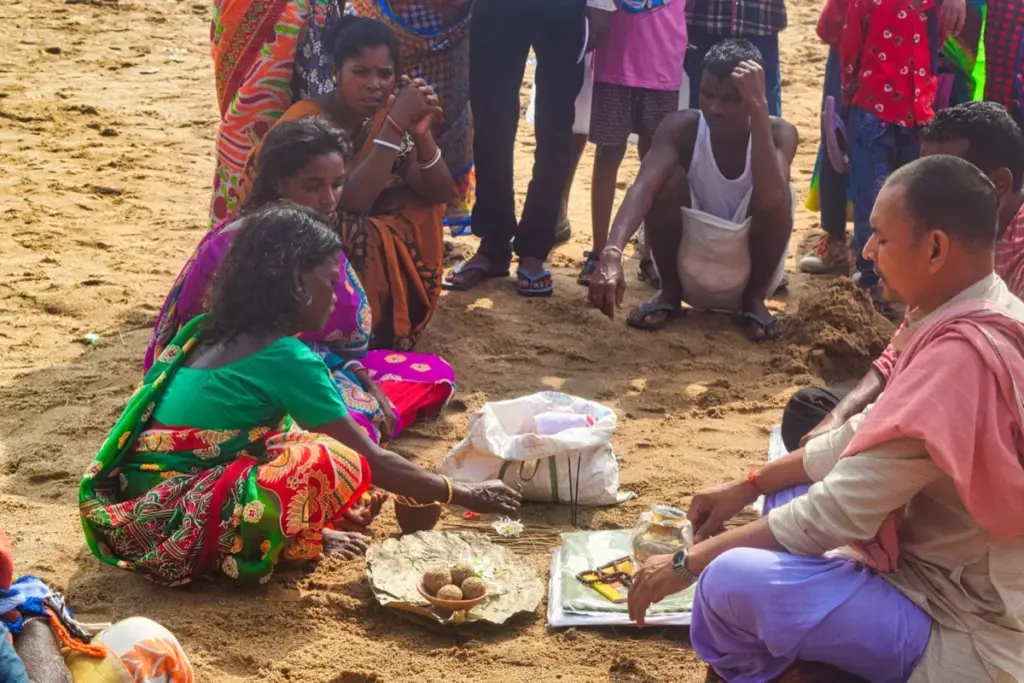
Pitru Paksha in Gaya
Pitru Paksha, also called Mahalaya or Shradh Paksha, is the fortnight of the waning moon in which Hindu families remember their ancestors, the pitrs, with Shradh, Pind Daan and Tarpan. It runs from Bhadrapada Purnima to Sarva Pitru Amavasya, the new moon, and falls in September or early October.
Gaya is the place most families name first for Pind Daan. Bihar Tourism lists 48 sacred sites in the city for the rite, chief among them the Phalgu river, the Vishnupad temple and the Akshayavat tree, and tradition holds that Lord Rama offered Pind Daan here for his father Dasharatha.
For the whole fortnight the city hosts the Pitripaksha Mela, and the Bihar government runs shelters, food distribution, medical camps and traffic control for it. Rites are led by Gayawal pandas, the city’s hereditary priests. A one-day Pind Daan is done at the Phalgu and Vishnupad; the three-day arrangement takes in more of the vedis, the altars where pindas are offered.
Choosing the day: your ancestor’s tithi
Each day of the fortnight is a tithi, a lunar date. A family performs Shradh for a parent or grandparent on the tithi that matches the one on which that person died, whatever the month of death. If no one remembers it, the pandit can work it out from the date of death.
Two days carry more weight. Sarva Pitru Amavasya, the last day, covers every ancestor, including those whose tithi is not known, and Drik Panchang calls it the most significant day of the period. Many families keep Navami, the ninth day, for the mothers of the family. Shradh is done late in the morning or in the afternoon, in the windows panchangs list as Kutup, Rohina and Aparahna, not at sunrise.
For the full calendar and the rules of the fortnight, read our Pitru Paksha ritual guide.
Pind Daan, Shradh or Tarpan?
Shradh is the whole rite of remembrance for a named ancestor, and includes food offered to Brahmins. Pind Daan, the offering of pindas (rice balls mixed with sesame), is usually part of it. Tarpan is the offering of water with sesame and kusha grass, which many families repeat on every day of the fortnight. If you are unsure which your family needs, read Pind Daan in Gaya, Shradh in Gaya and Tarpan in Gaya, or ask us on WhatsApp.
Planning your visit
- Book early. The mela fills hotels and the Vishnupad area weeks before the fortnight begins.
- Arrive the evening before. Rites start in the morning and a one-day Pind Daan takes most of the day.
- Bring the ancestors’ names, the gotra if known, and the name of the Karta, the family member who performs the rite.
- Wear plain cotton; men usually wear a dhoti for the rite.
- Gaya Junction is the railhead, and Gaya airport has domestic flights.
If you cannot travel
If no one can travel, choose Online on any package above. The pandit performs the same rite at the Phalgu and Vishnupad in your family’s name, and you join on a live video call and say the Sankalp, the statement of intent, with him. Families abroad can see every pooja with local timings on NRI Puja Services.
Choose by family need
Which ritual do I need?
Understand the purpose first, then compare the package and date that fits your family.
Pind Daan in Gaya
What the rite includes
Shradh in Gaya
Dates and family fit
Tarpan in Gaya
When the water offering applies
Online Group Pind Daan
Join a shared ceremony on a tithi
Pind Daan in Gaya
Included in this product
- Pind Daan at Vishnupad Temple / Phalgu River, Gaya
- Experienced Gayawal Pandit
- Complete samagri Pind ingredients, sesame, kusha, flowers, incense, ghee
- Sankalp with family name, gotra & ancestor names
- Ritual guidance through each step
- Pre-ceremony consultation
Not included
- Travel to Gaya
- Accommodation
- Station / airport pickup & drop
- Brahmin Bhoj / Gau Daan (available as add-ons)
- Extra Dakshina/Gifts/Donations made to the Priest/Pandit
Pind Daan Packages in Gaya
The pandit performs the rite in Gaya; your family joins live on video.

Online Pind Daan in Gaya, View & book
- Online Pind Daan at Vishnupad Area OR Phalgu Area
- Experienced pandit (Gaya Kshetra tradition)
- All pinda materials (rice, sesame, honey, milk)
Price ₹11,000
3 in 1 Online Pind daan Package Prayagraj, Varanasi & Gaya, View & book
- Online Pind Daan at Triveni Sangam, Prayagraj (live video)
- Online Pind Daan at Ganga Ghats, Varanasi (live video)
- Online Pind Daan at Phalgu River & Vishnupad, Gaya (live video)
Price ₹21,000
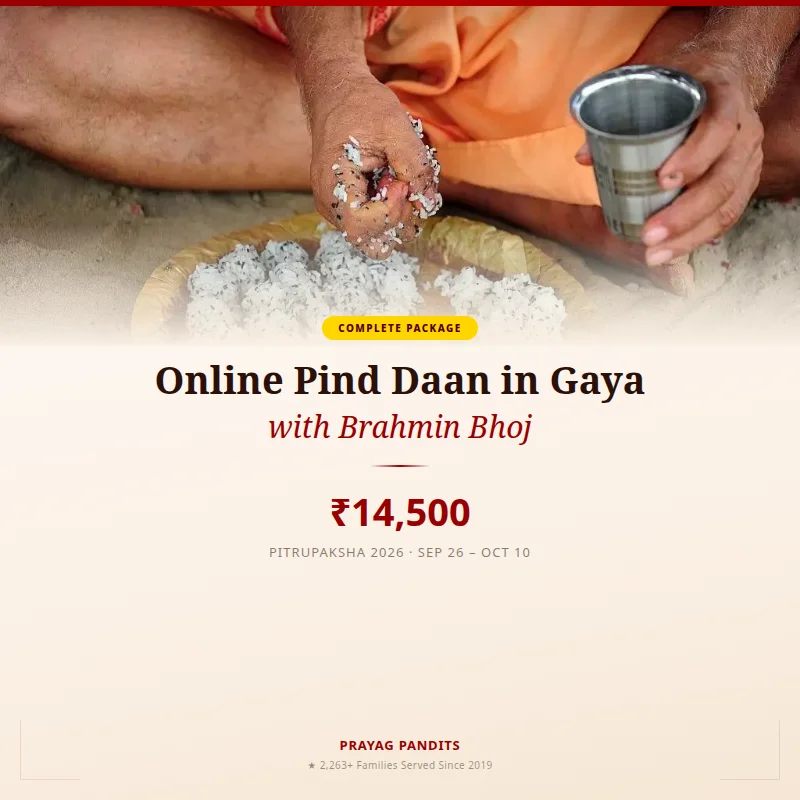
Online Pind Daan in Gaya with Brahmin Bhoj — Pitrupaksha 2026, View & book
- Online Pind Daan at Phalgu Vedi / Vishnupad Vedi, Gaya (Pitrupaksha 2026)
- Experienced Gaya Kshetra pandit
- All pinda materials (cooked rice, sesame, ghee, honey, milk, kusha)
Price ₹14,500


You come to Gaya and sit for the rite in person with the pandit.
Pind Daan in Gaya, View & book
- Pind Daan at Vishnupad Temple / Phalgu River, Gaya
- Experienced Gayawal Pandit
- Complete samagri (Pind ingredients, sesame, kusha, flowers, incense, ghee)
Price ₹7,100
Book Pind daan Gaya Platinum Package, View & book
- Pind Daan at Vishnupad Area AND Phalgu Area
- Dedicated experienced pandit for the full day
- Complete samagri (rice, sesame, honey, milk, barley, kusha, tulsi)
Price ₹11,000
Book Pind daan Gaya Platinum Package with Gau Daan, View & book
- Senior Gayawal Brahmin Pandit (hereditary)
- Pind Daan at Phalgu, Vishnupad & Akshaywat
- Tarpan at one vedi
Price ₹25,000
Pind daan in Gaya for two persons, View & book
- Complete Pind Daan ceremony for two persons (2 families) at Gaya
- Experienced pandit specialized in Gaya rites & tirtha circuit
- All puja samagri (til, barley flour, ghee, honey, kusha, flowers)
Price ₹13,000
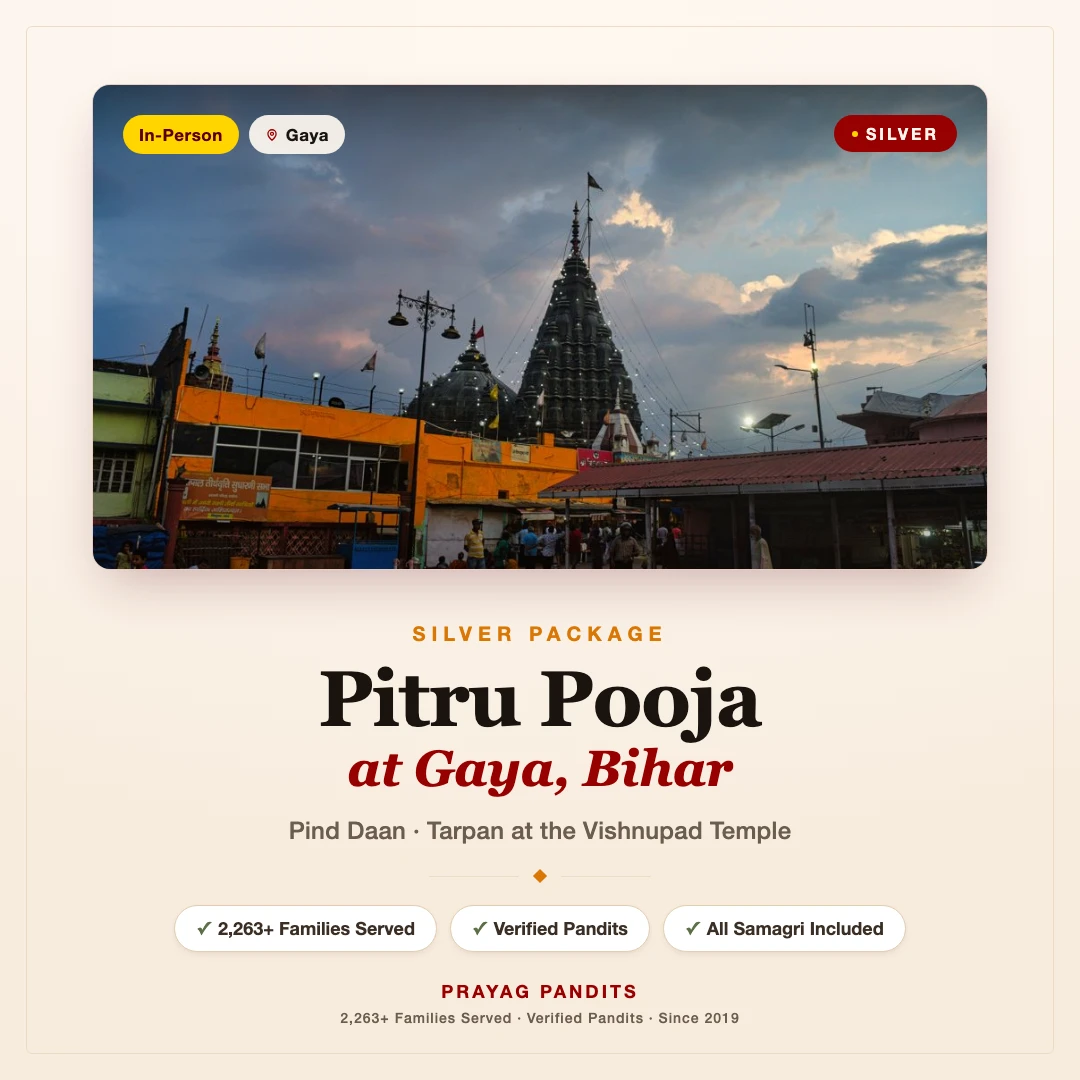
Silver Pitru Pooja Package – Gaya, View & book
- Pind Daan Pooja & Tarpan at Gaya, performed per the prescribed vidhi
- Experienced Gayawal Pandit — priest charges included
- All Pooja Samagri for the rituals
₹23,000
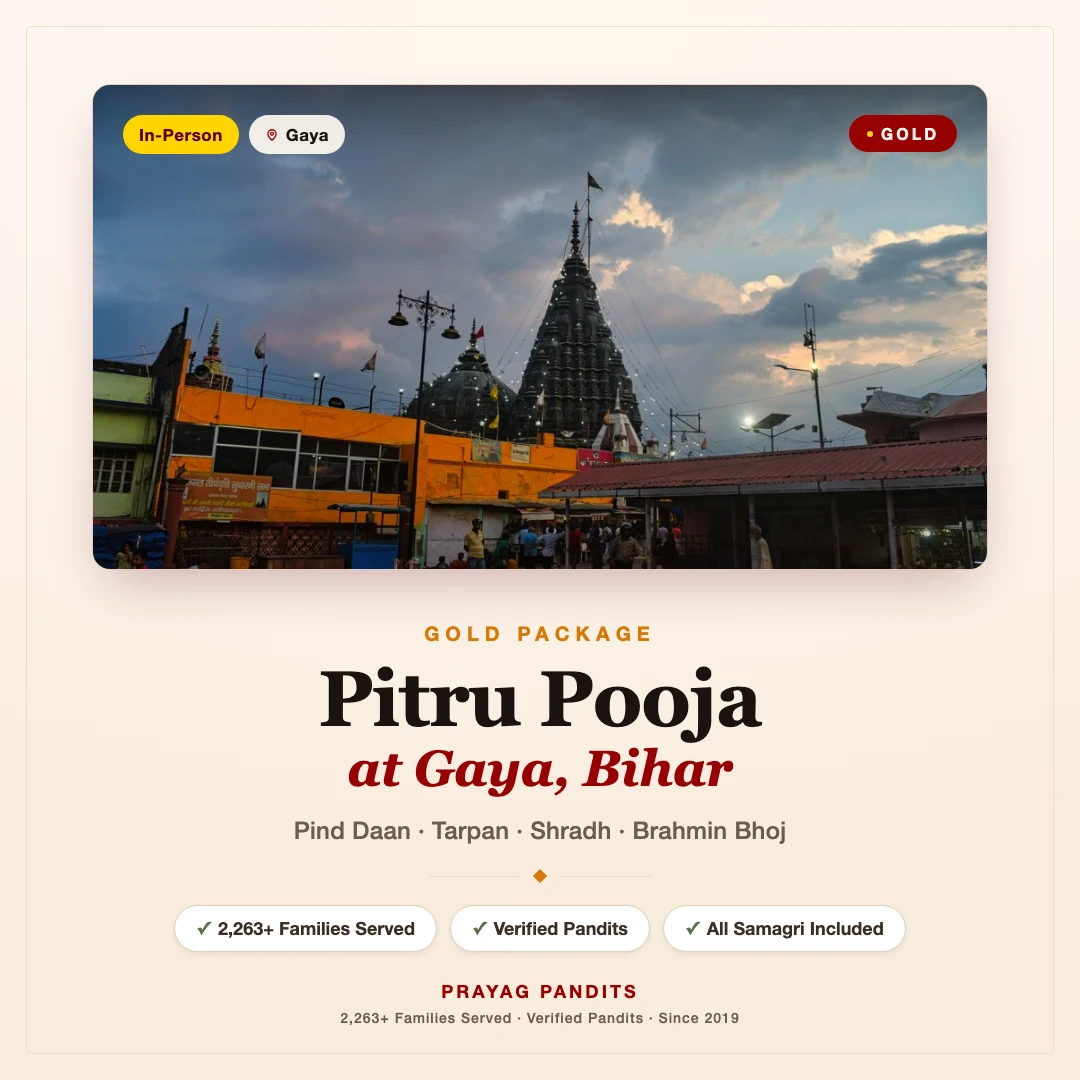
Gold Pitru Pooja Package – Gaya, View & book
- Pind Daan Pooja & Tarpan at Gaya, performed per the prescribed vidhi
- Experienced Gayawal Pandit — priest charges included
- All Pooja Samagri for the rituals
₹30,000
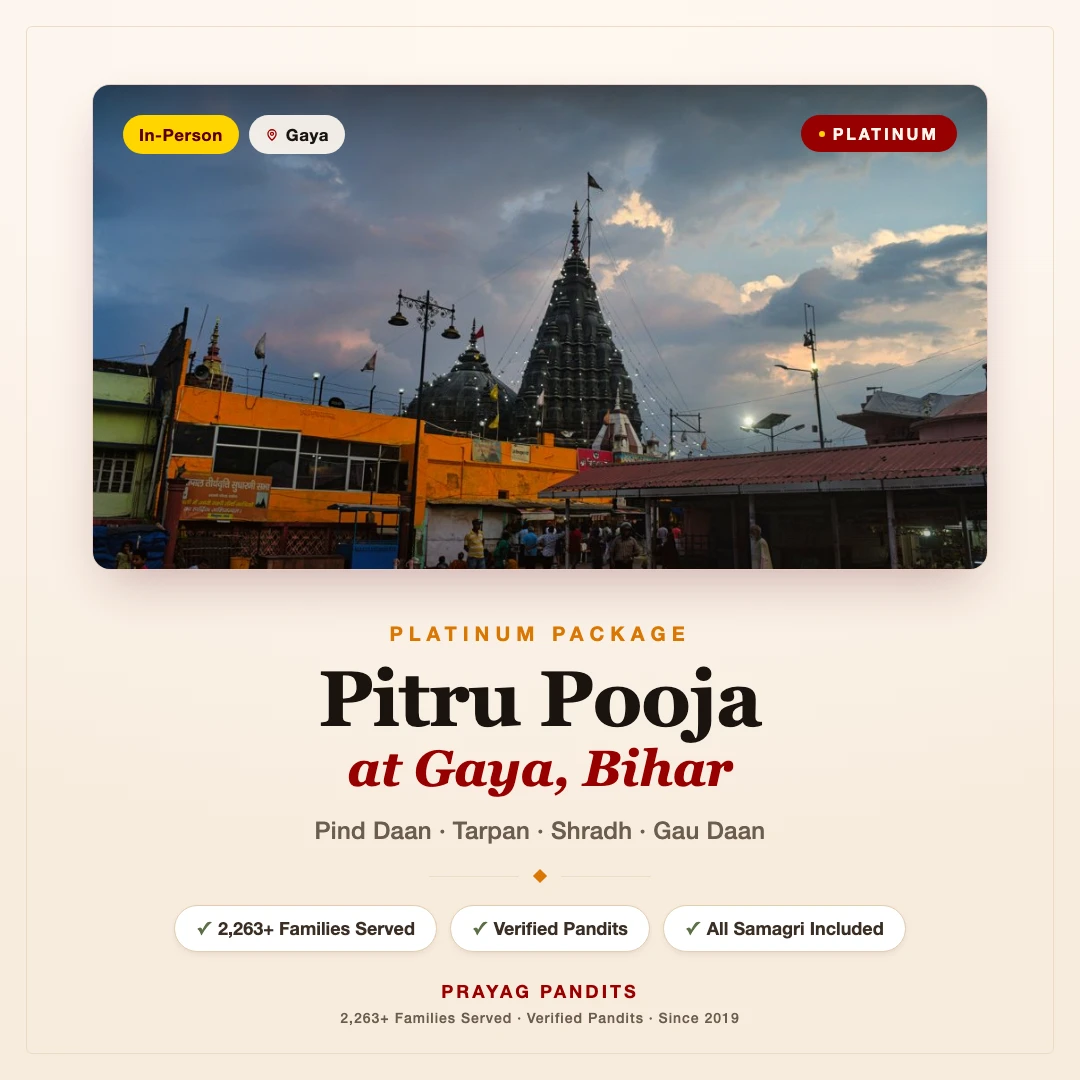
Platinum Pitru Pooja Package – Gaya, View & book
- Pind Daan Pooja & Tarpan at Gaya, performed per the prescribed vidhi
- Experienced Gayawal Pandit — priest charges included
- All Pooja Samagri for the rituals
₹45,000
Personal guidance
Have a question? Ask a pandit.
Tell us about your family. A pandit will suggest the right way.
- 2,263+families served
- 10+ yearspandit experience



Shradh Packages in Gaya
The pandit performs the rite in Gaya; your family joins live on video.
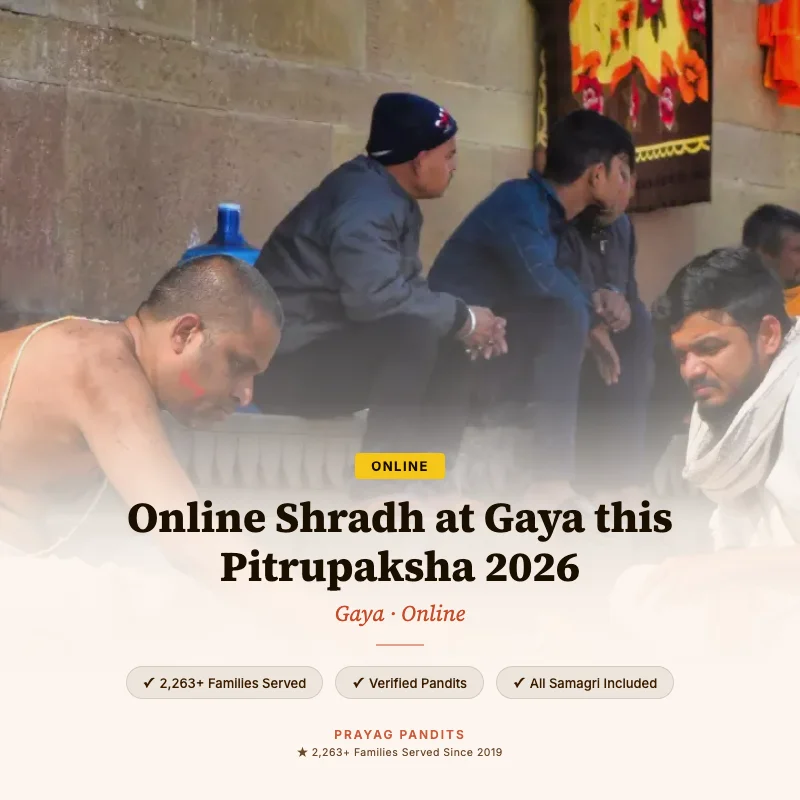
Online Shradh at Gaya this Pitrupaksha 2026, View & book
- Online Shradh at Phalgu River / Vishnupad area, Gaya (live video)
- Authorised Gayawal Priest (Gaya-vidhi)
- Complete samagri (sesame, kusha, barley flour, flowers, rice, Pind ingredients)
Price ₹10,999

Online Shradh in Gaya with Brahmin Bhoj — Pitrupaksha 2026, View & book
- Online Shradh ceremony at Phalgu Vedi, Gaya
- Experienced Gaya Kshetra pandit
- All Shradh samagri (til, kusha, jau, gangajal, kalash, flowers, incense)
Price ₹12,382
You come to Gaya and sit for the rite in person with the pandit.
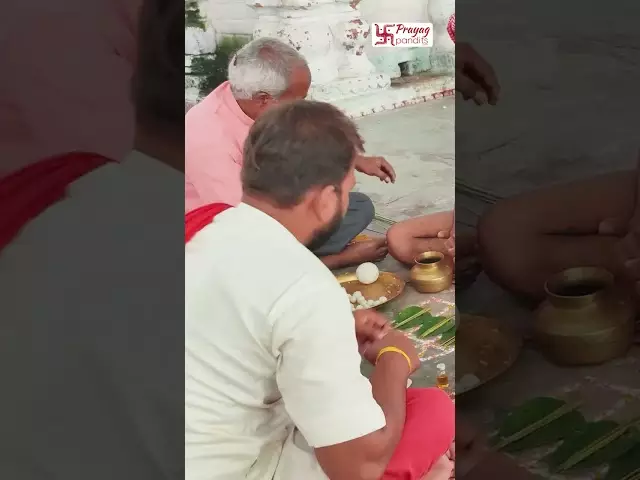
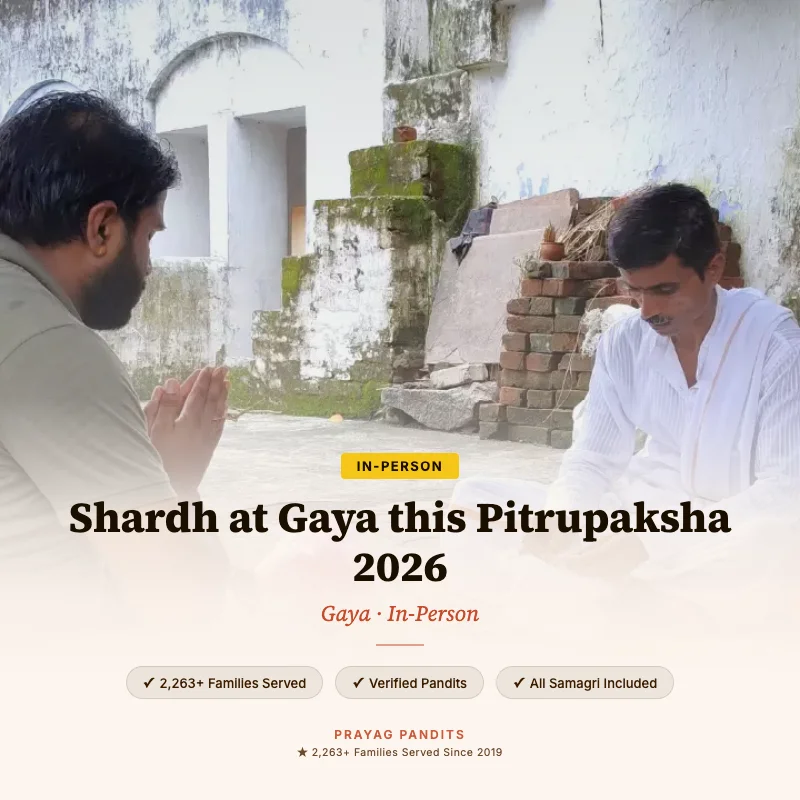
Shradh at Gaya this Pitrupaksha 2026, View & book
- Authorised Gayawal Pandit (hereditary)
- Complete Shradh ceremony at Vishnupad Area OR Phalgu Area (as per Gaya tradition)
- Complete samagri (black sesame, barley, kusha, rice flour, honey, ghee, flowers, incense, diyas)
Price ₹7,100
Gold Pitru Pooja Package – Gaya, View & book
- Pind Daan Pooja & Tarpan at Gaya, performed per the prescribed vidhi
- Experienced Gayawal Pandit — priest charges included
- All Pooja Samagri for the rituals
₹30,000
Platinum Pitru Pooja Package – Gaya, View & book
- Pind Daan Pooja & Tarpan at Gaya, performed per the prescribed vidhi
- Experienced Gayawal Pandit — priest charges included
- All Pooja Samagri for the rituals
₹45,000
Tarpan Packages in Gaya
The pandit performs the rite in Gaya; your family joins live on video.
Online Tarpan in Gaya, View & book
- Online Tarpan at Phalgu River, Gaya (live video)
- Experienced Gaya-based pandit
- All samagri arranged by us (sesame, kusha, barley flour, flowers)
Price ₹11,000

You come to Gaya and sit for the rite in person with the pandit.
Tarpan in Gaya Pitrupaksha 2026, View & book
- Tarpan at Phalgu River, Gaya (Pitrupaksha 2026)
- Experienced Gaya-based pandit
- All samagri (sesame, kusha, barley flour, flowers)
Price ₹11,000

Narayan Bali Packages in Gaya
The pandit performs the rite in Gaya; your family joins live on video.
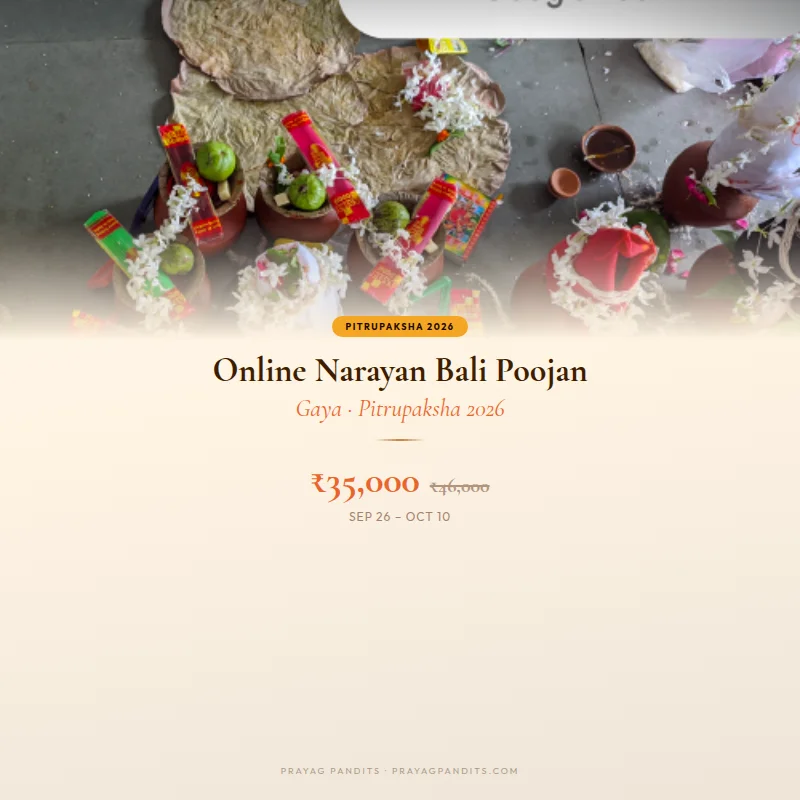
Online Narayan Bali Poojan in Gaya Pitrupaksha 2026, View & book
- Online Narayan Bali Poojan at Gaya (live video, 4–5 hours)
- Experienced pandit
- All samagri (flowers, diya, til, kusha, rice, honey, sesame, sacred cloths)
Price ₹35,000
You come to Gaya and sit for the rite in person with the pandit.
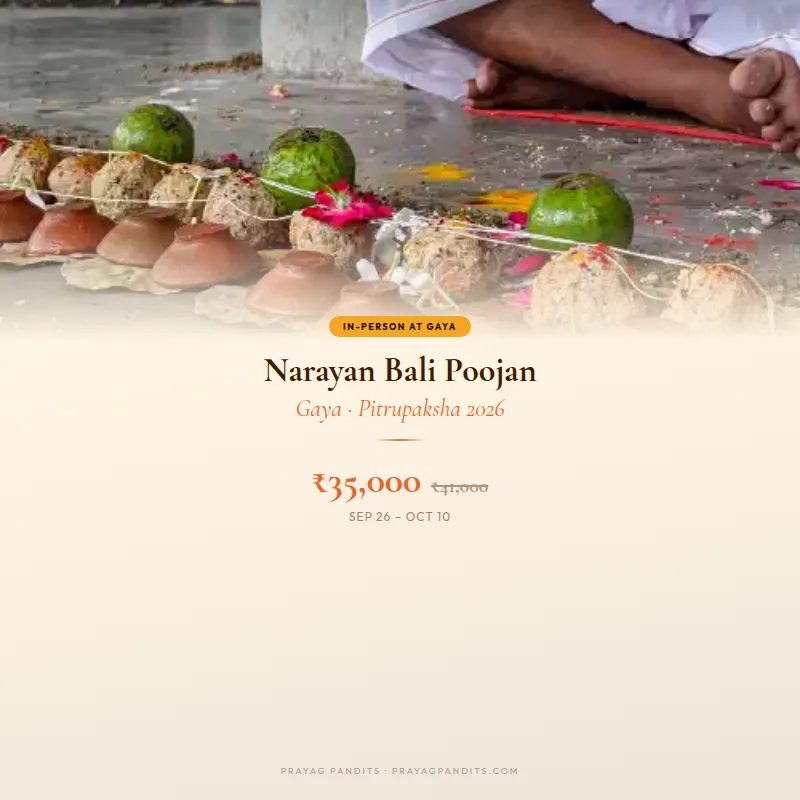
Narayan Bali Poojan in Gaya Pitrupaksha 2026, View & book
- Complete Narayan Bali Poojan at Vishnupad Temple area, Gaya
- Experienced qualified pandit (full Vedic mantras)
- All samagri (flowers, til, kusha, darbha, sacred threads, diya, honey, rice, cotton for effigy)
Price ₹35,000
Asthi Visarjan Packages in Gaya
You come to Gaya and sit for the rite in person with the pandit.

Asthi Visarjan in Gaya, View & book
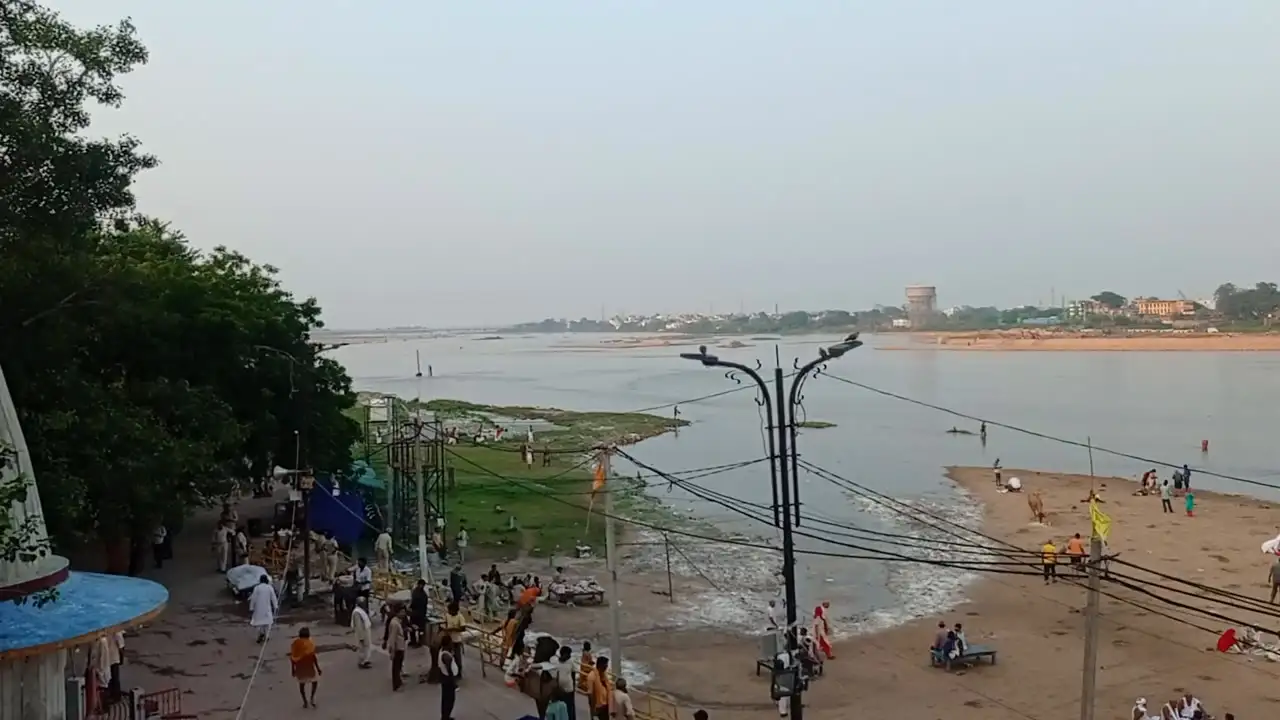
- Asthi Visarjan at the sacred Falgu (Phalgu) river, Gaya
- Experienced Gaya Teerth-Purohit (Gayawal tradition)
- All samagri (sesame, Gangajal, kush, flowers, incense, ghee lamps, barley)
₹7,100
Why Book Pitrupaksha with Prayag Pandits?
Experienced Shastris
All ceremonies performed by verified pandits with 10+ years of experience in Vedic rituals.
Clear Package Details
Package inclusions and exclusions are shown clearly before booking.
All Samagri Included
Every material required for the puja is arranged by us. Nothing extra to buy or carry.
Online Available for NRIs
Can’t travel? We perform the ritual on your behalf with live video call option.
Frequently Asked Questions
If you miss Sarva Pitru Amavasya, you have a few alternatives. You can perform the Shradh on the next available Amavasya (monthly new moon day), though the spiritual merit is reduced compared to the Pitrupaksha Amavasya. Another option is to perform the ceremony at Gaya, Prayagraj, or Varanasi on any day, as these tirthas are considered powerful for ancestral rites year-round. Some families also observe a compensatory Shradh during the Mahalaya Paksha of the following year. However, the best approach is to plan ahead — contact Prayag Pandits well before Pitrupaksha to secure your booking at +91-7754097777.
Not entirely, but Maha Bharani Shradh is considered so powerful that it can provide spiritual benefit equivalent to performing Shradh at Gaya. The Matsya Purana states that Bharani Nakshatra is directly ruled by Yama, the lord of death and the Pitrus. Because of this, Shradh performed on Maha Bharani carries amplified merit. However, if you know the specific tithi on which your ancestor died, performing Shradh on both that tithi day AND Maha Bharani is ideal. For those unsure of the death tithi, Maha Bharani serves as a powerful alternative to Sarva Pitru Amavasya.
The most popular route is by train from Chennai Central to Gaya Junction (approximately 32 to 38 hours). Several weekly trains cover this route directly or with one change. Alternatively, fly Chennai to Patna (1.5 hours) and take a taxi or train to Gaya (110 km, approximately 2.5 hours by road). During Pitrupaksha (September to October), Gaya International Airport also has seasonal direct flights from Chennai and via Kolkata. Book trains at least 3 to 4 months in advance for the Pitrupaksha season, as berths fill rapidly.
Bengali families traditionally travel to Gaya in two windows. The first is December through February — the post-harvest season after the Aman rice harvest — when families have both the time and financial means to undertake the pilgrimage. The weather is cool and pleasant, trains are less crowded than during the festival season, and the overall atmosphere at Gaya is serene. The second window is Pitru Paksha (September–October), specifically Mahalaya Amavasya, which in 2026 falls on October 10. This is the holiest day for Bengali tarpan and many families combine the Gaya yatra with their Mahalaya observance before returning home for Durga Puja. Book trains at least 3–4 months in advance for the Pitrupaksha window as demand is very high.
A single-vedi ceremony at the Vishnupad Temple, including the Sankalpa recitation, Pinda offering, and closing prayers, takes approximately 2 to 3 hours. A complete single-day ceremony covering Vishnupad Temple, Phalgu River Tarpan, and Akshaywat — the three most important vedis — takes approximately 5 to 7 hours including travel between sites. The 3-day Pitrupaksha Special package covers 10 or more vedis across the full Gaya Kshetra and is the most complete option. Come early in the morning (before 8 AM) to begin the snan at the ghat and have sufficient time for the full circuit.
Asthi Visarjan at Gaya can be performed throughout the year. However, certain periods carry heightened significance:
Pitrupaksha (September–October) — The supreme 16-day period for all ancestral rites at Gaya. During Pitrupaksha, hundreds of thousands of pilgrims gather at the Falgu River and Vishnupad Temple. The Falgu typically has visible surface water during this monsoon-adjacent period, and the spiritual charge of the Gaya Kshetra is at its peak. Pitrupaksha falls in September or October and its dates move each year with the tithi — ask us and we will confirm them against the panchang.
Monsoon (July–September) — The Falgu has the most visible surface water, making the physical immersion experience more tangible. Weather is warm and humid.
October–March — Comfortable weather for travel. The Falgu may be dry on the surface but rituals are performed on the sandy banks with Gangajal brought for the ceremony.
Amavasya days — New moon days throughout the year are considered powerful for ancestral offerings at Gaya.
Book early for Pitrupaksha — qualified Gayawal Brahmins are in extremely high demand during this period.
The Falgu River’s underground flow is explained by one of Hindu scripture’s most poignant stories. When Lord Rama visited Gaya to perform Pind Daan for his father Dashrath, he asked Sita to wait at the riverbank. When the auspicious moment arrived and Rama had not returned, Dashrath’s spirit appeared before Sita asking for the offering. Sita performed the Pind Daan herself, using sand from the Falgu riverbed, and called upon the river, a nearby cow, a Tulsi plant, and a Brahmin as witnesses.
When Rama returned and doubted her account, the Falgu River — afraid of Rama’s wrath — denied witnessing the offering. Sita, hurt by the betrayal, cursed the river to flow underground forever. This is why the Falgu is called “Antahsalila” — the river that flows beneath the surface.
Despite the underground flow, Asthi Visarjan at the Falgu is fully valid. The sacred waters are present beneath the sand year-round, and during the monsoon and Pitrupaksha season (September-October), surface water is visibly present. The Vayu Purana confirms that the Falgu’s sanctity is undiminished regardless of its visible flow.
Yes. We specialize in Pitrupaksha services at Prayagraj, Gaya, Varanasi, and Haridwar. During Pitrupaksha — the 16-day ancestral observance period — demand for qualified pandits is extremely high and the pilgrimage sites are most crowded, making the risk of encountering unauthorized operators highest. Booking with Prayag Pandits in advance of Pitrupaksha is strongly recommended to secure your preferred date and location.
Maha Bharani Shradh is performed when the Moon transits through Bharani Nakshatra — the nakshatra governed by Yama, the Lord of Death. This creates a direct cosmic alignment between the ritual, the deity (Yama) who governs the ancestral realm, and the consciousness of the departed souls. The Dharmasindhu explicitly states that this alignment produces merit equal to Gaya Pind Daan — the most powerful ancestral rite in Hinduism. No other single day in Pitrupaksha carries this scriptural guarantee.
Both Gaya and Prayagraj are among the most sacred sites for Pind Daan in Hindu tradition, each with distinct scriptural authority. Gaya is specifically associated with liberation for ancestors through Lord Vishnu’s direct presence at Vishnupad, and the Gaya Mahatmya describes it as the foremost Pinda Daan Kshetra. Prayagraj (the Triveni Sangam) is supremely sacred for Tarpan because of the confluence of the Ganga, Yamuna, and Saraswati, and is especially powerful during Pitrupaksha and Mauni Amavasya. Many families perform rites at both locations for the most comprehensive ancestral benefit.
Book your Pitrupaksha ceremony in Gaya
Ask us for the next Pitru Paksha dates, or arrange the ceremony on any day of the year. The rites are not limited to the season.
- 2,263+ families served
- Serving since 2019
- GST registered