



What’s included
Included in your package
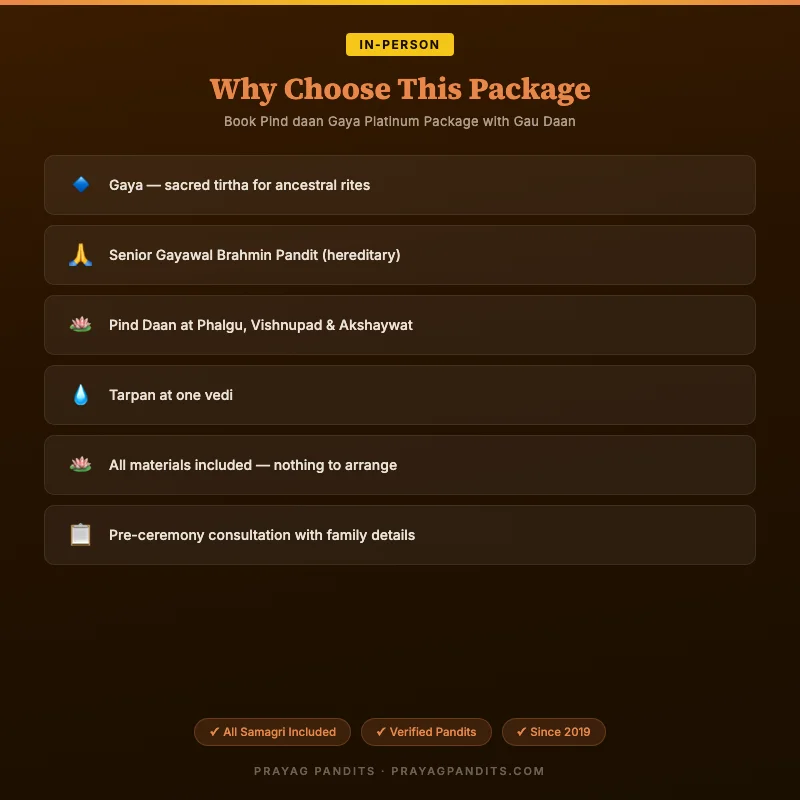
- Senior Gayawal Brahmin Pandit hereditary
- Pind Daan at Phalgu, Vishnupad & Akshaywat
- Tarpan at one vedi
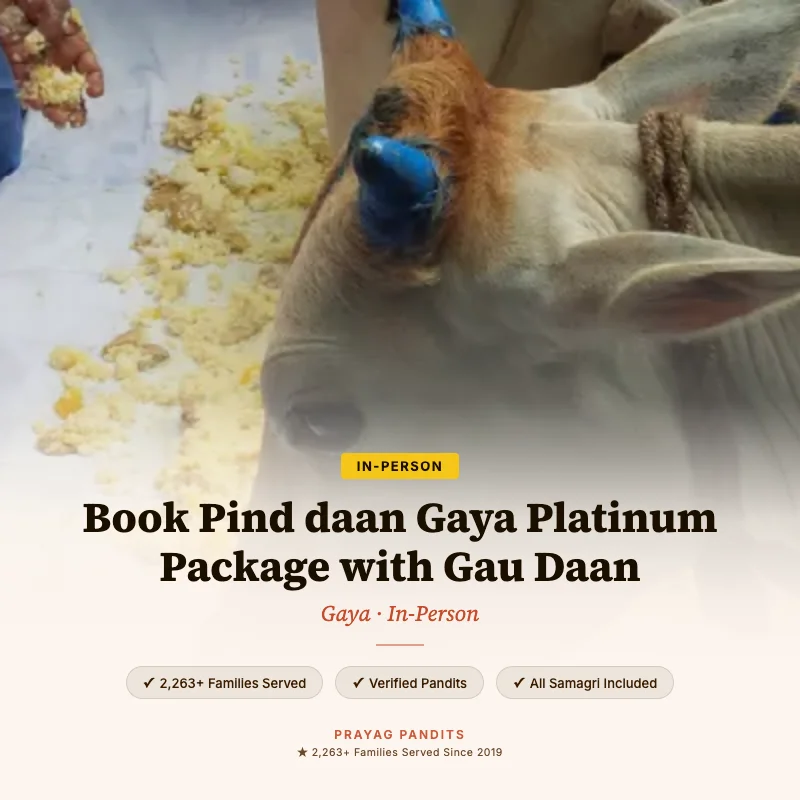
- Gau Daan (cow donation) with Sankalpa & Shodashopachara puja
- Brahmin Bhoj for 3 Brahmins
- Complete samagri pind ingredients, flowers, incense, ghee lamp
- Daan materials dhoti, angavastram, all prescribed items
- Local guidance & coordination by Pandit/Priest
Not included in your package
- Travel to Gaya (flights / trains)
- Accommodation in Gaya
- Family meals (Brahmin Bhoj is separate)
- Photography / videography
- Extra Dakshina/Gifts/Donations made to the Priest/Pandit
This is not a Daswa Gau Daan package.
How it works
Choose your pooja
Review your package and any available additions, then add it to your booking.
Share your preferences
Enter your contact details, preferred date and time. Add ancestral details if you wish.
We coordinate with you
Our team confirms the arrangements and shares your coordinator’s details 24 hours before the pooja.
Participate in your pooja
Follow the participation and joining arrangements described in your package and shared by your coordinator.
What families say after the rite
From families who booked Book Pind daan Gaya Platinum Package with Gau Daan.
Rated 4.8 out of 5
500+ reviews · Prayag Pandits
This poojarated 4.6 out of 519 reviews
Our pandits


- 2,263+ families served
- Serving since 2019
- GST registered
Families on video
The player loads only when you press play.


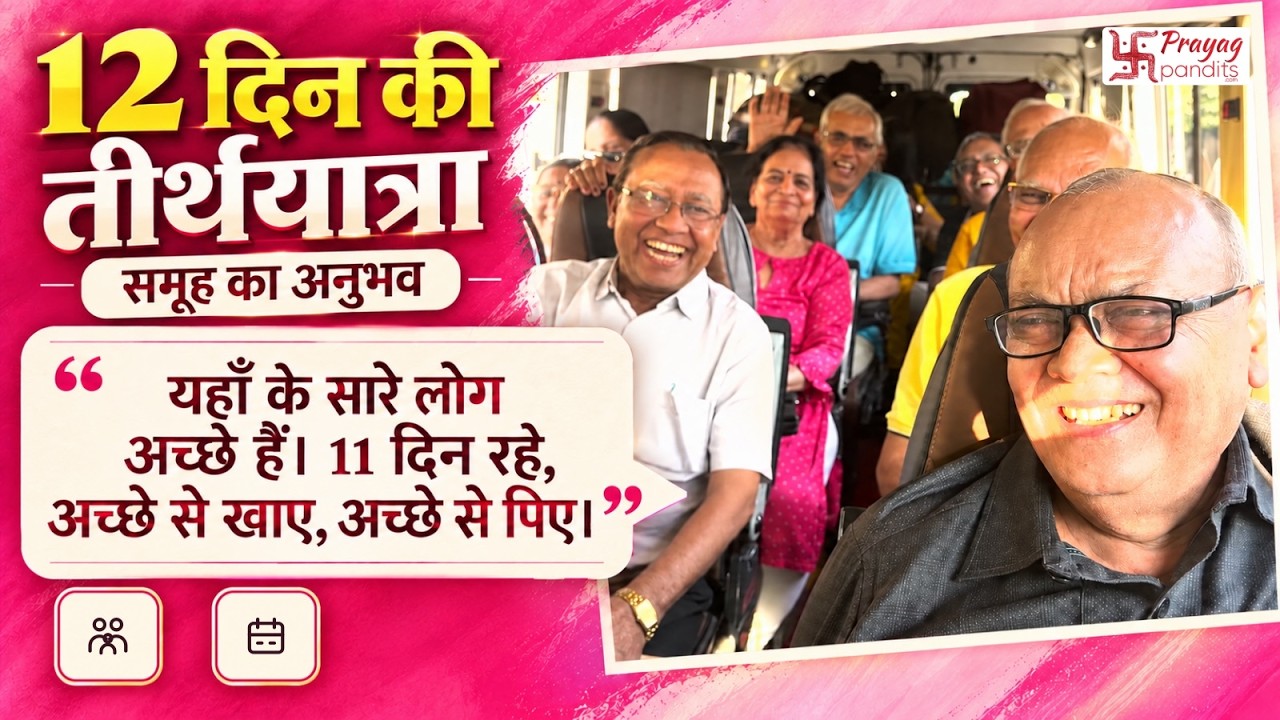
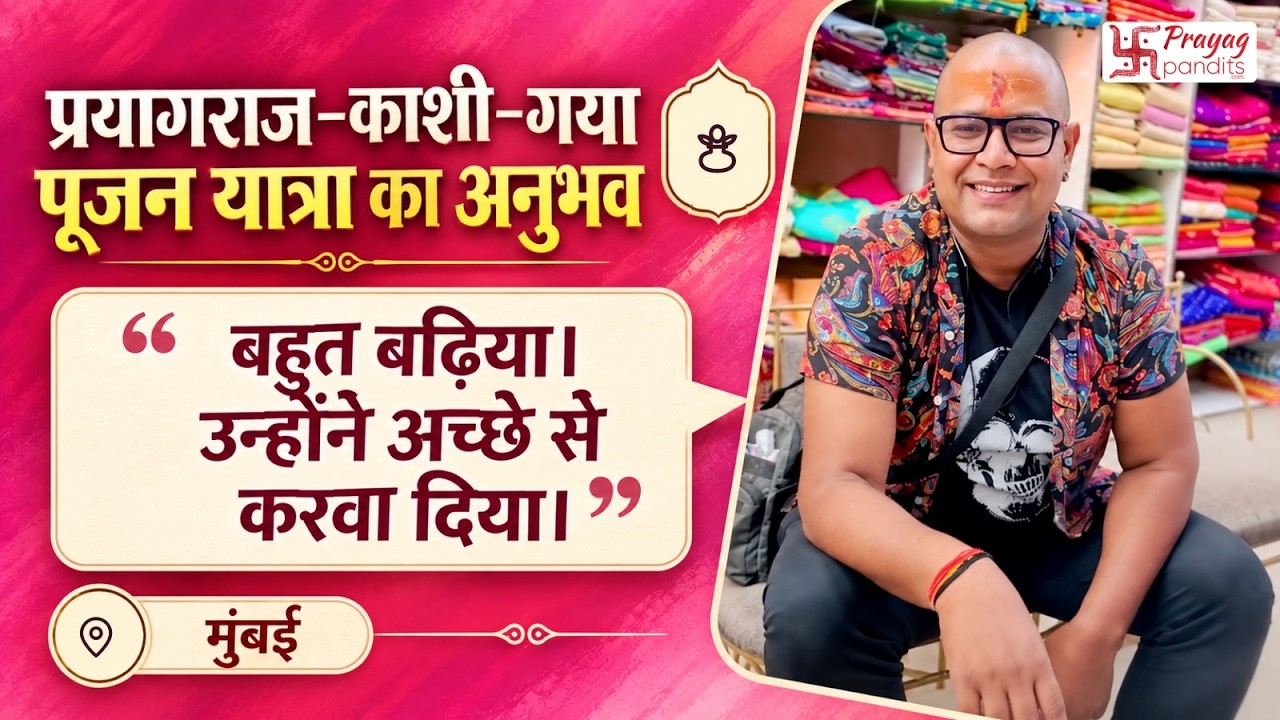
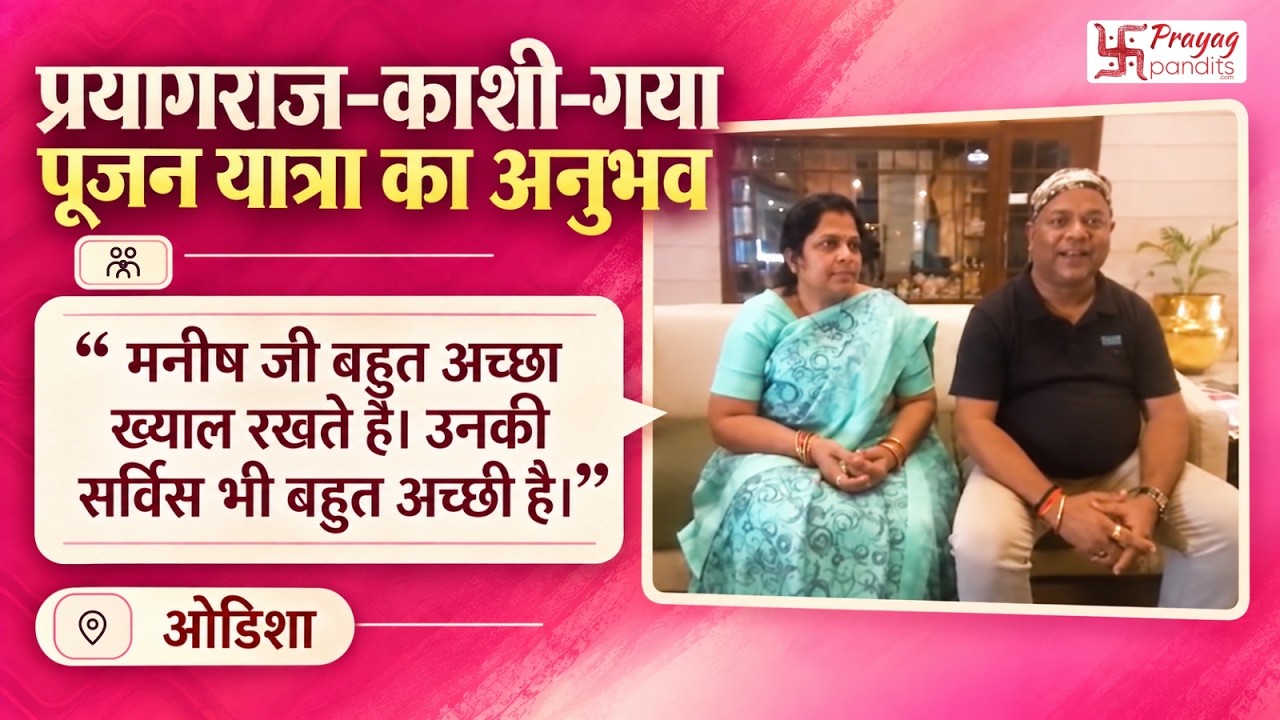

In their words
Outstanding service for Pind Daan. The pandit arrived early, set up everything neatly, and began the ceremony right on time. His pronunciation of Sanskrit shlokas was impeccable. Very authentic experience. Om Shanti.
ऑनलाइन पिंडदान का विकल्प हमारे जैसे NRI परिवारों के लिए वरदान है। वीडियो कॉल पर सब कुछ स्पष्ट दिख रहा था और हम पूजा में भाग ले सके। पंडित जी ने धैर्य से सब कुछ समझाया।
पिंडदान की पूरी व्यवस्था बहुत अच्छी थी। पंडित जी ने सभी मंत्रों का सही उच्चारण किया और हर विधि को विस्तार से समझाया। परिवार के सभी सदस्य संतुष्ट हैं। प्रयाग पंडित्स की सेवा सराहनीय है। 🙏
Thoroughly impressed with the professionalism. The pandit ji was punctual and well prepared with all the samagri.
Very professional service. The pandit ji explained every step of the ritual which helped us understand the significance. Everything was arranged well including the samagri. We are grateful to Prayag Pandits for making this spiritual journey meaningful. Om Shanti.
First time performing Pind Daan and was nervous about the process. But the team guided us well. They explained what to wear, what to bring, and what mantras to recite. Everything went smoothly. 🙏
Booked a rite with us? Tell other families how it went.
Write a reviewQuestions families ask
The standard package covers Pind Daan at the primary vedis — chiefly Vishnupad Temple and Falgu River banks. The Platinum Package covers all major vedis including Akshaywat, Pretshila Hill, Ram Kund, and Sita Kund, adds the full Gau Daan ceremony, includes Brahmin bhojan, and is conducted by our most senior Gayawal pandit. It is designed to be the most complete ancestral rite possible in a single day at Gaya.
Yes. During the Sankalpa, the pandit names all ancestors for whom the Pind Daan is being performed. It is both customary and scripturally valid to perform rites for all departed members of the paternal and maternal lineage in one session. Our pandit will guide you in naming the ancestors correctly, including those whose full names may not be known.
Gau Daan is not mandatory for a valid Pind Daan — the offering of Pind at Vishnupad is itself a complete ceremony. However, the Garuda Purana and Brahma Purana describe Gau Daan as the act that most powerfully assists departed souls specifically in crossing the Vaitarni river in the afterlife. For families who wish to provide maximum spiritual benefit to their ancestors, it is strongly recommended, and our Platinum Package makes it possible without the difficulty of arranging it independently.
You need to carry nothing for the puja itself — all materials are included in the package. We recommend bringing a written list of names and approximate death dates of the ancestors for whom you are performing the rite, along with your family gotra name. If the gotra is unknown, inform us in advance and our pandit will guide you on the appropriate alternative. Comfortable clothing and footwear easy to remove are advisable, as you will enter temple premises and walk on ghats.
For standalone ceremonies, booking one week in advance is generally sufficient. During Pitrupaksha — the most auspicious period for ancestral rites, occurring in September and October — demand is extremely high and we strongly recommend booking three to four weeks ahead to secure your preferred date and our senior Gayawal pandit. Contact us as early as possible during this period.
Yes. We offer a proxy representation service where our pandit performs the complete ceremony on your behalf, with your Sankalpa taken by proxy. While physical presence is always spiritually preferable, the scriptures do make provision for Sankalpa by proxy, and the merit reaches you in full. Many families living outside India use this option every year.
Still have a question?
Ask our team on WhatsApp and we will help you plan the ceremony.
We reply on WhatsApp within 1–2 hours.
Ask a pandit (opens WhatsApp)Know your ceremony
Of all the sacred acts a son or daughter can perform for a departed ancestor, Pind Daan at Gaya stands apart as the most potent. And within Gaya’s offerings, the Pind Daan Gaya Platinum Package with Gau Daan represents the pinnacle — a full-day, comprehensive ceremony that leaves nothing incomplete. At ₹35,000, this is our most senior and thorough package, designed for families who wish to offer their ancestors the complete liberation that Gaya promises, without compromise.
This package combines the ancient rites of Pind Daan performed across all major vedis in Gaya with the supremely meritorious act of Gau Daan — the gifting of a cow to a Brahmin. Together, these two acts are said to break the cycle of suffering in the ancestral realm and open the doors of Vaikuntha for departed souls.
Gaya has been revered as the greatest Pitru Tirtha — a place specifically designated for the liberation of ancestors — since time immemorial. The Vayu Purana, Agni Purana, and Garuda Purana all speak of Gaya with extraordinary reverence. The Garuda Purana states:
“Gayayam pindadam dattva pitarah svargam aapnuyuh” — Those who offer Pind Daan at Gaya ensure their ancestors attain heaven.
The sacred geography of Gaya is rooted in the story of the demon Gayasura, upon whose chest Lord Vishnu eternally rests his foot at the Vishnupad Temple. Because Vishnu himself sanctified this land, any ritual performed here carries the weight of divine witnessing. The Pind offered at Gaya is believed to directly reach the subtle body of the ancestor, providing them nourishment and peace wherever they currently reside in the ancestral realm.
The Mahabharata, in the Vana Parva, recounts how Yudhishthira himself journeyed to Gaya and performed Pind Daan for his ancestors. The text says: “By offering Pind here, even those ancestors who have committed terrible sins are liberated.” Gaya is one of the only places in Hindu sacred geography where this unconditional liberation is promised.
For a full understanding of the rituals involved and the history of this tirtha, read our comprehensive guide: All You Need to Know About Pind Daan.
Gau Daan — the donation of a cow — holds an entirely separate and exalted place in Hindu dharma. The Garuda Purana devotes multiple chapters to the merit of Gau Daan, particularly when performed during ancestral rites. The Bhagavata Purana describes the cow as sacred to all devatas, with her body inhabited by the thirty-three crore deities. She is called Kamadenu — the one who fulfills all desires — and her donation is considered the most complete act of charity a person can perform.
When Gau Daan is performed specifically during Pind Daan ceremonies at a Pitru Tirtha like Gaya, the merit is considered compounded many times over. The specific benefits of Gau Daan in this context include:
- Safe crossing of Vaitarni — the Garuda Purana describes a river called Vaitarni in the afterlife realm which is terrible to cross. A soul that received Gau Daan on its behalf crosses it safely, as the cow guides the soul across the waters
- Removal of ancestral curses — Pitru Dosha accumulated over multiple generations is significantly reduced by Gau Daan combined with Pind Daan
- Comprehensive merit — the scriptures state that Gau Daan carries within it the merit of all other forms of daan combined — land, gold, food, clothing — making it the single most complete act of charitable giving
- Blessings for the living family — prosperity, progeny, good health, and protection from malefic planetary influences flow to the family that performs Gau Daan with sincerity
When Pind Daan and Gau Daan are performed together at Gaya, the combined effect is considered unmatched in all of shastra.
No description of Gaya Pind Daan is complete without understanding the Vishnupad Temple. Built originally in the 8th century and rebuilt to its current form by Queen Ahilyabai Holkar in 1787, the temple enshrines the footprint of Lord Vishnu — 40 centimeters long, set in solid rock. This footprint is the reason Gaya is the supreme Pitru Tirtha.
The story: the demon Gayasura, despite his demonic origin, was a great devotee of Vishnu and performed extraordinary austerities. Vishnu, pleased with him, granted him a boon — that any person who touches Gayasura’s body will be liberated. As Gayasura was effectively becoming a tirtha himself, the devatas feared that all souls, including evil ones, would simply be liberated and dharma would be disrupted. They requested Vishnu to restrain Gayasura. Vishnu placed his foot on Gayasura’s chest, causing him to become still beneath the earth forever. The footprint remains, and the liberation Gayasura was granted — that all who come to his body will be freed — is the basis of Gaya’s power.
Pind Daan performed at the Vishnupad Temple is therefore witnessed directly by Vishnu himself. No other tirtha can claim this.