

What’s included
Included in your package
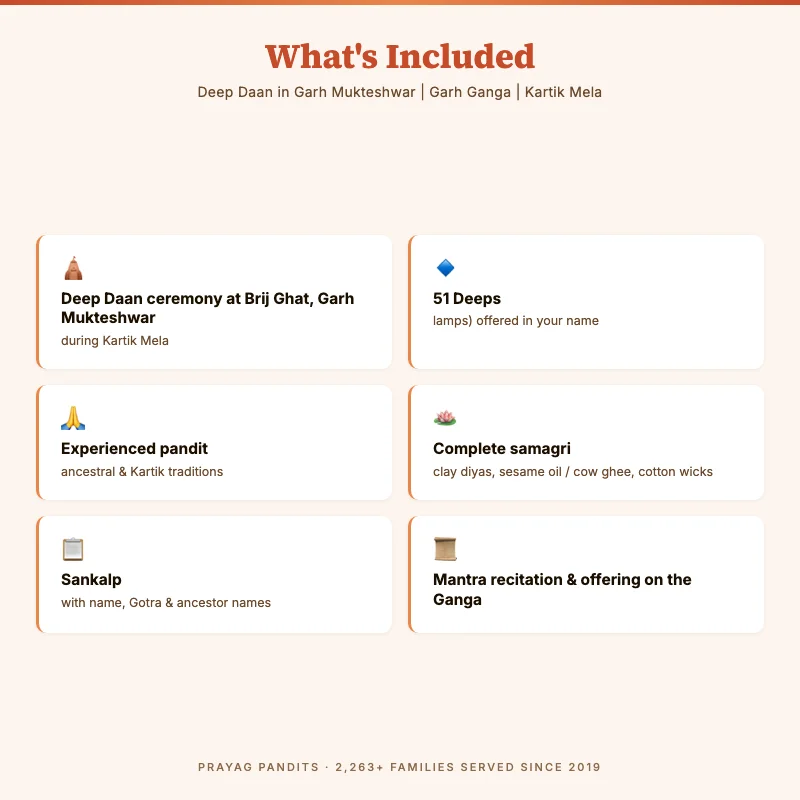
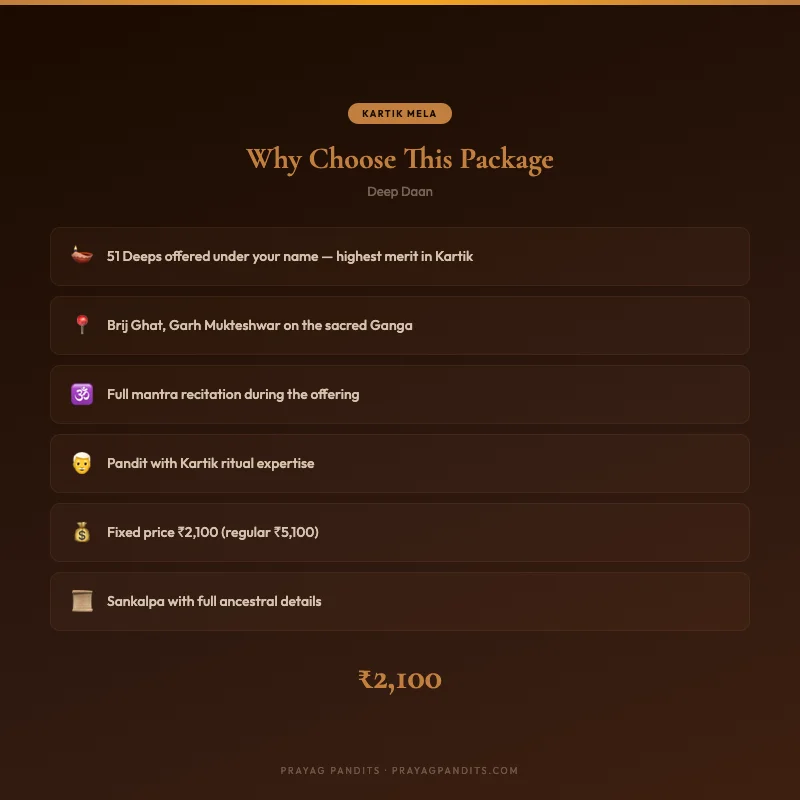
- Deep Daan ceremony at Brij Ghat, Garh Mukteshwar during Kartik Mela
- 51 Deeps (lamps) offered in your name
- Experienced pandit ancestral & Kartik traditions
- Complete samagri clay diyas, sesame oil / cow ghee, cotton wicks
- Sankalp with name, Gotra & ancestor names
- Mantra recitation & offering on the Ganga
Not included in your package
- Travel to Garh Mukteshwar
- Accommodation during Kartik Mela (book early — fills fast)
- Pind Daan / Tarpan (separate services)
- Yagya / Havan (available as add-on)
- Extra Dakshina/Gifts/Donations made to the Priest/Pandit
How it works
Choose your pooja
Review your package and any available additions, then add it to your booking.
Share your preferences
Enter your contact details, preferred date and time. Add ancestral details if you wish.
We coordinate with you
Our team confirms the arrangements and shares your coordinator’s details 24 hours before the pooja.
Participate in your pooja
Follow the participation and joining arrangements described in your package and shared by your coordinator.
What families say after the rite
From families who booked Deep Daan in Garh Mukteshwar | Garh Ganga | Kartik Mela.
Rated 4.8 out of 5
500+ reviews · Prayag Pandits
This poojarated 4.5 out of 515 reviews
Our pandits
- 2,263+ families served
- Serving since 2019
- GST registered
Families on video
The player loads only when you press play.


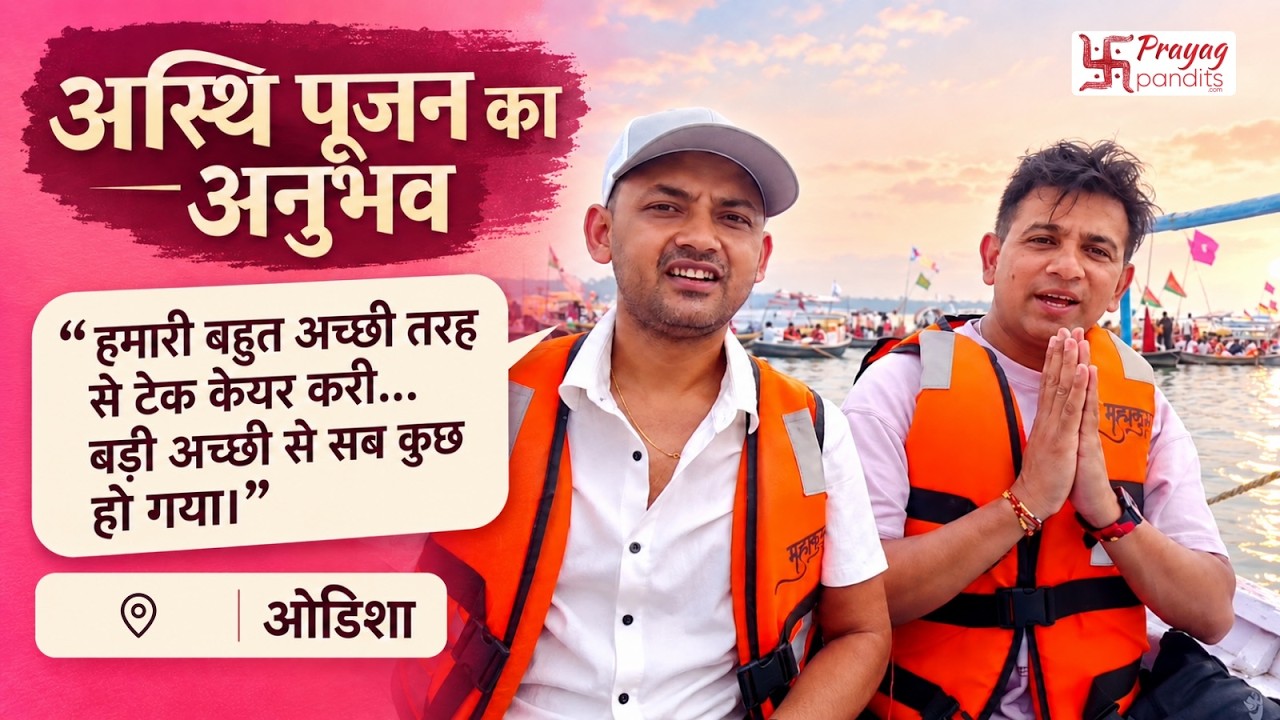


In their words
We were looking for reliable pandit services online and found Prayag Pandits. The experience exceeded our expectations. Professional team, knowledgeable pandits, and transparent pricing.
Had a wonderful experience with Prayag Pandits. The team is very organized and the pandits are genuine. They don't rush through the ceremonies like some other services do. Quality work. Dhanyavaad.
Good service by Prayag Pandits. The booking was easy and the team was responsive. The pandit was well versed and performed the poojan with sincerity. Would definitely use their services again. Jai Shri Ram.
Had a wonderful experience. The booking process was easy and the ceremony was conducted with full devotion.
ऑनलाइन बुकिंग आसान थी। व्हाट्सएप पर जवाब तुरंत मिला। पूजा शुभ मुहूर्त में शुरू हुई और सही समय पर पूर्ण हुई। मूल्य भी उचित है। Jai Shri Ram.
Booked this for my late father. Everything was arranged perfectly. The team was professional and respectful throughout.
Booked a rite with us? Tell other families how it went.
Write a reviewQuestions families ask
Kartik Purnima in 2026 falls on Thursday, November 26, 2026. The Purnima Tithi begins in the afternoon of November 25 and extends through the morning of November 26. The most auspicious bathing time is during Brahma Muhurta on November 26, approximately 90 minutes before sunrise. The evening Dev Deepawali lamp ceremony should begin at sunset and continue through the night.
Kartik Poornima in 2026 falls on November 30, 2026. The holy bath (Snan) should be taken at Brahma Muhurta, approximately 4:30–5:30 AM local time. The main lamp-lighting rituals are performed at sunset and continue through the moonlit night.
During Kartika and especially on Kartik Poornima, devotees traditionally avoid meat, liquor, honey, eggplant (brinjal), turnip, radish, and food cooked in another's home (parānna). A diet of fruits, milk, and foods prepared without salt (Phalahar) is recommended for those observing the fast. Even if a full fast is not possible, avoiding meat and maintaining mental purity is beneficial.
Yes. The traditional Deepak Mantra is: 'Bhoo bhuva suvaha, deepo jyoti parabrahma, deepo jyotir janardhana, deepo harastu papam mama jyotir namostute.' This mantra identifies the lamp with the supreme light of Brahman, invokes Vishnu (Janardhana), and requests the lamp to destroy the devotee's sins. It should be recited before lighting, while holding the unlit lamp in both hands.
The most auspicious time for Deep Daan is during Pradosh Kaal — the twilight period approximately 90 minutes before sunset extending 45 minutes after sunset. Among all occasions, the Kartik month (October–November) is most prescribed, with the five days from Rama Ekadashi to Deepawali being the most sacred. Kartik Purnima (Dev Deepawali) is the single most powerful day for lamp donation at any sacred river.
The Padma Purana describes Kartik as the most sacred month in the Hindu calendar for devotional practices. During this month, Lord Vishnu rises from his annual cosmic sleep (Chaturmas Yoga Nidra), and Lord Shiva’s liberating grace is at its most active. The Padma Purana states specifically that a lamp offered to the Ganga during Kartik month liberates fourteen generations of ancestors from whatever suffering or limitation they carry in the afterlife. The merit of this single act during this specific month is described as exceeding that of major yagyas performed at other times of year.
The standard package includes eleven diyas (lamps), which is the traditional number for ancestral Deep Daan in the ritual tradition at Garh Mukteshwar. Eleven represents the eleven Rudras — the forms of Shiva that govern the transitions of the soul — and is considered complete for ancestral purposes. If you wish to offer additional lamps for further ancestral lineages or as an act of additional devotion, this can be arranged at a modest additional cost. Please mention this when booking.
Yes, and attending in person during Kartik Mela is a deeply moving experience. The ceremony is scheduled at Brij Ghat and you participate directly, setting the lamps on the Ganga with your own hands while the pandit recites the mantras. If you plan to attend in person, please book well in advance and arrange accommodation early — Garh Mukteshwar fills completely during the main Kartik Mela days. Our guide to reaching Garh Mukteshwar covers accommodation, routes, and what to expect during the Mela period.
Deep Daan in its ancestral form is specifically offered for the departed. However, there is a tradition of offering lamps for the long life and protection of living family members as well, in which case the ceremony is framed as a devotional offering to the Ganga and to Lord Mukteshwara rather than as an ancestral rite. If you wish to offer lamps for both the living and the departed in a single ceremony, our pandit can structure the ceremony to include both intentions. Please specify your requirements when booking.
White or light-coloured clothing is traditional for ancestral ceremonies and ghat rituals. Avoid black during the ceremony itself. Footwear is removed before ascending the ritual platform at the ghat. Dress modestly — loose, simple clothing is appropriate. If you plan to take the Kartik Snan (sacred bath in the Ganga), bring a change of clothes and a towel. The ghat area during Kartik Mela is crowded, so secure any valuables before entering the crowd.
Still have a question?
Ask our team on WhatsApp and we will help you plan the ceremony.
We reply on WhatsApp within 1–2 hours.
Ask a pandit (opens WhatsApp)Know your ceremony
Every year, as the month of Kartik arrives and the air turns cool across the Gangetic plains, the town of Garh Mukteshwar transforms. Hundreds of thousands of pilgrims converge on Brij Ghat from across Uttar Pradesh, Delhi, and Rajasthan, drawn by one of the oldest and most spectacular religious fairs in northern India — the Kartik Mela at Garh Mukteshwar. And at the heart of this great gathering is the ritual of Deep Daan: the offering of lighted lamps upon the sacred waters of the Ganga.
To see Deep Daan performed at Brij Ghat during Kartik Mela is to witness something that is difficult to describe to someone who has not been there. Thousands of oil lamps set upon the river simultaneously, the Ganga carrying them downstream in a river of light within a river of water, the chanting of the pandit’s voices blending with the sound of bhajans from the ghats above — it is an act of collective devotion that reaches across centuries and touches something deep in the heart of every witness.
This package allows you to participate in this tradition with proper ritual attention: your own lamps offered by our pandit at Brij Ghat, your ancestors remembered by name in the Sankalp, your intention carried forward on the current of the Ganga.
Deepa — the lamp — is one of the most ancient symbols in Hindu worship. Light is the divine principle made visible. In ritual, the lighting of a lamp represents the invocation of consciousness, the dispelling of ignorance, and the act of giving warmth and direction to those who are in darkness. The Padma Purana devotes an entire chapter (Uttara Khanda, chapters 112 to 120) to the significance of lamp offerings in the month of Kartik, and the text’s declarations are unambiguous: those who offer lamps to the Ganga during Kartik month earn merit that liberates not only themselves but their ancestors for fourteen generations.
The specific connection of Deep Daan to ancestral welfare comes from the cosmological understanding that the Ganga flows through multiple realms simultaneously. The river you see at Brij Ghat is also, in the subtler planes of existence, a river in the Pitru Loka — the realm where departed souls await their next journey. A lamp set upon the physical Ganga at Garh Mukteshwar carries its light into that realm, illuminating the path of the ancestors named in the Sankalp. This is not metaphor in the Vedic understanding — it is a literal act of care for those who can no longer help themselves.
The Kartik Mela at Garh Mukteshwar is one of the oldest surviving religious fairs in Uttar Pradesh and one of the largest. It is held during the Kartik Shukla Paksha (bright fortnight of Kartik month), typically running from Kartik Ekadashi through Kartik Purnima. Kartik Purnima — the full moon of Kartik — is the culminating day and the most auspicious, traditionally considered equivalent in merit to a dip at the Prayagraj Sangam.
The fair draws pilgrims from across the region for a combination of religious observance and community gathering. The main activities at the ghat include the Kartik Snan (sacred bath in the Ganga during Kartik month), Deep Daan, Tulsi Vivah ceremonies, and various bhajan and kirtan programs that continue through the night. The town fills with makeshift markets, food stalls, and temporary shelters as it absorbs the influx of visitors.
For families who have been performing Deep Daan at Garh Mukteshwar for generations, the Kartik Mela is an annual pilgrimage that marks not just a religious obligation but a continuity of family tradition. For those visiting for the first time, it is an overwhelming and moving introduction to the living tradition of Ganga worship in northern India.
Key Dates of Kartik Mela
- Kartik Ekadashi: the opening of the main festival period; Tulsi Vivah ceremonies begin
- Kartik Dwadashi (Gopashtami): major cattle and community fair day
- Kartik Purnima: the most auspicious day; the Ganga is literally covered in lamps from dusk onward; special Snan muhurta at the Brahma Muhurta (pre-dawn)
- The five days around Kartik Purnima are considered the peak period for Deep Daan
All rivers in the Hindu tradition are sacred. The Ganga above all. But not all points on the Ganga are equal — certain locations, through the accumulation of centuries of prayer, ritual, and the presence of specific divine energies, develop a spiritual potency that the texts call “Teertha Shakti.” Garh Mukteshwar is one such location.
Lord Mukteshwara Shiva’s presence at this teertha adds a specific dimension to Deep Daan that distinguishes it from lamp offerings at other locations. Shiva in his Mukteshwara form is the liberator of souls — his function is to dissolve the bonds that keep the individual soul bound in the cycle of rebirth. A lamp offered at his teertha, for the benefit of an ancestor, carries Shiva’s liberating intention along with the natural power of the Ganga. The ancestor receives not just light but a specific grace toward liberation.
The Deep Daan performed by our pandit at Brij Ghat is not simply the lighting of a lamp and setting it on the water. It is a structured ceremony with proper Sankalp, mantra invocation, and intention-setting that transforms a beautiful gesture into an effective act of ancestral worship.
Ceremony Elements
- Achamana and Purification — ritual preparation of the space and the pandit
- Sankalp — formal declaration of your name, Gotra, and the names of ancestors to be remembered
- Diya Preparation — clay lamps filled with pure sesame oil or cow ghee, with cotton wicks
- Mantra Invocation — specific Vedic verses addressing the Ganga as the carrier of light to the ancestral realm, and Lord Mukteshwara as the granter of liberation
- Lamp Lighting — the diyas are lit with a ceremonial flame from the pandit’s agni
- Offering on the Ganga — lamps set upon the water at Brij Ghat with mantra and prayer
- Arghya — water offering to the setting or rising sun if the ceremony is at the appropriate hour
- Final Prayer — blessing for the peace, liberation, and forward journey of the named ancestors
While Kartik Mela is the most famous and most auspicious time for Deep Daan at Garh Mukteshwar, the ceremony can be performed throughout the year. The Amavasya (new moon) of each month is considered a secondary peak for ancestral rites including Deep Daan. The Pitrupaksha period is another significant time. And for those who simply wish to perform the ceremony on the death anniversary of a family member or at another personally meaningful time, it is fully appropriate to do so.
The special merit of the Kartik Mela period is real and significant — the Padma Purana’s descriptions of Kartik Purnima at a Ganga teertha are among the most expansive in all of scripture regarding lamp offerings. But the Ganga and Lord Mukteshwara are present and receptive throughout the year. If you cannot come during Kartik Mela, contact us about scheduling a Deep Daan ceremony at another time.