




What’s included
Included in your package
- Private Ganga Aarti at your chosen city Varanasi / Haridwar / Prayagraj — ghat confirmed based on availability
- Pandit-led ritual with devotional songs & chants
- Lighting of sacred lamps at the ghat
- Incense, flowers & traditional offerings
- Sankalp in your name
Not included in your package
- Transportation to the ghat city
- Accommodation
- Meals
- Personal expenses
- Extra Dakshina/Gifts/Donations made to the Priest/Pandit
How it works
Choose your pooja
Review your package and any available additions, then add it to your booking.
Share your preferences
Enter your contact details, preferred date and time. Add ancestral details if you wish.
We coordinate with you
Our team confirms the arrangements and shares your coordinator’s details 24 hours before the pooja.
Participate in your pooja
Follow the participation and joining arrangements described in your package and shared by your coordinator.
What families say after the rite
From families who booked Ganga Aarti.
Rated 4.8 out of 5
500+ reviews · Prayag Pandits
This poojarated 4.6 out of 520 reviews
Our pandits






- 2,263+ families served
- Serving since 2019
- GST registered
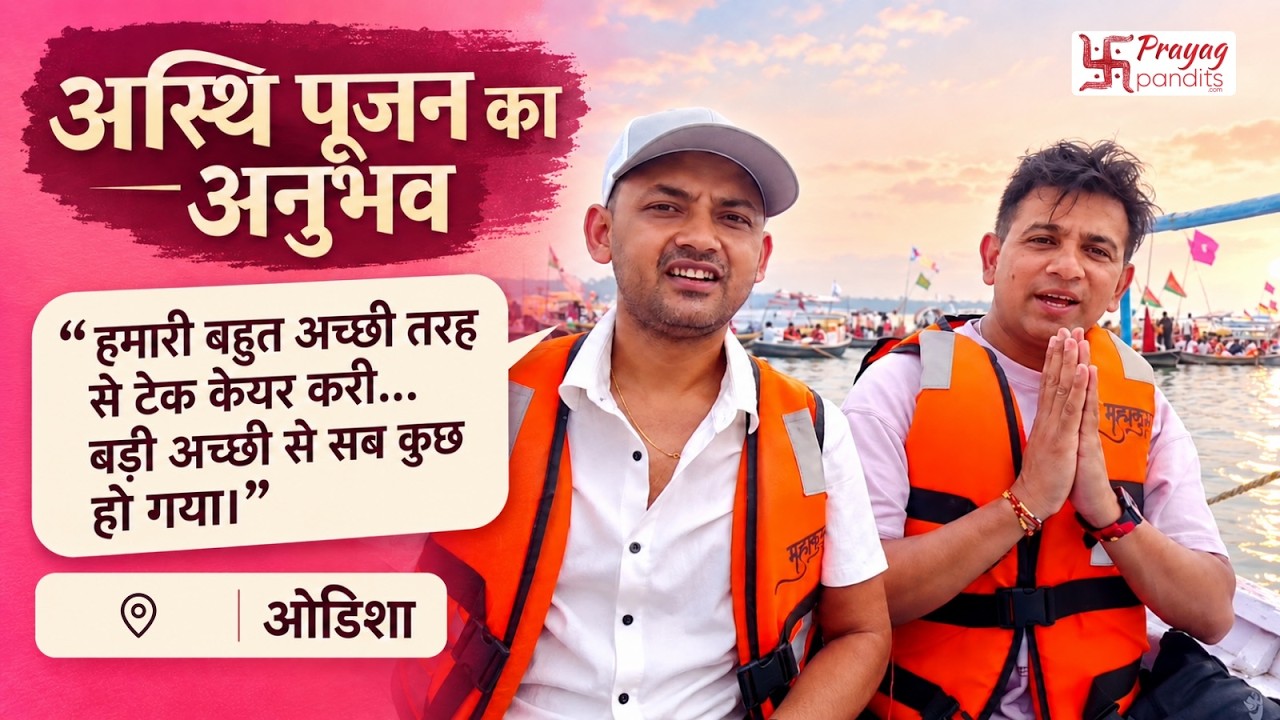
Families on video
The player loads only when you press play.




In their words
ऑनलाइन बुकिंग आसान थी। व्हाट्सएप पर जवाब तुरंत मिला। पूजा शुभ मुहूर्त में शुरू हुई और सही समय पर पूर्ण हुई। मूल्य भी उचित है। Dhanyavaad.
The online poojan option is great for people living abroad. We could participate from our home in the UK. The video was clear and the pandit made us feel included in every step of the ceremony.
Affordable and authentic poojan services. We compared several providers before choosing Prayag Pandits and we made the right choice. The quality of service matched what was promised. Dhanyavaad.
प्रयाग पंडित्स की सेवा से पूर्णतया संतुष्ट हूँ। उनकी टीम बहुत पेशेवर है और पंडित जी का ज्ञान गहन है। दूसरों को भी सिफारिश करूँगा। Dhanyavaad.
We have used Prayag Pandits twice now for different ceremonies. Both times the service was excellent. The team remembers returning customers and gives personal attention. Highly recommended. Dhanyavaad.
प्रयाग पंडित्स से दूसरी बार पूजा करवाई। दोनों बार अनुभव शानदार रहा। उनकी टीम पुराने ग्राहकों को याद रखती है और व्यक्तिगत ध्यान देती है। Dhanyavaad.
Booked a rite with us? Tell other families how it went.
Write a reviewQuestions families ask
The main Ganga Aarti is held every evening around sunset. In Varanasi at Dashashwamedh Ghat, it starts between 6:00 PM and 7:00 PM depending on the season — earlier in winter (October to March) and later in summer. In Haridwar at Har Ki Pauri, the timing similarly shifts with sunset, ranging from around 5:30 PM in December to 7:15 PM in June. Both locations also hold a smaller morning aarti at dawn, but the evening ceremony is the grand, must-attend experience.
There is no official dress code, but modest and culturally respectful clothing is expected. Cover your shoulders and knees — avoid shorts, sleeveless tops, or revealing outfits. Traditional Indian attire like a kurta-pyjama or saree is welcome but not mandatory. Wear comfortable footwear you can easily remove, since shoes must be taken off near the ghat. Lighter fabrics work well in Varanasi and Haridwar summers. The same guidelines apply at both Dashashwamedh Ghat and Har Ki Pauri.
Both have distinct characters and both are deeply spiritually powerful. Haridwar Ganga Aarti at Har Ki Pauri is famous for its massive scale, the Ganga flowing directly below the platform, and the ability of devotees to physically dip diyas into the river while the aarti is being performed. Varanasi Ganga Aarti at Dashashwamedh Ghat is famous for the seven synchronised priests performing choreographed movements with large brass lamps, the traditional music with shehnai and tabla, and the historic ambiance of the oldest living city. Haridwar is considered more "devotional" and close to the river; Varanasi is considered more "theatrical" and cultural. Many pilgrims visit both to experience each unique form. Both are part of our North India pilgrimage packages.
There is no formal dress code, but modest traditional attire is strongly recommended and culturally respectful. Men should wear kurta-pyjama, dhoti, or full-length trousers with a collared shirt. Women should wear saris, salwar-kameez, or long skirts with tops covering the shoulders. Avoid shorts, tank tops, or revealing clothing. Remove shoes before entering the main ghat area. Do not use flash photography during the aarti itself (allowed from distance). Silence your mobile phone or keep it on silent. Do not use the aarti lamps or diyas as props for selfies. Offering a small donation at the Ganga Sabha collection box is appreciated (optional). Following these simple etiquettes ensures a respectful and spiritually meaningful experience for all present.
Dress modestly: covered shoulders and knees are respectful at any religious site on the ghats. Traditional Indian attire (kurta-pyjama for men, salwar-kameez or sari for women) is always well-received and makes the experience more immersive. Remove footwear when stepping onto the main Aarti platform at Dashashwamedh Ghat. A light shawl or stole is useful for evenings, which can be cool in winter months.
Still have a question?
Ask our team on WhatsApp and we will help you plan the ceremony.
We reply on WhatsApp within 1–2 hours.
Ask a pandit (opens WhatsApp)Know your ceremony
Experience the beauty and spiritual significance of Ganga Aarti, a daily ritual held on the banks of the Ganges River in Varanasi. Attendees offer prayers, flowers, and other sacred items to the river believed to be a deity in Hinduism and a source of purification and salvation. The ceremony, attended by Hindus and tourists alike, includes chanting, music, and the lighting of lamps and incense. Dress modestly, show respect and reverence, and take in the rich cultural and spiritual traditions of Hinduism at this meaningful and immersive ceremony.
Ganga Aarti is a daily ritual performed at dusk on the banks of the Ganges River in the Hindu holy city of Varanasi. It is a centuries-old tradition that has become an integral part of the spiritual and cultural identity of Varanasi. Ganga Aarti is held in honour of the Ganges River, which is considered a deity in Hinduism and is revered as a source of purification and salvation.
During the ceremony, priests and attendees offer prayers, flowers, and other sacred items to the river in a ritual that is rich in symbolism and meaning. The ceremony typically takes place on a raised platform at one of the ghats (stairs leading down to the river) in Varanasi and is attended by a large crowd of devotees and tourists.
The Ganges River has played a central role in Hindu mythology and religious practices for thousands of years, and Ganga Aarti is just one of the many ways in which Hindus express their devotion to the river. The ceremony is not only a way to pay respects to the deity, but also a way to connect with the divine and seek blessings.
The Ganga Aarti ceremony is a multi-sensory experience that involves chanting, music, and the offering of various items to the river. The ceremony takes place on a raised platform, or aarti ghat, where a large altar is set up with an image of the Ganges River and a lamp that is lit during the ceremony.
The ceremony begins with the ringing of bells and the chanting of mantras by the priests, who are dressed in traditional Hindu attire. As the chanting continues, attendees join in and offer their own prayers and offerings to the river. These offerings may include flowers, incense, and small lamps that are lit and placed on the altar or floating in the river.
Throughout the ceremony, the priests move around the altar in a clockwise direction, making offerings and performing various rituals. The ceremony concludes with the blowing of a conch shell and the ringing of bells, signalling the end of the ritual.
While the priests play a central role in the ceremony, attendees also have the opportunity to participate by offering their own prayers and making their own offerings to the river. The ceremony is an inclusive and participatory experience that allows everyone in attendance to connect with the divine and seek blessings.
During the Ganga Aarti ceremony, attendees and priests alike offer various items to the Ganges River as a way of paying respects to the deity and seeking blessings. Some of the common offerings made during the ceremony include
Flowers: Flowers are a common offering made to the Ganges River, and are typically placed on the altar or floated in the river. In Hinduism, flowers are seen as a symbol of devotion and are often used to decorate altars and temples.
Incense: Incense is another common offering made during the Ganga Aarti ceremony. The fragrant smoke is believed to purify the air and create a sacred atmosphere and is often used in Hindu rituals and ceremonies.
Lamps: Small lamps, or diyas, are lit and placed on the altar or floated in the river as an offering to the Ganges River deity. The light of the lamp is seen as a symbol of enlightenment and the lamp itself is a symbol of knowledge and wisdom.
Fruits: Fruits are sometimes offered as a way of seeking blessings and nourishment from the deity.
Water: Water is a particularly important offering in the Ganga Aarti ceremony, as the Ganges River is seen as a source of purification and salvation. Attendees may offer small cups of water or pour water over the altar as a way of offering their devotion and seeking blessings.
In addition to these offerings, attendees may also make personal prayers and offerings, such as offering their own personal possessions or making monetary donations to the temple or priests.
The Ganga Aarti ceremony holds great spiritual and cultural significance for Hindus. The Ganges River is revered as a deity in Hinduism and is seen as a source of purification and salvation. Hindus believe that bathing in the waters of the Ganges or offering prayers and offerings to the river can help to cleanse the soul and bring one closer to enlightenment.
The Ganga Aarti ceremony is also a way for Hindus to connect with their culture and traditions. For many Hindus, participating in the ceremony is a way to express their devotion to the Ganges River and to reaffirm their connection to their faith.
Additionally, the Ganga Aarti ceremony has become an important tourist attraction in Varanasi, and many non-Hindus attend the ceremony out of curiosity or to learn more about Hinduism and Indian culture. The ceremony is a visually stunning and immersive experience that offers a glimpse into the rich spiritual and cultural traditions of Hinduism.
If you are interested in attending a Ganga Aarti ceremony in Varanasi or any other city, there are a few things to keep in mind to ensure that you have a meaningful and respectful experience. Here are some tips for visiting Ganga Aarti:
Best time to go: Ganga Aarti is held daily at dusk, so you can choose a time that works best for your schedule. Many people prefer to attend the ceremony in the evening, as the setting sun provides a beautiful backdrop for the ceremony.
What to wear: It is important to dress modestly and respect local customs when attending the Ganga Aarti ceremony. Men should wear trousers or knee-length shorts, and women should wear long skirts or skirts that cover the knees. It is also a good idea to remove your shoes before entering the aarti ghat.
Cultural considerations: Ganga Aarti is a sacred ceremony for Hindus, and it is important to show respect and reverence while attending. Avoid taking photos or videos during the ceremony, and be mindful of your surroundings and behaviour.
Nearby attractions: Varanasi is a city with a rich history and cultural heritage, and there are many other attractions and activities to enjoy while you are there. Some popular attractions in the area include the Kashi Vishwanath Temple, the Sarnath Archaeological Museum, and the Ramnagar Fort.
By following these tips, you can have a meaningful and respectful experience while attending the Ganga Aarti ceremony in Varanasi.
In conclusion, the Ganga Aarti ceremony is a daily ritual performed on the banks of the Ganges River in Varanasi that is rich in symbolism and spiritual significance. The ceremony involves the offering of prayers, flowers, and other sacred items to the river, and is attended by a large crowd of devotees and tourists.
The Ganges River is revered as a deity in Hinduism and is seen as a source of purification and salvation. The Ganga Aarti ceremony is a way for Hindus to connect with the divine and seek blessings, as well as a way to express their devotion to their faith and cultural traditions.
For those interested in attending the Ganga Aarti ceremony, it is important to dress modestly, show respect and reverence, and be mindful of local customs. Varanasi is a city with a rich history and cultural heritage, and there are many other attractions and activities to enjoy while you are there.
Overall, the Ganga Aarti ceremony is a beautiful and meaningful experience that offers a glimpse into the spiritual and cultural traditions of Hinduism. Whether you are a Hindu seeking blessings or a tourist looking to learn more about Indian culture, the Ganga Aarti ceremony is an experience that is not to be missed.