





What’s included
Included in your package
- Online Shradh Poojan at Har Ki Pauri, Haridwar live video
- Experienced pandit Pitrupaksha & Haridwar traditions
- Complete samagri sesame, kusha, flowers, rice, Pind ingredients, Gangajal
- Tarpan with three-generation ancestral invocation
- Pind offering per tradition
- Sankalpa with family & ancestor names
- Live video call + recorded meeting via Google Meet / Zoom within 72 hours
Not included in your package
- Physical travel to Haridwar (this is online)
- Narayan Bali / Tripindi Shradh (separate ceremonies)
- Brahmin Bhojan / Gau Daan (available as add-ons)
- Puja for other deities
- Extra Dakshina/Gifts/Donations made to the Priest/Pandit
How it works
Choose your pooja
Review your package and any available additions, then add it to your booking.
Share your preferences
Enter your contact details, preferred date and time. Add ancestral details if you wish.
We coordinate with you
Our team confirms the arrangements and shares your coordinator’s details 24 hours before the pooja.
Participate in your pooja
Follow the participation and joining arrangements described in your package and shared by your coordinator.
What families say after the rite
From families who booked Online Shradh Poojan in Haridwar Pitrupaksha 2026.
Rated 4.8 out of 5
500+ reviews · Prayag Pandits
This poojarated 4.5 out of 520 reviews
Our pandits








- 2,263+ families served
- Serving since 2019
- GST registered
Families on video
The player loads only when you press play.

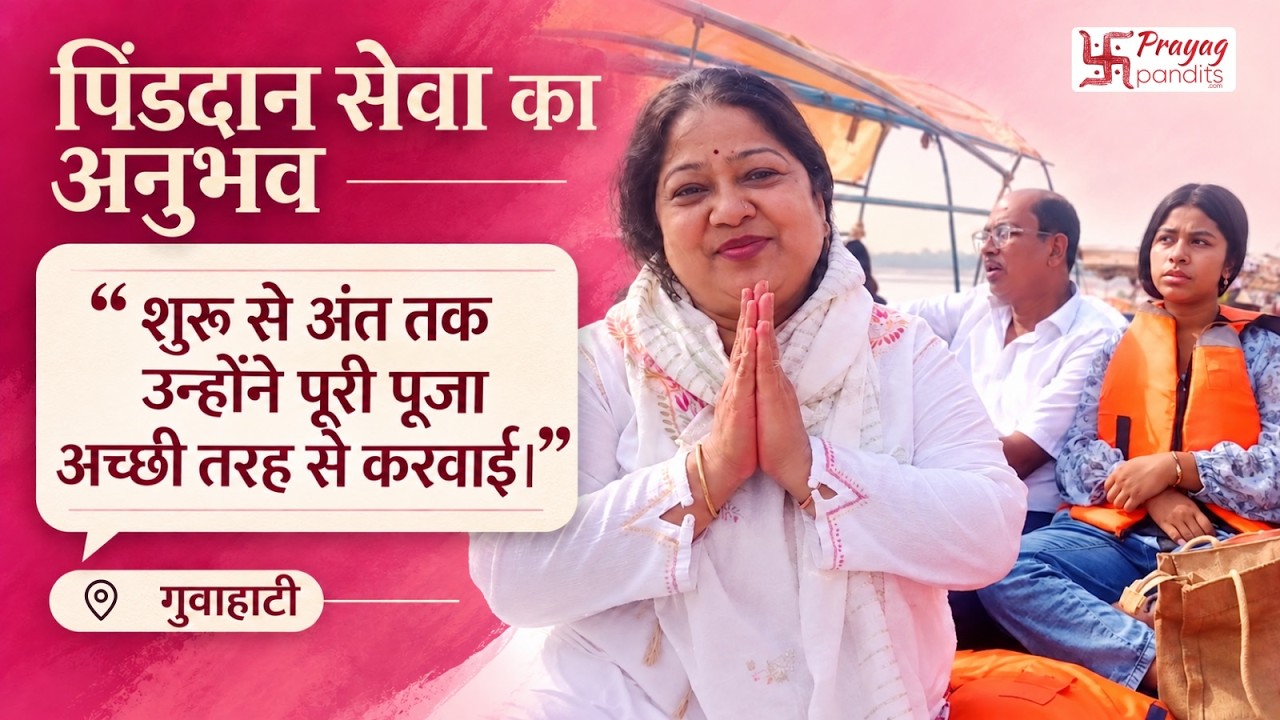



In their words
Thoroughly impressed with the professionalism. The pandit ji was punctual and well prepared with all the samagri.
पिंडदान की पूरी व्यवस्था बहुत अच्छी थी। पंडित जी ने सभी मंत्रों का सही उच्चारण किया और हर विधि को विस्तार से समझाया। परिवार के सभी सदस्य संतुष्ट हैं। प्रयाग पंडित्स की सेवा सराहनीय है।
Third time booking with Prayag Pandits. Always reliable service. The pandits are well versed in the scriptures and perform rituals with full devotion. The pricing is fair and transparent. No hidden charges. Dhanyavaad.
We are NRI family based in USA. We booked online poojan and it was conducted very sincerely. The video quality was good and we could see everything clearly. The team sent us photos and videos after the ceremony too. 🙏
My family performed Pind Daan through Prayag Pandits and it was a deeply spiritual experience. The location was serene and the pandit's chanting was beautiful. We felt connected to our ancestors throughout the ceremony. Om Shanti.
प्रयाग पंडित्स की टीम बहुत सहयोगी है। बुकिंग से लेकर पूजा तक सब कुछ सुव्यवस्थित था। पंडित जी ने मंत्रों के अर्थ भी बताए जो बहुत ज्ञानवर्धक था। Jai Shri Ram.
Booked a rite with us? Tell other families how it went.
Write a reviewQuestions families ask
Haridwar, one of the seven holiest cities (Sapta Puri) in Hinduism, holds immense significance for Shradh due to:
- The Holy Ganges: The Ganga river, believed to originate from the heavens, enters the plains at Haridwar. Performing Shradh on its banks or offering Pindas into its pure waters is considered highly effective in reaching the ancestors and granting them peace and salvation.
- Sacred Ghats: Haridwar boasts specific Ghats like Kushavarta Ghat and holy sites like Narayani Shila Temple, which are traditionally designated and considered potent for ancestral rites.
- Spiritual Energy: As a major pilgrimage hub and the "Gateway to God," Haridwar possesses a powerful spiritual atmosphere conducive to performing such important rituals.
- Scriptural Sanction: Texts like the Garuda Purana mention Haridwar as a key Tirtha (pilgrimage site) for performing Shradh and Pind Daan for ancestral liberation.
Shradh can be performed in Haridwar on several occasions:
- Pitru Paksha: This 16-lunar day period (usually Sept/Oct) is the most auspicious time dedicated solely to ancestor worship. Performing Shradh in Haridwar during Pitru Paksha is considered highly meritorious.
- Death Anniversary (Tithi): Performing Shradh on the annual Tithi (lunar date) of the ancestor's death according to the Hindu calendar is a primary observance.
- Amavasya (New Moon): Every Amavasya is suitable for Tarpan and Shradh, especially the Amavasya during Pitru Paksha (Sarva Pitru Amavasya).
- Pilgrimage: Anytime one undertakes a pilgrimage to Haridwar is considered a good time to perform Shradh for ancestors.
- Consulting a local Pandit for an auspicious date and time (Muhurat) is always recommended.
Guided by a Pandit at a designated Ghat or temple like Narayani Shila, the process typically involves:
- Purification: Taking a holy dip (Snan) in the Ganges.
- Sankalpa: Making a formal resolution (vow) specifying for whom the Shradh is being performed.
- Invocation: Invoking gods and the ancestors to accept the offerings.
- Pind Daan: Preparing and offering Pindas (balls of rice/barley flour, sesame seeds, honey, ghee, milk) to specific ancestors (usually three paternal and three maternal generations).
- Tarpan: Offering water mixed with black sesame seeds to quench the thirst of ancestral spirits.
- Puja: Performing worship with flowers, incense, etc.
- Brahmin Bhoj / Daan: Offering food (Bhojan) and Dakshina (fees/gifts) to the officiating Brahmin(s), as feeding Brahmins is believed to satisfy the ancestors.
- At Key Locations: Pandits specializing in Shradh are readily available at Kushavarta Ghat, Narayani Shila Temple, and Har Ki Pauri.
- Local Inquiry: Ask at established temples or seek recommendations from locals or accommodation providers.
- Online Platforms: Numerous websites now facilitate booking verified and experienced Pandits for Shradh in Haridwar (e.g., Prayag Pandits, 99Pandit, Pitradev, Yatradham, Diyabati). These platforms often provide details on Pandit experience, languages spoken, and specific ritual packages.
- Community Records: Traditionally, Tirth Purohits in Haridwar maintain records (Bahis) for families from specific regions, and you might find a Pandit associated with your ancestral region.
Common materials include rice flour, barley flour (Jau), black sesame seeds (Kala Til), Kusha grass (Darbha), honey, ghee, milk, flowers, fruits, betel leaves/nuts, Gangajal, uncooked rice, and items for Brahmin Daan (like grains, cloth). Yes, all these materials are easily available for purchase in shops near the Ghats and temples in Haridwar. Many Pandits or service packages include the cost of Samagri.
Yes. If you do not know the Tithi on which your ancestor passed away, the ceremony can be performed on Sarva Pitru Amavasya — the last day of Pitrupaksha, which is October 10, 2026. Sarva Pitru Amavasya is specifically designated for offering Shradh to all ancestors, including those whose Tithi is unknown. The scriptures affirm that this day carries equal potency for all ancestral offerings.
The intention behind a ritual is its foundation. The Bhagavad Gita states that offerings made with sincerity and devotion reach the recipient regardless of form. The pandit performs every physical element of the ceremony correctly and completely at the actual ghat in Haridwar. The offerings enter the actual Ganga. The mantras are chanted in full. Your participation via video call does not diminish any of this — it is simply the means by which you witness and sanction the ceremony. Many traditional pandits and scholars affirm the validity of this format for devotees who cannot travel in person.
Tarpan is the offering of water mixed with sesame seeds, kusha grass, and sometimes milk or honey, made while reciting the names of ancestors. It satisfies and refreshes the ancestral soul. Pind Daan involves preparing balls of cooked rice or barley mixed with sesame and honey — called Pind — and offering them at the water’s edge while chanting specific mantras. Pind Daan is considered more complete and provides nourishment to the ancestor’s subtle body. In a full Shradh ceremony, both Tarpan and Pind offering are performed.
No. Shradh is performed only for those who have departed from this world. Performing Shradh for a living person is considered inauspicious according to tradition. If you wish to perform a ceremony for the long life and health of elderly parents or grandparents, a separate Ayushya Homa or Mahamrityunjaya Puja is the appropriate ritual — please contact us and we will guide you accordingly.
Still have a question?
Ask our team on WhatsApp and we will help you plan the ceremony.
We reply on WhatsApp within 1–2 hours.
Ask a pandit (opens WhatsApp)Know your ceremony
There is a particular stillness that settles over Haridwar during Pitrupaksha. The ghats fill with white-clad pilgrims, the air carries the fragrance of sesame and marigold, and the Ganga flows steady and clear as though she too is receiving the prayers of a thousand families. This is the fortnight when Hindus across the world pause to honor those who came before them — parents, grandparents, ancestors reaching back through generations — and to offer them what the scriptures call tripti: the satisfaction of knowing they are remembered, loved, and released.
Prayag Pandits now makes it possible for you to participate fully in this sacred ceremony from wherever you are in the world. Our Online Shradh Poojan in Haridwar brings the complete ritual — Tarpan, Pind offering, Vedic mantras, and the blessings of the Ganga — directly to you through a live video call, performed by an experienced pandit at one of Haridwar’s most auspicious ghats during Pitrupaksha 2026 (September 26 to October 10, 2026).
Shradh is one of the most ancient and enduring practices in Hindu tradition. The word itself comes from the Sanskrit root shraddha, meaning faith — and Shradh is, at its heart, an act of faithful remembrance. It is the ritual through which a family acknowledges its debt to those who gave them life, maintained the household, and upheld dharma across generations.
The Garuda Purana and the Vishnu Purana both speak at length about the importance of Shradh. According to these texts, the souls of departed ancestors exist in a liminal state, and the offerings made by their descendants during Pitrupaksha reach them directly, providing nourishment and enabling them to progress toward moksha. The scriptures describe how ancestors who go un-honored become restless, and how the merit generated by a properly performed Shradh benefits not just the deceased but the entire living family — bestowing health, prosperity, and the removal of ancestral curses known as Pitru Dosha.
Shradh is not a funeral. It is a celebration of continuity — the recognition that a family is not just those who are alive today but a chain of souls stretching backward and forward through time. To perform Shradh is to place yourself consciously in that chain and to take responsibility for your place within it.
To understand the full range of Shradh types and their philosophical basis, read our guide: Shradh Karm 101: A Deep Dive into Types, Rituals, Philosophy, and Importance in Hinduism.
Every place has its own spiritual weight, and Haridwar carries the weight of countless ages of devotion. Haridwar — literally “the gateway to Hari (Vishnu)” or, in another reading, “the door to God” — is one of the seven sacred cities named in the Puranas as most conducive to liberation. The Ganga arrives here fresh from the mountains, having passed through Gangotri, Rishikesh, and the sacred forests of the Himalayas, and she meets the plains for the first time at Har Ki Pauri, the ghat that Hindus regard as especially potent for ancestral rites.
There are several reasons why Shradh performed at Haridwar carries exceptional merit:
- The Ganga at Haridwar is considered especially pure — it is here that the river transitions from mountain to plain, and the water carries the blessings of the entire Himalayan stretch upstream
- Har Ki Pauri and the surrounding ghats have been the site of Shradh ceremonies for thousands of years, creating a concentrated field of spiritual energy that amplifies individual rituals
- The presence of learned pandits who have maintained the Haridwar pandit lineage across generations ensures that mantras are recited correctly and rituals are performed according to Vedic and Puranic authority
- Haridwar is mentioned explicitly in the Puranas as a location where offerings reach ancestors swiftly and completely
- Performing Shradh at a Maha Teertha like Haridwar during the specific fortnight of Pitrupaksha compounds the merit manyfold compared to ordinary days
Our online format is designed so that every essential element of the ceremony is present and complete. You participate through a live video call — you see the ghat, you hear the mantras, you watch the offerings enter the water — while our pandit handles the physical aspects of the ritual on your behalf.
- Experienced Pandit: A pandit well-versed in Pitrupaksha rituals and Haridwar traditions, from a lineage that has performed these ceremonies at the Ganga for generations
- Complete Samagri: All ritual materials — sesame seeds (til), kusha grass, flowers, rice, barley, dhoop, deepak, and the specific items required for Pind — are arranged and used in the ceremony on your behalf
- Tarpan: The offering of water mixed with sesame seeds and kusha grass, made while chanting the names of ancestors across three generations. Tarpan satisfies the souls of ancestors and is the foundational act of Pitru Karma
- Pind Offering: The preparation and offering of Pind — balls of cooked rice or barley mixed with sesame and honey — which are offered to the ancestors through specific Vedic rituals. The Pind symbolically serves as food for the departed soul
- Vedic Mantras: The correct Sanskrit mantras from the relevant portions of the Rigveda, Yajurveda, and Pitru Sukta are chanted throughout, addressing each category of ancestor by name and relationship
- Video Recording: The ceremony is recorded in full and sent to you afterward, so you have a permanent record of the ritual performed in your family’s name
- Live Video Call: The ceremony is conducted live over video call so you can witness every moment, hear the mantras, and feel present at the ghat
The process is straightforward and requires minimal preparation on your part.
- Book and share details: After booking, you fill a short form with the names of your departed ancestors (father, mother, paternal grandparents, maternal grandparents, and any others you wish to include), their relationship to you, and the Tithi (lunar date) on which they passed away if you know it
- Receive your appointment: We assign you a specific date within Pitrupaksha 2026 that corresponds to the appropriate Tithi for your ancestors, or Sarva Pitru Amavasya (October 10, 2026) if you are performing Shradh collectively
- Join the live call: At the scheduled time, you join a video call from any device. The pandit is at the ghat in Haridwar with all materials ready
- Participate as guided: The pandit leads the ceremony. At key moments you are asked to join in with specific words or gestures. For the rest, you observe and hold the intention in your heart
- Receive prasad and recording: The prasad (sacred food from the ceremony) is distributed at the ghat to brahmins or cows as per tradition. The video recording of your ceremony is shared with you within 24 hours
According to Hindu tradition, Shradh is ideally performed by the eldest son of the family — the karta. However, the scriptures also clarify that any family member can perform Shradh when circumstances prevent the karta from doing so. Daughters can perform Shradh for their parents’ peace. Grandchildren can perform it for grandparents. A wife can perform it for a husband who has passed away.
You should consider performing Shradh at Haridwar during Pitrupaksha if:
- You have lost a parent, grandparent, or ancestor within the past year (first Shradh is especially important)
- You have never performed Shradh for ancestors who passed away years or decades ago
- You or members of your family are experiencing recurring difficulties that astrologers or elders have associated with Pitru Dosha
- You wish to mark a milestone — a marriage, a birth, a new home — with an offering of gratitude to the ancestors who made your present life possible
- You live abroad and have been unable to return to India for the ceremony in previous years
- You wish to perform Shradh at Haridwar specifically but cannot travel at this time
Pitrupaksha 2026 falls from September 26 to October 10. These fifteen days of the Bhadrapada month, in the Krishna Paksha (waning fortnight), are when the boundary between the world of the living and the realm of ancestors is believed to be at its thinnest. The Puranas describe how Yamraj — the deity of death and dharma — grants ancestors special leave during this fortnight to receive offerings from their descendants.
Each day of Pitrupaksha corresponds to a specific Tithi, and the Shradh for an ancestor is ideally performed on the Tithi that matches the day they died in the lunar calendar. The final day, Sarva Pitru Amavasya (also called Pitru Amavasya or Mahalaya), is the most powerful day of all — on this day, Shradh performed benefits all ancestors regardless of the Tithi of their passing.
During Pitrupaksha, Haridwar takes on a particular character. The usual roar of the city quiets to something more measured. Families who have traveled from across India arrive at the ghats carrying flowers and sesame. Pandits conduct ceremony after ceremony at the water’s edge, their voices carrying mantras across the current. The Ganga herself seems to move differently — perhaps it is just the angle of the late-season light, or perhaps it is exactly what the scriptures say it is.
Through the video call, you are present in this atmosphere. You see the ghat, the river, and the ritual unfolding in real time. Many families find that the experience of watching the Pind enter the water and hearing their ancestors’ names called out in Sanskrit mantras is genuinely moving — a moment of connection across the distance of death itself.