

What’s included
Included in your package
- Shradh Poojan at Ganga Ghat, Varanasi
- Experienced Kashi-trained pandit
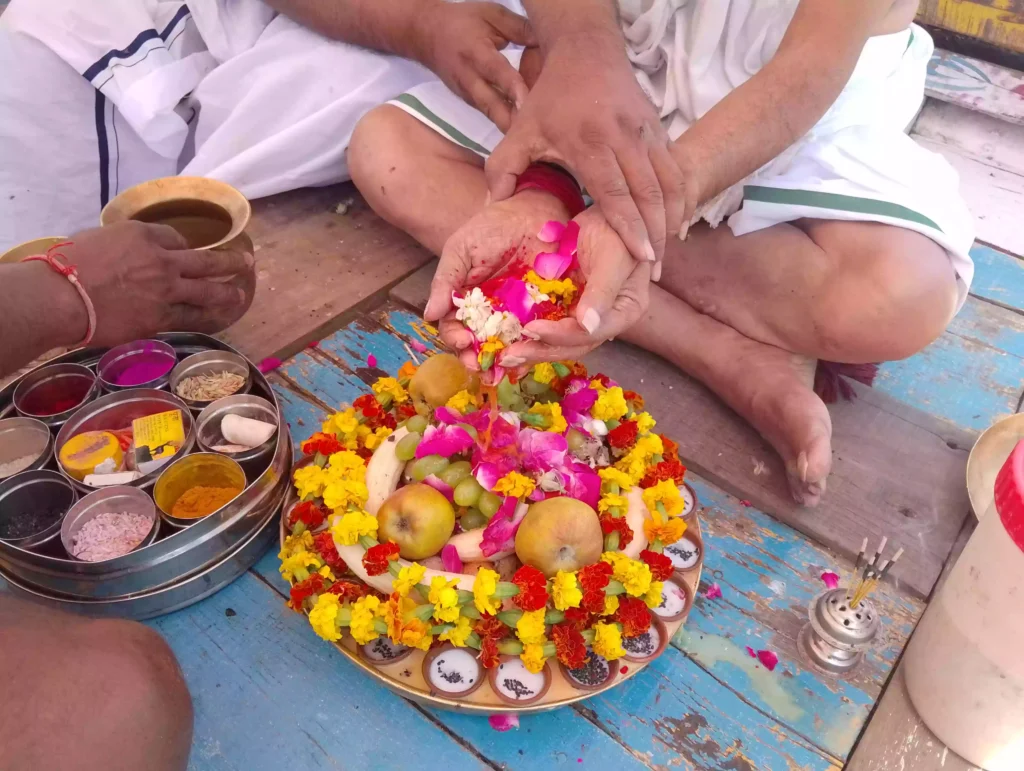
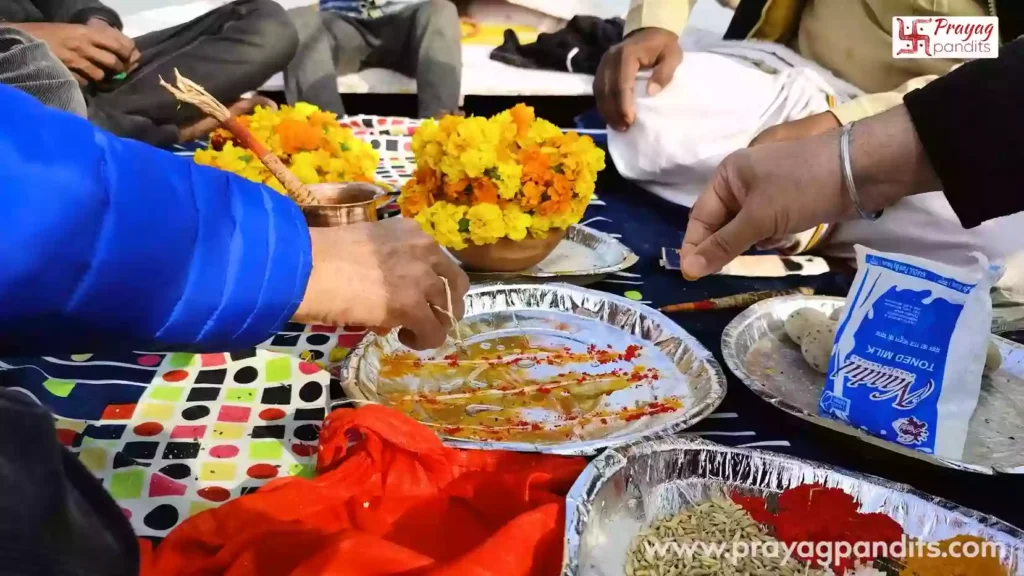
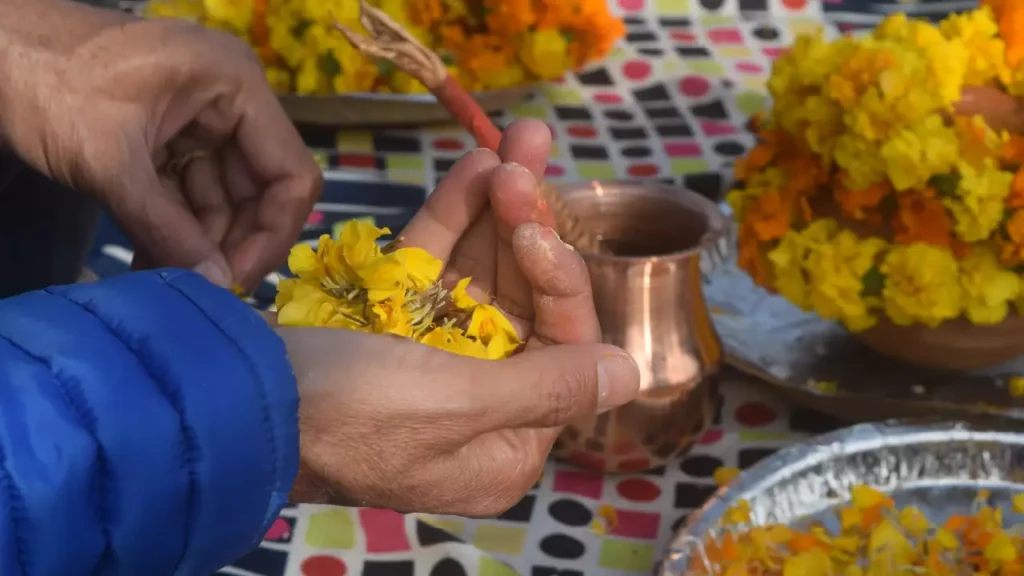
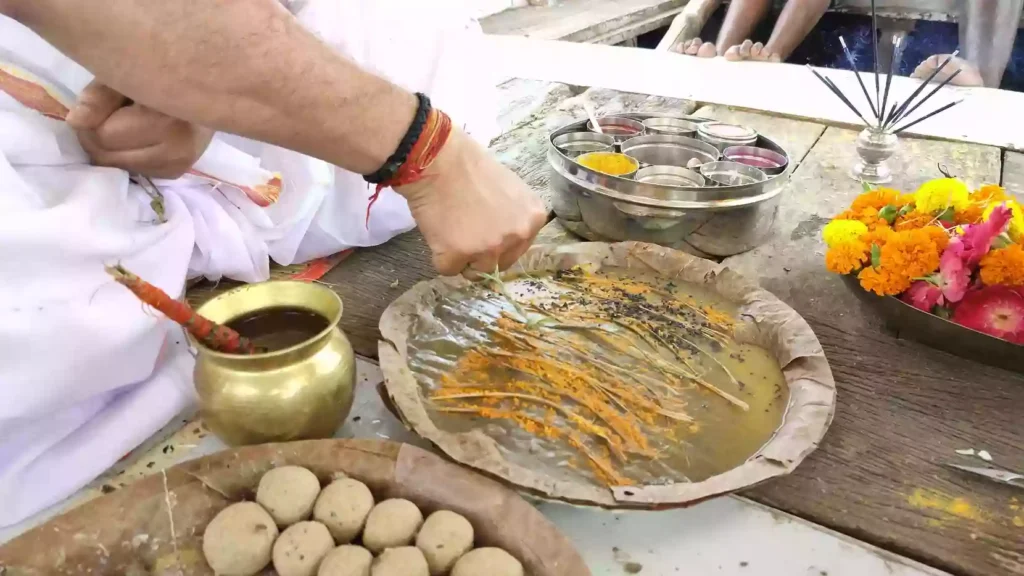
- All samagri sesame, kusha, Gangajal, rice, Pind ingredients, flowers, incense
- Tarpan with three-generation ancestral invocation
- Pind offering per tradition
- Sankalp with family name, gotra & ancestor names
Not included in your package
- Travel to Varanasi
- Accommodation
- Station / airport pickup & drop
- Narayan Bali / Tripindi Shradh / Pind Daan (separate ceremonies)
- Photography / videography
- Extra Dakshina/Gifts/Donations made to the Priest/Pandit
How it works
Choose your pooja
Review your package and any available additions, then add it to your booking.
Share your preferences
Enter your contact details, preferred date and time. Add ancestral details if you wish.
We coordinate with you
Our team confirms the arrangements and shares your coordinator’s details 24 hours before the pooja.
Arrive for your pooja
Our team guides you to the designated pooja area and helps you participate in the ceremony.
What families say after the rite
From families who booked Shradh at Varanasi | Shradh Poojan in Kashi.
Rated 4.8 out of 5
500+ reviews · Prayag Pandits
This poojarated 4.4 out of 520 reviews
Our pandits


- 2,263+ families served
- Serving since 2019
- GST registered
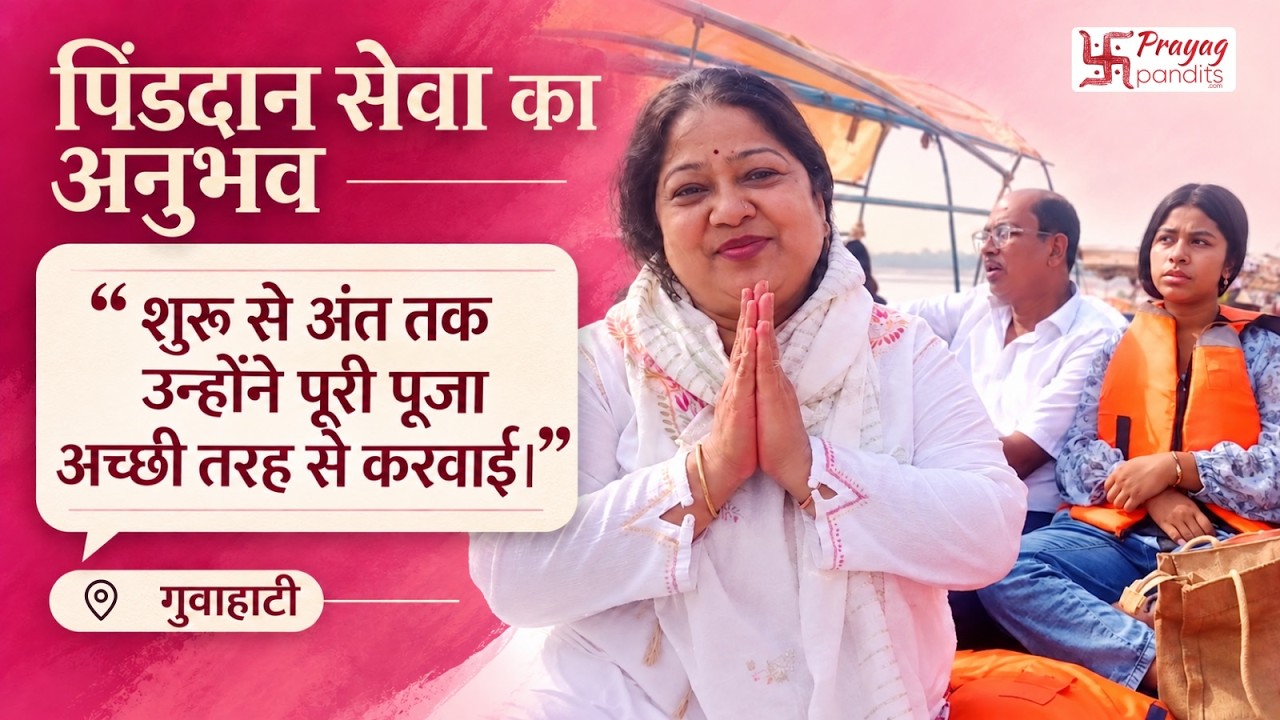
Families on video
The player loads only when you press play.




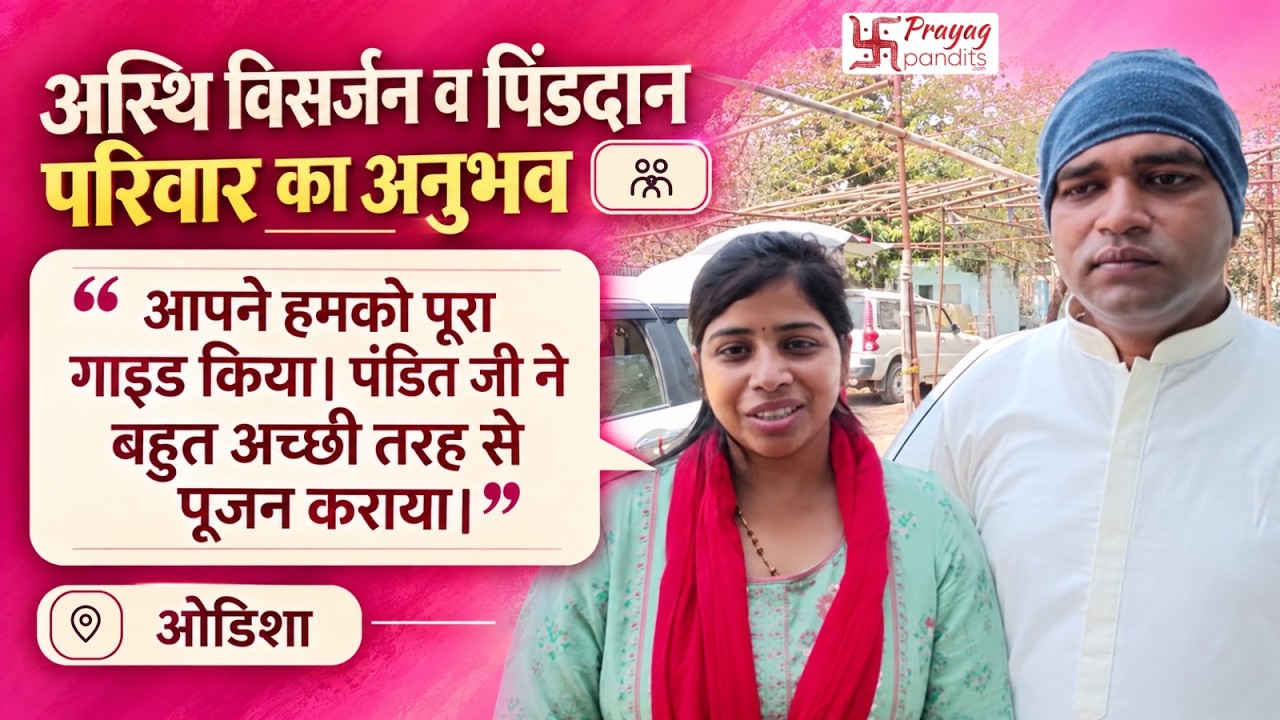
In their words
Good service overall. The pandit was on time and well prepared. He guided us through each step of the ceremony. The booking process was simple and the team was responsive on WhatsApp. Would recommend to others.
बहुत संतोषजनक सेवा। पंडित जी का वेद-शास्त्र का ज्ञान अद्भुत था। उन्होंने गरुड़ पुराण के श्लोकों का पाठ किया जो बहुत मार्मिक था। पूरा परिवार भावुक हो गया।
पिंडदान की पूरी व्यवस्था बहुत अच्छी थी। पंडित जी ने सभी मंत्रों का सही उच्चारण किया और हर विधि को विस्तार से समझाया। परिवार के सभी सदस्य संतुष्ट हैं। प्रयाग पंडित्स की सेवा सराहनीय है। Jai Shri Ram.
After losing my father suddenly we needed guidance on the proper rituals. Prayag Pandits team was very compassionate and helped us through every step. The Pind Daan brought us immense peace. Jai Shri Ram.
First time performing Pind Daan and was nervous about the process. But the team guided us well. They explained what to wear, what to bring, and what mantras to recite. Everything went smoothly.
We booked Pind Daan for our late father's shradh ceremony. The pandits were very knowledgeable and performed all rituals with proper Vedic mantras. The whole family felt at peace after the poojan. Highly recommended for anyone looking for authentic rituals. Jai Shri Ram.
Booked a rite with us? Tell other families how it went.
Write a reviewQuestions families ask
Kashi is no ordinary city. It is the city of Lord Shiva, the Moksha-Dayini Nagari (city that grants liberation). Performing Shradh here, especially Pind Daan on the banks of Maa Ganga, is believed to grant ultimate peace (Sadgati) and liberation (Moksha) to the departed souls. It is said that ancestors receive immense satisfaction when their descendants perform these rites in Kashi, helping them ascend peacefully to higher realms or even break the cycle of rebirth.The energy of this place, combined with the purity of the Ganga, amplifies the merit of the ritual manifold.
While variations exist, the core components usually include:
- Sankalpa: Taking a vow to perform the Shradh with the names and Gotra (lineage) of the ancestors (usually three generations).
- Avahana: Invoking the ancestors to be present and accept the offerings.
- Pind Daan: Offering Pindas (rice balls mixed with barley flour, black sesame seeds, honey, milk etc.) which symbolise the subtle body of the ancestors. This is a central part of the ritual.
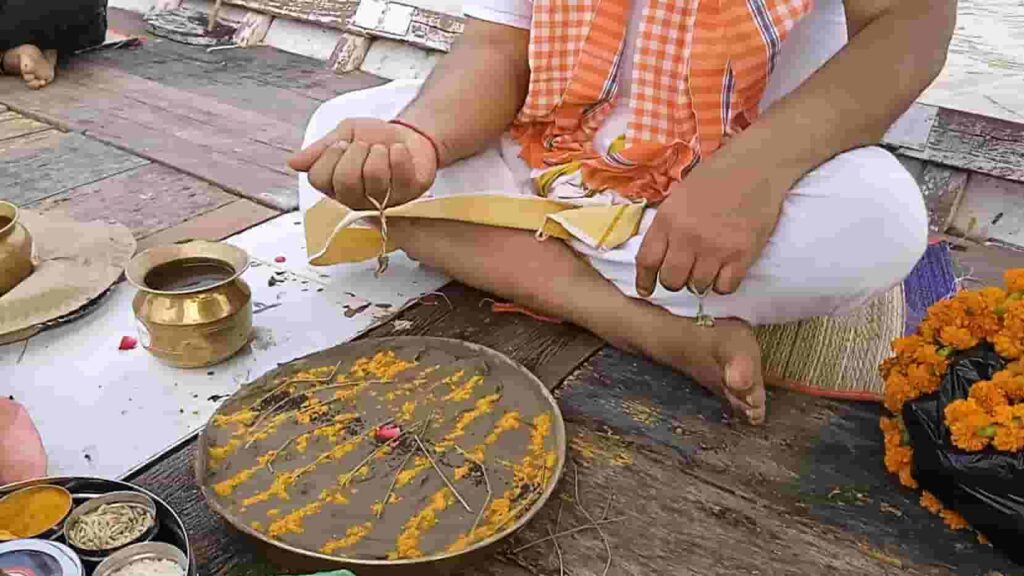
- Tarpan: Offering water mixed with black sesame seeds to quench the thirst of the Pitrus.
- Brahman Bhojan/Dakshina: Feeding learned Brahmins or offering them food items and Dakshina (monetary offering). It's believed ancestors receive nourishment through the Brahmins.
- Pancha Bali: Offering food to cows, dogs, crows, ants, and Devas, recognizing the interconnectedness of all beings.
- Prayer & Visarjan: Praying for the peace and liberation of the ancestors and bidding them farewell.
Pind Daan is the heart of the Shradh ritual. The 'Pinda' (rice/barley ball) is offered as a symbolic body for the ancestor's soul (Atma). It is believed that this offering provides nourishment and energy to the departed souls, helping them in their journey after death.
In Varanasi, performing Pind Daan on the banks of the Ganga is exceptionally potent. It is believed that Lord Shiva himself grants liberation to souls whose last rites or Shradh are performed here. This act helps free the ancestors from attachments, sufferings, or unfavorable states (like Preta Yoni) and propels them towards Moksha (liberation), which is the ultimate goal. Offering Pind Daan in Kashi is considered one of the highest duties a descendant can perform for their ancestors.
Narayan Bali Puja is another important ritual, often performed in conjunction with or in similar contexts as Tripindi Shradh, though distinct. It is primarily done to appease Lord Vishnu (Narayan) for souls who suffered an unnatural death (Durmaran), such as death by accident, suicide, animal attack, snake bite, fire, curse, or certain diseases. It is also performed if regular funeral rites weren't properly conducted.
The ritual aims to fulfill the unsatisfied desires of such souls, preventing them from becoming restless spirits (like Preta or Pishacha) that might trouble descendants (causing Pitru Dosh). It helps these souls achieve liberation (Moksha). Like Tripindi Shradh, it is often performed at potent sites like Varanasi (or Trimbakeshwar, Gaya, etc.) to maximize its effect. It addresses the liberation of specific souls rather than general ancestral appeasement across three generations, like regular Shradh.
Yes, in recent times, especially for those unable to travel (like NRIs, elderly, or due to health/work constraints), some Pandits and organizations in Varanasi]i offer online Shradh services.
How it works: You provide the necessary details (ancestor names, Gotra, etc.). The Pandit performs the rituals (Pind Daan, Tarpan) on your behalf at the designated Ghat in Varanasi at an agreed time. Often, this is done via live video call (like Zoom, WhatsApp video) so you can witness and participate remotely. They may also send you a recording afterwards.
Reliability: While convenient, ensure you choose a reputable and trustworthy service. Check reviews, ask for references if possible, and confirm exactly what will be performed and how you can participate/verify it. While physical presence holds immense significance, performing the rites remotely with faith is certainly better than not performing them at all, as per interpretations of scriptures like the Garuda Purana allowing rites by proxy
They are related but distinct. Shradh is the broader set of ancestral rites — it includes tarpan (water offerings), pind daan (rice-ball offerings), brahmin feeding, and prayers. Pind Daan is specifically the rice-ball offering, which is one important element within Shradh. Our Shradh Poojan package includes all these elements together, making it a complete ancestral ceremony. If someone recommends only Pind Daan, that is a shorter ceremony focused on the pind offering. If they recommend Shradh, they mean the full set of rites.
Both options are available. If you can travel to Varanasi, we strongly encourage you to come in person — being physically present at the Ganga for your family member’s Shradh is a deeply meaningful experience. However, if travel is not possible, our pandit can perform the ceremony as your pratinidhi (representative) with your sankalp given over a phone or video call. We will send you photographs of the ceremony afterward.
Manikarnika Ghat is the most traditionally significant ghat for all death-related rites, including Shradh. However, it is also the city’s primary cremation ground and may feel overwhelming or emotionally intense for some families. Dashashwamedha Ghat is another excellent option — equally sacred, slightly more accessible, and the site of the famous evening Ganga Aarti. Assi Ghat and Pishach Mochan Kund are also used for specific types of Shradh. Our pandit will recommend the most appropriate ghat based on your specific puja requirements.
Shradh can be performed on the death anniversary (tithi) of the departed at any time of year. Additionally, every Amavasya (new moon day) is auspicious for ancestral rites. Pitrupaksha (16 days in September–October) is the most sacred period. Certain Amavasyas — particularly Somvati Amavasya (new moon on a Monday) — are considered especially powerful for Shradh and draw large gatherings at the Varanasi ghats.
For regular dates throughout the year, booking 5–7 days in advance is usually sufficient. During Pitrupaksha, we strongly recommend booking at least 3–4 weeks ahead, as this is the busiest period for all Shradh services in Kashi and slots fill up quickly. For Mahalaya Amavasya (the final and most important day of Pitrupaksha), booking 6–8 weeks in advance is advisable.
Still have a question?
Ask our team on WhatsApp and we will help you plan the ceremony.
We reply on WhatsApp within 1–2 hours.
Ask a pandit (opens WhatsApp)Know your ceremony
Of all the sacred cities in India, Kashi — the ancient name for Varanasi — holds a place in the Hindu heart that no other tirtha quite matches. It is the city that Lord Shiva himself is said to never leave. It is where the Ganga flows northward, against her own natural course, as if bowing in reverence. And it is here, on the burning ghats and the moss-worn stone steps that descend to the river, that countless families have come for millennia to fulfil their most sacred duty to the dead: Shradh Poojan.
If your family has lost a loved one and you wish to perform their Shradh in a place of the deepest spiritual power, our Shradh Poojan in Kashi service brings this experience to you with everything arranged — the pandit, the puja samagri, the location, and the guidance — so that you can focus entirely on your prayers and your grief, without the burden of logistics in an unfamiliar city.
The Skanda Purana, one of the largest of the 18 Mahapuranas, contains an entire section called the Kashi Khanda dedicated to the glories of this city. It states that dying in Kashi is itself a form of liberation — Lord Shiva whispers the Taraka Mantra into the ears of every soul that departs from Kashi, ensuring their moksha regardless of their accumulated karma. This tradition of liberation makes Kashi the most auspicious place not only for death itself but for all rites connected to the dead.
The Garuda Purana specifically recommends that Shradh performed on the banks of the Ganga at Kashi carries merit equal to a hundred years of regular Shradh. The Ganga at Kashi is said to be especially charged because she receives the ashes and offerings of countless souls over thousands of years — the river herself becomes a conduit to Pitru Lok (the realm of ancestors). When tarpan water is offered here, the tradition holds that it reaches the departed with particular directness.
Two ghats in Kashi are especially significant for Shradh. Manikarnika Ghat — the main cremation ground of Varanasi, where fires have reportedly never been extinguished for thousands of years — is considered the most powerful place on Earth for last rites and post-death ceremonies. You can read more about this extraordinary place in our dedicated guide on Manikarnika Ghat and its mythological roots. Dashashwamedha Ghat, where the famous evening Ganga Aarti takes place, is another principal location for Shradh and tarpan, considered to carry the merit of ten Ashwamedha Yagnas.
Shradh in Kashi is appropriate for all Hindus who wish to honour their departed ancestors. It is particularly meaningful in these situations:
- The deceased had a lifelong wish to visit or die in Kashi, and fulfilling that wish through their post-death rite feels like completing an unfinished promise
- Your family has been performing Shradh at home or locally but wishes to perform a more thorough, tirtha-based ceremony at least once
- The departed soul died far from any tirtha — in a hospital, at home, in an accident — and you feel the Shradh at a major sacred site will provide additional peace to their soul
- You are performing Shradh for the first year after death (Prathama Varsha Shradh) and want it performed at a location of maximum spiritual merit
- Pitrupaksha Shradh — the annual 16-day period of ancestral observance — when you want to perform the rite in Kashi for the first time or as a special observance
- A Jyotishi or family elder has specifically recommended that Shradh be performed at Kashi to address Pitru Dosh or recurring family difficulties
Knowing what to expect helps you arrive prepared — spiritually and practically. Here is how the ceremony typically unfolds:
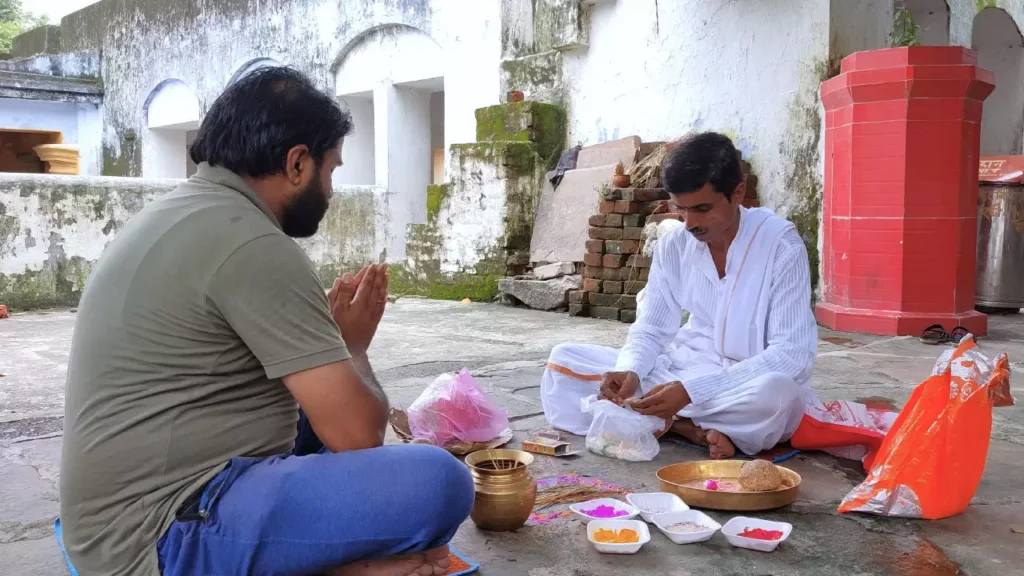
- Arrival and Orientation — Our team meets you at the ghat (or a nearby landmark) and guides you to the designated puja spot. The pandit introduces himself and briefly explains what will happen during the ceremony.
- Achaman and Purification — You and the pandit perform a brief purification ritual — sipping sacred water and reciting mantras — to prepare for the ceremony. If you have come to the Ganga, you may take a brief dip as part of your own purification.
- Sankalp — The most important step. The pandit leads you through the sankalp — a formal statement in Sanskrit in which you declare your name, your father’s name, your gotra, the name of the deceased, the tithi of their passing (if known), and the purpose of the ritual. This establishes your intention and your relationship to the departed soul before the divine witnesses.
- Tarpan — You offer water mixed with sesame and kusha grass into the Ganga, once for each ancestor being honoured. The pandit recites the names and gotras while you pour. This is the moment when many families feel the most emotional connection to the ceremony.
- Pind Daan — Rice balls (pind) prepared with sesame, honey, and ghee are offered at the water’s edge in the name of the departed ancestors. The pind are then gently immersed in the Ganga.
- Dakshina and Brahmin Bhojan — A brahmin (in this case, our assisting pandit) receives dakshina on behalf of the deceased, fulfilling the Shradh tradition of feeding a brahmin.
- Prayers and Visarjan — Final prayers are offered for the peace of the departed soul. Any remaining ritual materials are respectfully immersed in the Ganga, and the ceremony formally concludes.
The core Shradh pooja typically takes 30 to 45 minutes. Additional rites, a larger ancestor list, and local movement can extend the total visit. We recommend arriving at least 30 minutes before the scheduled time, especially during Pitrupaksha when the ghats are busy.
Shradh can be performed at any time of year on the death anniversary (tithi) of the departed. However, the annual Pitrupaksha (Shradh Paksha) — a 16-day period in the dark fortnight of Ashwin month — is the most sacred time. During Pitrupaksha, the belief is that the ancestors are especially close to the world of the living, and offerings made during this period have multiplied merit. In 2026, Pitrupaksha runs from 26 September to 10 October.
Our Shradh service in Kashi is available year-round for annual Shradh on specific tithis, as well as during Pitrupaksha for the special seasonal observance. Many families choose to perform their annual Shradh locally throughout the year and come to Kashi once, during Pitrupaksha, for a particularly significant year — the first year after the death, the year of a major family event, or simply when they are finally able to make the journey.
To understand more about the different types of Shradh and which one might be most appropriate for your situation, we recommend reading our comprehensive guide on all you need to know about Pind Daan and Shradh.
We understand that there are many pandit services available in Varanasi, and we also understand how important it is to choose wisely for a ceremony as personal as Shradh. Here is what sets Prayag Pandits apart:
- No Shortcuts — We perform the complete traditional vidhi. We do not compress the ritual or omit sections to save time. Every step — sankalp, tarpan, pind daan, dakshina — is done in full.
- Pre-Ceremony Guidance — Before the puja, our team explains everything to you: what each step means, what you need to bring, how to dress, and how to participate. You are not left confused or passive during the ceremony.
- Transparent Communication — We tell you exactly what is included in the price before you book. There are no surprise charges on the day of the puja.
- Experienced Purohits — Our pandits are not part-time performers of ceremonies. They are practicing purohits with deep knowledge of the scriptural basis for each ritual. They can answer your questions about the tradition, the significance, and the spiritual purpose of each step.
- Sensitive to Grief — Shradh is performed in the midst of loss. Our pandits approach every family with warmth, patience, and genuine understanding. They have guided many grieving families through these ceremonies and know how to hold space for emotion while maintaining the sanctity of the ritual.
If your family is also considering Pind Daan as part of the Shradh observance, you may want to explore our dedicated Pind Daan in Varanasi package, which can be combined with or performed alongside the Shradh Poojan.
Shradh ceremony in Varanasi (Kashi) costs ₹10,999 (regular price ₹19,999). This covers the experienced Kashi pandit, complete shradh samagri, pind offerings, tarpan, Brahmin bhoj, and full documentation. Varanasi is one of the seven moksha-giving cities — performing Shradh here carries deep spiritual merit.