






What’s included
Included in your package
- Tarpan at Har Ki Pauri, Haridwar
- Experienced Haridwar-based pandit
- All samagri sesame, kusha, Gangajal, flowers
- Tarpan with three-generation ancestral invocation
- Sankalp with family name, gotra & ancestor names
- Pre-ceremony consultation
Not included in your package
- Travel to Haridwar
- Accommodation
- Station / airport pickup & drop
- Pind Daan / Shradh / Asthi Visarjan (separate services)
- Photography / videography
- Extra Dakshina/Gifts/Donations made to the Priest/Pandit
How it works
Choose your pooja
Review your package and any available additions, then add it to your booking.
Share your preferences
Enter your contact details, preferred date and time. Add ancestral details if you wish.
We coordinate with you
Our team confirms the arrangements and shares your coordinator’s details 24 hours before the pooja.
Arrive for your pooja
Our team guides you to the designated pooja area and helps you participate in the ceremony.
What families say after the rite
From families who booked Tarpan in Haridwar.
Rated 4.8 out of 5
500+ reviews · Prayag Pandits
This poojarated 4.5 out of 515 reviews
Our pandits









- 2,263+ families served
- Serving since 2019
- GST registered
Families on video
The player loads only when you press play.





In their words
Very professional service. The pandit ji explained every step of the ritual which helped us understand the significance. Everything was arranged well including the samagri. We are grateful to Prayag Pandits for making this spiritual journey meaningful. Om Shanti.
We had been wanting to perform Pind Daan for years but couldn't travel to India. This online service was a blessing. The entire ritual was done as per shastras. Thank you Prayag Pandits team for your dedication.
The pandit ji recited the mantras perfectly and explained the significance of each ritual. Deeply moving experience.
Third time booking with Prayag Pandits. Always reliable service. The pandits are well versed in the scriptures and perform rituals with full devotion. The pricing is fair and transparent. No hidden charges.
We booked Pind Daan for our late father's shradh ceremony. The pandits were very knowledgeable and performed all rituals with proper Vedic mantras. The whole family felt at peace after the poojan. Highly recommended for anyone looking for authentic rituals.
पितृपक्ष में पिंडदान करवाया। पूरी व्यवस्था उत्तम थी। पंडित जी समय पर आए और सभी विधि-विधान पूर्ण भक्तिभाव से सम्पन्न करवाए। प्रसाद वितरण भी अच्छा था। Om Shanti.
Booked a rite with us? Tell other families how it went.
Write a reviewQuestions families ask
While a Pandit can guide the specific mantras, the basic procedure at a Haridwar Ghat involves:
- Purification: Taking a holy dip (Snan) in the Ganges.
- Facing Direction: Usually facing South for Pitru Tarpan (ancestors), East for Deva Tarpan, and North for Rishi Tarpan.
- Materials: Using water (Gangajal), usually mixed with black sesame seeds (for Pitrus) and sometimes Kusha grass (Darbha grass) ring worn on the finger. Rice grains (Akshat) might be used for Deva/Rishi Tarpan.
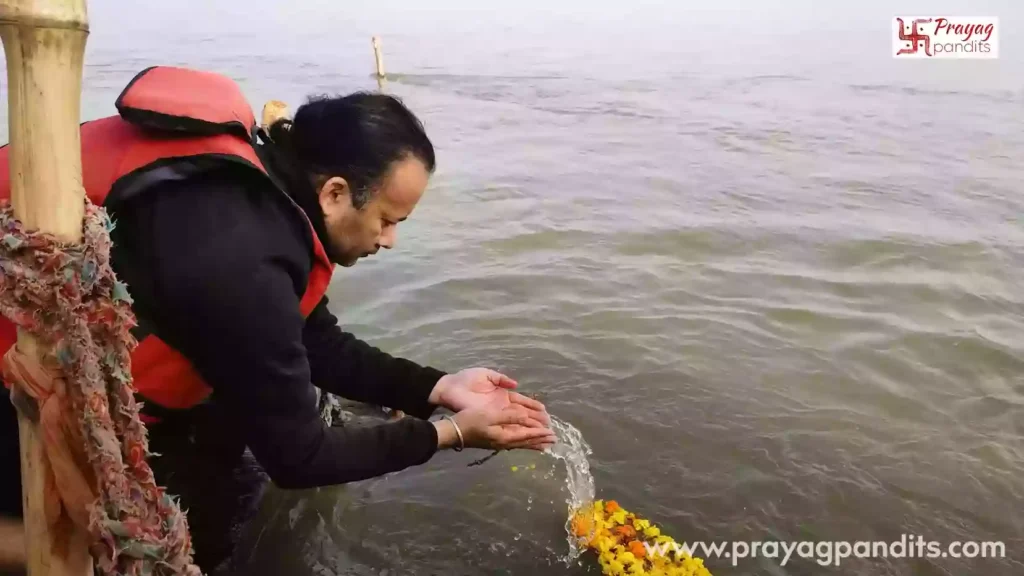
- Offering Water: Taking water in cupped hands (Anjali) and releasing it slowly, typically from the space between the thumb and index finger for Pitrus, or over the fingertips for Devas, while chanting appropriate mantras invoking the names/groups being offered to (e.g., specific ancestors, Pitru Loka).
- Repetitions: Offering water multiple times (often 3 times) for each category (Deva, Rishi, Pitru).
Tarpan is generally performed by men who have undergone the Upanayana (sacred thread) ceremony. Sons, grandsons, nephews, or any male relative can perform Tarpan for their ancestors. While traditionally less common for women to perform the water offering itself, they actively participate in related rituals like Shradh and Pind Daan, and guidance should be sought from local Haridwar Pandits regarding specific permissions or procedures if no male member is available.
While the basic act of offering water can be done individually if one knows the procedure and basic intentions, having a knowledgeable Pandit (Tirth Purohit) from Haridwar is highly recommended, especially during specific events like Pitru Paksha or Shradh. The Pandit ensures the correct mantras are chanted, the procedure is followed accurately according to Vedic guidelines, and specific Sankalpas (resolutions) are made, enhancing the ritual's efficacy. Pandits are readily available at major Ghats like Kushavarta.
If performed as a standalone ritual, the cost for a Pandit's guidance and basic materials for Tarpan might be relatively modest, perhaps ranging from ₹500 to ₹1500 or more, depending on the Pandit and duration. However, Tarpan is often part of a larger Shradh or Pind Daan package, the cost of which can range from ₹3,100 to ₹7,100 or higher. It's best to clarify the cost for the specific service required directly with the Pandit at Ghats like Kushavarta.
Yes, significantly. Tarpan can be performed at home on any Amavasya, and it is valid and meritorious. However, the texts consistently emphasize that Tarpan performed at sacred teerths — and especially at a Moksha-puri like Haridwar — multiplies the merit many times over. The combination of the holy Ganga, the sacred energy of the location, and the guidance of an experienced pandit makes the teerth ritual substantially more powerful.
For regular dates, two to three days’ notice is generally sufficient. During Pitrupaksha, Kumbh Mela, and major Amavasyas, demand is very high and we recommend booking at least two weeks in advance to ensure an experienced pandit is available at your preferred time.
Yes. There is no restriction on how many family members attend the Tarpan. The ritual is performed by one person (usually the eldest male or designated representative), but the entire family is welcome to be present and to participate in the prayers and witness the offering.
This is more common than people realise. If your gotra is unknown, our pandit will use the general Kashyap gotra declaration, which is traditionally used as a default in such situations. The ritual remains fully valid.
Yes. Tarpan can be combined with Shraddh and other ancestral rites for a complete Pitru Karma package. Visit our full services page to see our complete range of ancestral rite offerings and combination packages.
Still have a question?
Ask our team on WhatsApp and we will help you plan the ceremony.
We reply on WhatsApp within 1–2 hours.
Ask a pandit (opens WhatsApp)Know your ceremony
Where the Ganga first touches the plains of India, she is young, swift, and charged with the energy of the Himalayas. Haridwar — Hari ka Dwar, the gateway of Vishnu — is that sacred threshold. And it is here, at this extraordinary point of transition between mountain and earth, that Tarpan for your ancestors carries a potency that the scriptures describe with awe and reverence.
Performing Tarpan in Haridwar is among the oldest and most meritorious ancestral rites in the Hindu tradition. The Ganga’s water here has not yet journeyed through the plains. It arrives from the Himalayas at Har Ki Pauri still carrying the full spiritual charge of its divine source. Your ancestors receive this offering through water that the gods themselves have blessed from its very origins.
Our service is priced at ₹7,999 and includes an experienced Vedic pandit along with all ritual materials. You focus on the prayer; everything else is arranged for you.
Tarpan is the Sanskrit word for satisfying or pleasing. In ritual terms, it refers to the offering of water mixed with sesame seeds (til), barley (jau), and kush grass (darbha) to three categories of recipients: the gods (Deva Tarpan), the sages (Rishi Tarpan), and above all, the ancestors (Pitr Tarpan).
The Manu Smriti places Tarpan among the five daily duties of a householder. The Vishnu Purana states that ancestors who receive Tarpan are satisfied for one month. Performed at a powerful teerth like Haridwar, this satisfaction deepens into something lasting — a release from lower realms, an ascent toward higher ones, or guidance toward a more auspicious rebirth.
The ingredients used each carry specific meaning. Sesame is the most sacred to the pitrs; the Garuda Purana calls sesame the most pleasing offering to departed souls. Barley represents sustenance and abundance. Kush grass purifies the space and the one performing the ritual. Together, held in cupped palms with Gangajal, they form an offering that crosses the boundary between worlds.
When you offer Tarpan with genuine feeling — with the memory of your father, your mother, your grandmother in your heart — the ritual becomes something far more than ceremony. It becomes a conversation across dimensions, a gift sent to those who cannot receive gifts any other way.
Every location on the Ganga is sacred. But Haridwar holds a distinction that no other location shares: it is where the Ganga first descends from the mountains and enters the plains of Bharat. This is the precise point of divine transition.
The Skanda Purana describes Haridwar as one of the seven Moksha-puris — the seven cities that grant liberation to souls. Among these, Haridwar is specifically associated with the power of the Ganga in her freshest and most potent form. The scriptures say that the Ganga at Haridwar flows from the Brahma Kund — the pool of Brahma — and that its water carries the energy of Brahma’s own creation.
The freshness of the water matters spiritually. The closer to the source, the less diluted the divine energy. At Har Ki Pauri, the water has completed its descent from Gangotri but has not yet mixed with the slower-moving plains waters. It arrives charged, clear, and potent. This is the water that reaches your ancestors when you offer Tarpan here.
Haridwar’s connection to the Kumbh Mela deepens its significance further. Every twelve years, the Kumbh Mela comes to Haridwar, drawing tens of millions of pilgrims. The reason is specifically that at the time of Kumbh, the planetary alignment creates a spiritual amplification at this point that the texts describe as transforming the Ganga into a direct channel to the divine realm. Tarpan performed at Haridwar — especially during Kumbh — is said in the Skanda Purana to liberate a hundred generations of ancestors.
To understand the spiritual energy of Haridwar’s Ganga Aarti and the atmosphere of this sacred city, read our guide: The Phenomenal Ganga Aarti at Haridwar.
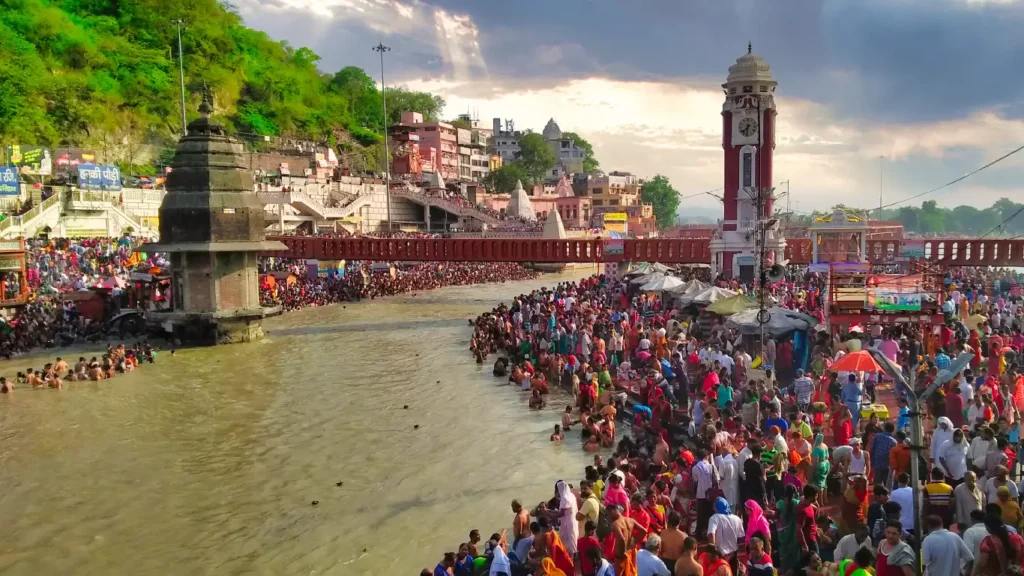
The primary ghat for Tarpan at Haridwar is Har Ki Pauri — literally, “the steps of Hari (Vishnu).” According to tradition, Lord Vishnu himself stood on these steps and left his footprint, which is preserved in a small shrine at the ghat. Lord Brahma is said to have performed a sacred yagna here, and the water at this spot is thus doubly blessed — by both the preserver and the creator.
Har Ki Pauri is the emotional and spiritual heart of Haridwar. Every evening at dusk, the Ganga Aarti held here draws thousands of devotees. The energy at this ghat during any act of worship is palpable. When you cup your palms with Gangajal here and offer it southward to your ancestors, you do so in a space where prayers have been offered for thousands of years without interruption. That accumulated devotion adds to the power of your own ritual.
Other important ghats for Tarpan in Haridwar include Kushavart Ghat, Birla Ghat, and Gau Ghat — each with its own specific significance in the texts. Our pandit will guide you to the most appropriate ghat for your specific ritual needs.
Pitrupaksha — The Fortnight of the Ancestors
The most powerful time for Tarpan is during Pitrupaksha — the 15-day lunar fortnight in Ashwin (September-October) when the boundary between the world of the living and the world of ancestors thins. During this period, the pitrs are said to descend close to the earthly realm, waiting for their descendants to remember them. Tarpan at Haridwar during Pitrupaksha carries extraordinary merit.
Mahalaya Amavasya
The final day of Pitrupaksha — Mahalaya Amavasya, also known as Sarva Pitru Amavasya — is when one can perform Tarpan for all ancestors simultaneously, including those whose specific death dates are unknown. This is considered the single most important day of the year for ancestral rites.
Monthly Amavasya
Every new moon (Amavasya) is considered sacred to the pitrs. Performing Tarpan monthly on Amavasya maintains a living connection to your ancestors through the year and prevents the accumulation of Pitr Dosha.
Death Anniversary and Special Tithis
The lunar date on which an ancestor departed is especially powerful. Tarpan performed on this specific tithi reaches the soul with particular directness. Certain other tithis — Dwadashi (12th), Trayodashi (13th), Chaturdashi (14th), and Amavasya — are generally auspicious for Tarpan throughout the year.
Kumbh Mela
If you have the opportunity to visit Haridwar during the Kumbh Mela, Tarpan at that time carries the full multiplied merit described in the Skanda Purana. Our team coordinates Kumbh-period services well in advance due to the extraordinary demand during this event.
Tarpan is traditionally performed by the eldest son for his father and mother. However, the tradition is inclusive. A daughter, son-in-law, nephew, or any devoted family member may perform Tarpan when no son is present, or when the family chooses to perform the ritual together.
You should consider Tarpan in Haridwar if:
- You have recently lost a parent or grandparent and wish to perform the first formal ancestral rite at a major teerth
- You sense ancestral disharmony in your family — recurring obstacles, health difficulties, or relationship troubles that seem inexplicable
- You wish to fulfill the annual Pitrupaksha obligation at a location of extraordinary merit
- You are on a pilgrimage to Char Dham and wish to add ancestral rites to your journey
- Your family has a longstanding tradition of visiting Haridwar for Tarpan that you wish to continue
Arrival and Preparation
On the day of the ritual, wear clean white or undyed clothing if possible. Observe a fast or eat only sattvic food — no meat, no alcohol, no onion or garlic. You will be received by the pandit at the ghat.
Ritual Bathing
The ceremony begins with a bath in the Ganga. Even a brief immersion or the ritual sprinkling of Gangajal on the body is considered purifying and prepares the performer for the sacred act ahead.
Sankalpa
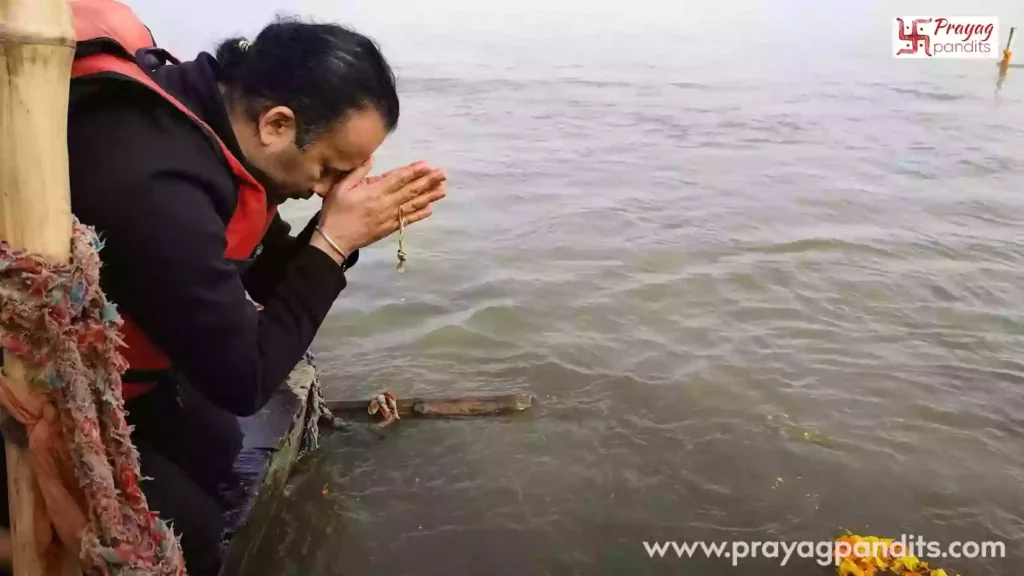
The Sankalpa is the formal declaration of intent. The pandit recites it in Sanskrit while you repeat the key phrases. The Sankalpa includes your name, gotra (family lineage), current location, and the precise intention of the ritual — naming the ancestors you honour and the purpose of the offering.
Tarpan Offerings
Facing south, you cup water from the Ganga in both palms along with sesame, barley, and kush grass. As the pandit recites the name and lineage of each ancestor, you allow the water to flow from your hands as an offering. This is repeated three times for each ancestor — covering the paternal side, maternal side, and the lineage of teachers and sages.
Closing Prayers
The ritual closes with prayers to Ganga Mata, to Yama Dharmaraja, and to the pitrs. A prayer for the wellbeing of the living family follows. The pandit offers final blessings, and the ceremony is complete.
- Gather the names (and death tithis if known) of the ancestors you wish to honour
- Know your gotra (paternal lineage name) — if uncertain, we can work with a general declaration
- Observe a fast or eat lightly before the ritual
- Arrive with clean, modest clothing
- Bring a list of any specific family members to be remembered, including mothers, grandmothers, and maternal ancestors
The Skanda Purana is specific about what Tarpan at Haridwar achieves. Ancestors who receive this offering gain relief from whatever realm they inhabit and are propelled toward higher states. Family members who face ongoing challenges — financial struggles, health issues, relationship difficulties — often find these easing after sincere performance of ancestral rites, as the Pitr Dosha that underlies such difficulties begins to clear.
For the performer, Tarpan at Haridwar discharges the Pitr Rinn — the fundamental ancestral debt — and generates an abundance of punya (merit) that supports prosperity, peace, and good fortune in this life and the next. The texts describe it as an investment that pays returns across generations.
Beyond the individual, performing Tarpan at Haridwar connects you to a tradition that has been maintained here for thousands of years. You join a line of countless sons and daughters who have stood at these same ghats and sent their love across the threshold to those they could no longer see.