
Pitra Dosh: What a Chart Reading Means, and the Rites the Texts Prescribe
Prayag Pandits performs shradh, pind daan, tripindi shradh and Narayan Bali at Prayagraj, Gaya, Varanasi and Haridwar. We do not read charts and we do not sell dosh diagnoses. If a jyotishi has told you there is pitra dosh, send us what they said on WhatsApp and a pandit will tell you which rite — if any — the tradition actually prescribes for it.
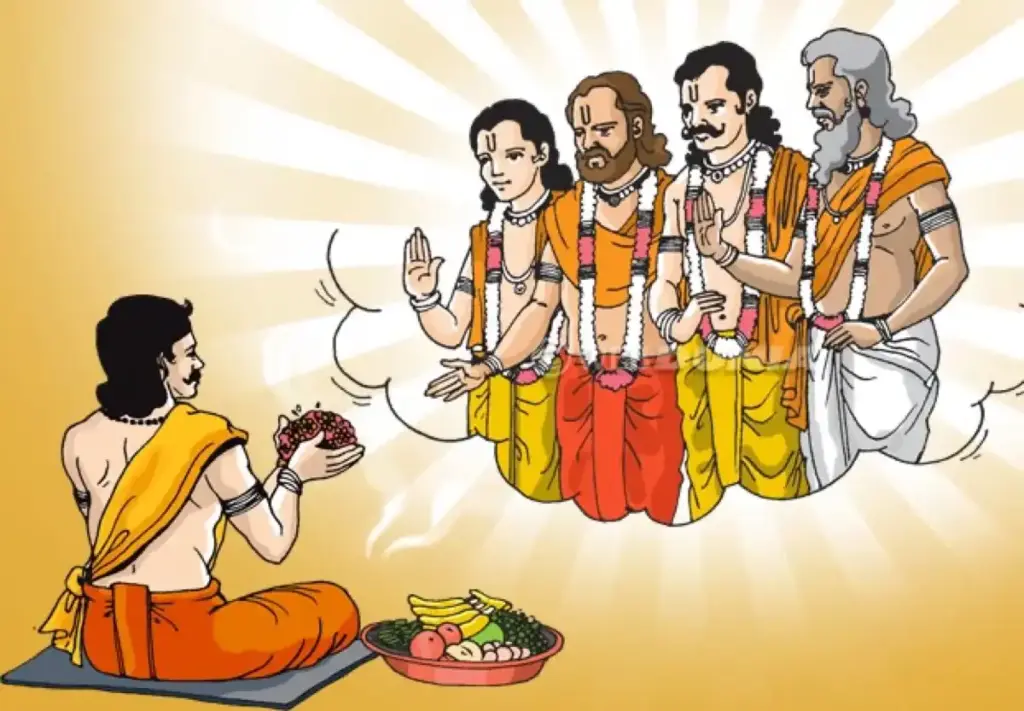
Pitra dosh is the affliction the Jyotish tradition reads in a birth chart when the ninth house, or the Sun, is afflicted by Rahu, Ketu or Saturn. The classical understanding is that ancestral rites left undone pass down as an obstruction in the line until the rites are performed. This page sets out what a jyotishi actually looks at, what the texts say, what the prescribed remedies are — and, just as importantly, what this page will not tell you.
What pitra dosh means
The idea rests on pitru rina, the debt to the ancestors, which the Dharmashastra holds every person is born carrying along with the debts to the gods and the sages. It is discharged by performing the rites for those who came before. Where a line has gone generations without performing them — through migration, through a death that disrupted the observances, through nobody being told — the tradition holds that the debt stands, and Jyotish reads that standing debt in the chart as pitra dosh.
Two things follow that are worth holding onto. First, it is framed as an unpaid obligation, not a curse and not a punishment — the remedy is to pay it. Second, the remedy is the ordinary ancestral rite. There is no special transaction involved; what the texts prescribe for pitra dosh is shradh and pind daan, the same rites a family would owe anyway.
What a jyotishi looks at in the chart
These are the combinations. They are reference material — so that when someone tells you that you have pitra dosh, you can ask which of these they are reading and check that they can name it.
| Combination | Where | What the tradition reads into it |
|---|---|---|
| Rahu or Ketu with the ninth house | 9th | The classic position. The ninth is the ancestral and dharmic house, so this is the primary indicator |
| Sun conjunct Rahu | Any | Surya-Rahu — the most commonly cited form. The Sun stands for the father and the ancestral line |
| Sun conjunct Saturn | Any | Surya-Shani. Read as long-running obstruction rather than acute difficulty |
| Sun conjunct Mars, or Ketu | Any | Surya-Mangal and Surya-Ketu. Associated with disputes over ancestral property, and with practice abandoned mid-way |
| Saturn afflicting the ninth lord | 9th | Reaches the same house indirectly, through its ruler |
| Ninth lord in the 6th, 8th or 12th | 6/8/12 | The ancestral significator placed in the houses of obstacle, rupture and loss |
| Saturn with Rahu | Any | Shrapit yoga, the “cursed” combination — the heaviest reading in this group |
Jyotish also distinguishes forms by which house Rahu occupies — the first, second, fourth, fifth, seventh, eighth or tenth — and attaches a different area of life to each. That part of the tradition is real, and it is also where most of the frightening material on this subject comes from, because each form gets described in terms of a specific misfortune. Treat those descriptions as a traditional system of correspondence rather than as predictions about your family.
What the texts actually describe
The Brahma Purana’s own list, as the text gives it and attributed as such: no son born into the family, or sons who do not survive; illness circulating continuously through the household; shortened lifespans across generations; and a family deprived of welfare and happiness despite its means.
Two observations about that list, and then this page will leave it alone. It is written in the idiom of a society in which a line without sons ended — which is why the first item leads, and which is not how anyone should read it now. And it describes patterns across generations, not events in one household in one year. A family reading its own recent misfortunes into it is doing something the text is not asking for.
The one sign the tradition treats as specifically its own, rather than as general misfortune, is dreaming of the dead — ancestors appearing hungry, dishevelled or distressed. The Garuda Purana names it directly, it is the sign families most often arrive describing, and it is the one with no medical reading attached.
The remedies, and what they cost
The prescription is consistent across the texts and it is not exotic. Which of these applies depends on what has and has not been done, not on the severity of a reading.
| Rite | From | When it is the right one |
|---|---|---|
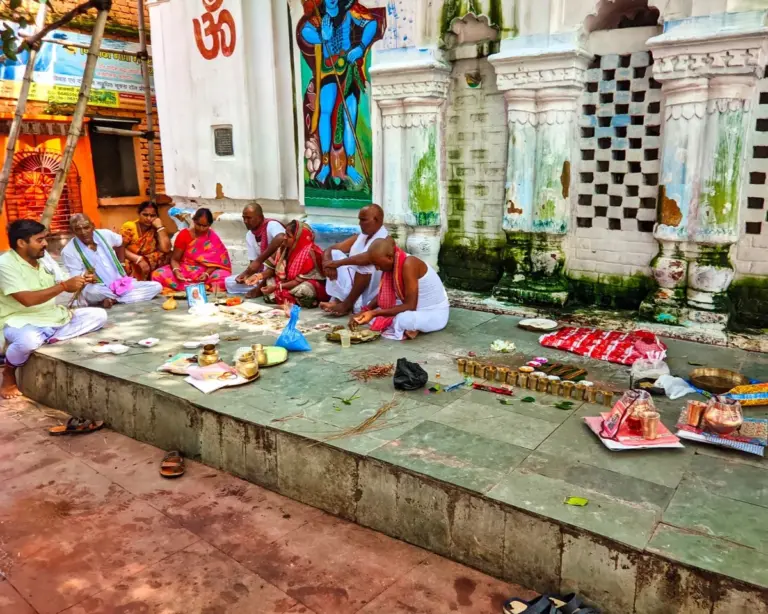
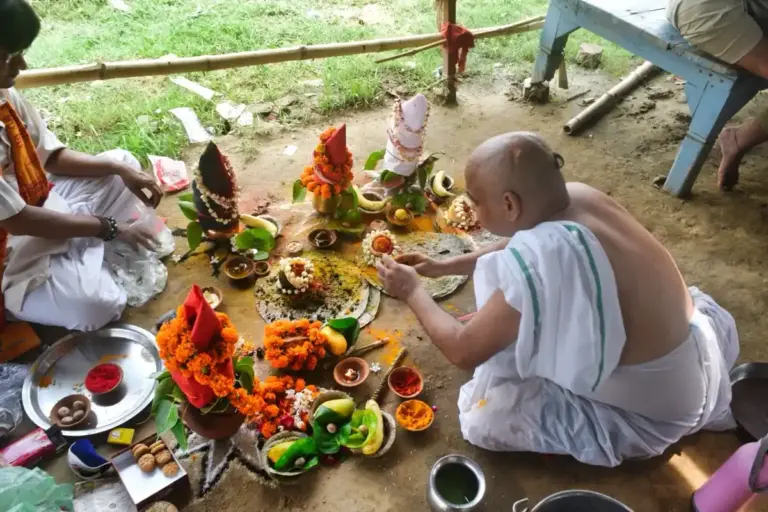
| Shradh and pind daan | ₹7,100 | The baseline, and for most families the whole answer. The rites that were owed and missed, performed properly once and then kept annually |
| Tripindi shradh | ₹21,000 | Where annual shradh has lapsed for three years or more. Addresses three generations together |
| Narayan Bali | ₹31,000 | Only where a death in the line was unnatural — accident, suicide, snakebite — or the last rites were never performed |
| Tarpan | ₹5,100 | The ongoing observance rather than a one-off remedy. Monthly, at amavasya, and through Pitru Paksha |
Alongside them the tradition prescribes things that cost nothing: feeding crows, cows and dogs; anna daan; keeping the annual tithi; and the Pitru Gayatri and Mahamrityunjay mantras. A pandit who recommends only the paid options is not giving you the full prescription.
On stri pitra dosh
The term exists, and women ask about it often enough that it deserves an honest answer rather than silence. What is worth keeping from it is narrow and practical: a married woman has two ancestral lines in view, her own and her husband’s, and at the Sangam it is both normal and common for a husband and wife to be named together in the sankalpa so that the rites address both.
What this page will not do is set out a list of women’s reproductive difficulties and marital troubles as symptoms of ancestral karma. That framing puts the blame for infertility, miscarriage and an unhappy marriage on the woman and on her family line, it is not something the texts require, and the harm it does to a woman already carrying those things is out of all proportion to anything it explains. If you have been told that your difficulty conceiving is ancestral, please see a doctor, and perform the rites as well if you want to — not instead.
Does it end, and can it be removed
The honest answer is that the tradition treats the debt as dischargeable and the chart as fixed. Performing the prescribed rites discharges the obligation; the planetary positions in a birth chart do not change, so a jyotishi reading the same chart afterwards will still see the same combination. Anyone promising that a puja will remove a yoga from a chart is describing something Jyotish does not claim.
What the tradition does say is that once the rites are performed and then kept up — annual shradh on the tithi, pind daan, tarpan, and the Pitru Paksha observances — the obligation is being met, and that is the whole of what was being asked.
Families often arrive here having also been told about kaal sarp dosh, which is a different reading with a different remedy and can be present alongside this one. If both have been named, ask a pandit to deal with the ancestral side first — and tell us the circumstances rather than the chart, because that is what decides it.
Keep reading


Blog
10 min read
Barsi: The Hindu First Death Anniversary, and When It Falls
Questions families ask
The Brahma Purana identifies four primary signs: no son is born or sons do not survive; no family member stays free of illness for long; lifespans across generations are shortened; and the family is persistently deprived of happiness despite having resources. In everyday observation the signs include repeated miscarriages, delays in marriage that break for unexplained reasons, a chain of financial losses, recurring serious illness circulating among family members, and ancestors appearing distressed in dreams.
Yes. Pitra Dosh is a condition caused by unfulfilled ancestral debt and conditions can be remedied. The Garuda Purana and Brahma Purana both specify that Shraddha, Pind Daan, Tarpan, and where required Narayan Bali or Tripindi Shradh resolve the Dosh by nourishing the departed soul and enabling its progression from Preta Yoni. Permanent resolution also requires establishing a regular Shraddha practice going forward to prevent fresh accumulation of ancestral debt.
Look for: Rahu or Ketu in the ninth house; the Sun conjunct Rahu in any house; Saturn afflicting the ninth house or its lord; or the ninth house lord in the sixth, eighth, or twelfth house. Secondary indicators include malefic planets in the fifth house, severely afflicted Jupiter, or Moon conjunct Rahu. Saturn and Rahu together form Shrapit Yoga, a strong ancestral karma signal. A qualified pandit needs the full chart and family Shraddha history alongside these placements for a complete assessment.
Pind Daan at Prayagraj or Gaya starts from Rs. 5,100. Tripindi Shradh, prescribed when the family has missed Shraddha for three or more generations, is Rs. 22,000. Narayan Bali, required when ancestors died an unnatural or violent death, is Rs. 31,000 and takes three days. Online ceremonies for NRIs are available at similar price points with live video documentation.
Trimbakeshwar near Nashik is particularly powerful, especially for Maharashtrian families. For families from North India, Prayagraj Triveni Sangam and Gaya are equally or more powerful choices. The Brahma Purana calls Prayagraj the Tirtha-raja -- king of all holy sites -- and specifies that Pind Daan here grants immediate liberation to the ancestor. Trimbakeshwar has a specific ritual called Narayan Nagbali that addresses snake-bite deaths alongside Pitra Dosh.
Yes, these are among the most commonly reported effects. When Rahu is in the fifth house (children) or seventh house (marriage), Pitra Dosh directly disrupts these life areas. Families report matches finalised then breaking for no clear reason, and marriages troubled by conflict from an invisible source. For childlessness where all medical tests return normal, the Garuda Purana associates this specifically with ancestral hunger from unperformed Pind Daan.
Pitra Dosh is an ancestral affliction from unfulfilled Shraddha duties, reflected through the Sun and Rahu relative to the ninth house. Kaal Sarp Dosh forms when all seven visible planets fall between Rahu and Ketu. Both can cause suffering in similar life areas but have different causes and different remedies. The two can coexist and reinforce each other, particularly when Rahu also conjuncts the Sun -- in such cases both doshas need to be addressed through their respective rituals.
Yes. We have been facilitating this for families across the USA, UK, Canada, UAE, Australia, Singapore, and Malaysia for over six years. You provide the names, gotras, and relationship details of ancestors for the Sankalp. Our Teerth Purohits perform the complete ceremony at Prayagraj, Gaya, or Varanasi with live video streaming. After the ceremony you receive ritual photographs, a summary of the Sankalp, and prasad dispatched to your address. WhatsApp +91-7754097777 or visit the NRI puja services page to begin.
Still have a question?
Ask our team on WhatsApp and we will help you plan the ceremony.
We reply on WhatsApp within 1–2 hours.
Ask a pandit (opens WhatsApp)Book Your Sacred Ritual
Authentic ceremonies performed by Veda-trained pandits at sacred sites across India.
- Clear package details before you book
- The ceremony in the language you choose
- 2,263+ families served
- Serving since 2019
- GST registered