
Pind Daan for Unmarried or Childless Ancestors: Who Performs It
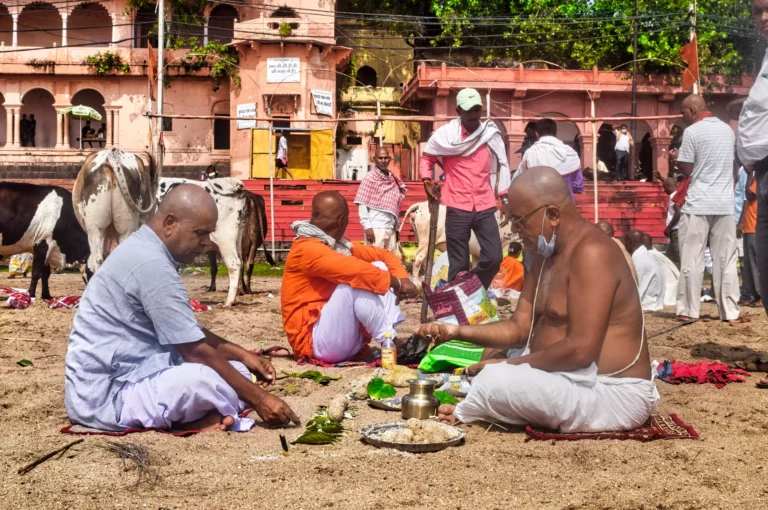
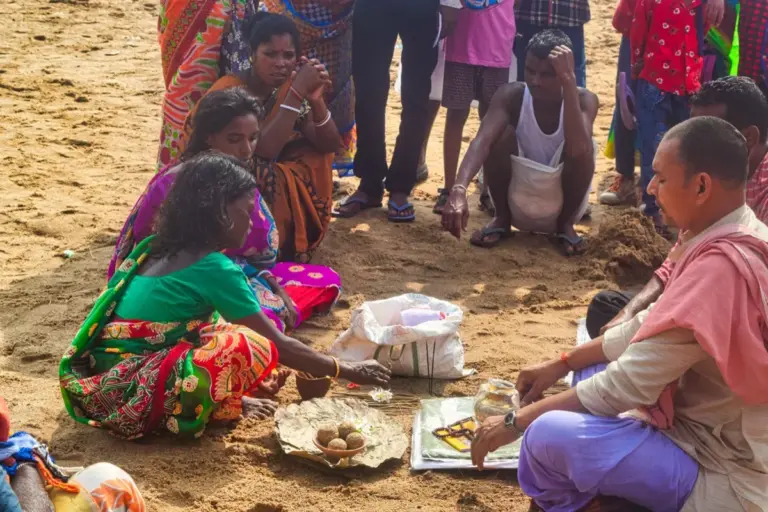
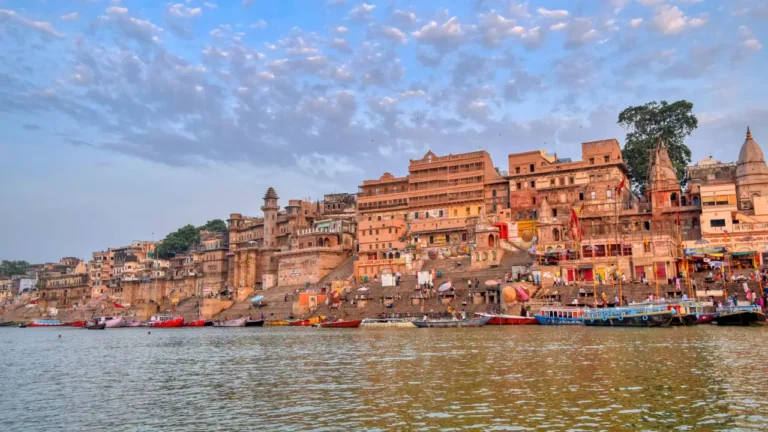
Prayag Pandits arranges pind daan at Prayagraj, Gaya, Varanasi and Haridwar, including for ancestors who left no descendants of their own. Tell us the relationship and the circumstances on WhatsApp and a pandit will say who in your family may perform it and what the sankalpa should name. Same-day reply.

Nothing breaks. A person who died unmarried, or married but without children, is owed the same rites as anyone else, and the tradition names who performs them: the brother first, then the nephew, then the wider kin, and a sister or daughter where that is who is there. There is also a rite made specifically for this situation — Neel Vrish Shraddha, in which one pinda is set aside for exactly these souls — and it is the part most families have never heard of.
Who performs the rites
When someone dies without direct descendants the duty shifts outward through the lineage rather than lapsing. The closest available and willing relative performs it.
| Who | Order | When it falls to them |
|---|---|---|
| Brother | 1st | The primary substitute. Same parents, same lineage — usually the brother closest in age or in circumstance |
| Nephew (brother’s son) | 2nd | Where there is no brother, or the brother cannot perform it. He carries that branch forward |
| Father | Special case | Where a father outlives an unmarried or childless son. Against the natural order and hard to do, but permitted and sometimes necessary |
| Sister, or daughter | 3rd | A sister performs for a brother; a daughter, including an adopted or informally raised one, for a childless couple. Not a lesser offering |
| Paternal uncles and cousins | 4th | The sapinda circle, seven generations, and then the samanodaka circle at fourteen. Closest relation first |
| Maternal uncle, or his son | 5th | Where no paternal relative remains. The paternal line takes precedence, but the maternal line is not excluded |
| A purohit | Last | Where no relative survives or none is able. A ritwik performs it on the family’s behalf and the rite is complete |
On the sister and the daughter: our position is not that they step in reluctantly when no man is available. A daughter may perform pind daan, married or unmarried, and whether or not there are brothers — the Garuda Purana permits daughters, daughters-in-law and granddaughters, the Vishnu Smriti permits a daughter where no son is present, and the tradition’s best-known performance of this rite at Gaya is Sita’s. The same reasoning covers a sister performing for a brother. The full order is in who can perform pind daan.
The rites themselves do not change with the ancestor’s gender. An unmarried woman receives the same sequence as an unmarried man, performed by the same order of relatives.
Neel Vrish Shraddha — the rite made for this
This is the part worth knowing, and almost no family arrives already aware of it. The scriptures do not leave these souls to be caught incidentally by someone else’s shradh. They provide a named ceremony for them.
During Vrishotsarga — the release of a consecrated bull, which the Garuda Purana treats as necessary for lifting a soul out of the ghost state — a ceremony called Neel Vrish Shraddha is performed. The performer, ordinarily the brother, the nephew or the nearest eligible relative, prepares twenty-eight pindas of barley flour, sesame and sugar. One of them, the neel pinda, is dedicated specifically to ancestors who died without a wife and without children.
There is a second provision alongside it. During ordinary tarpan the performer also offers general satisfaction mantras — tripti mantras — using the gopuchchodak hand position, directed at any ancestor in the line who has lost their rites or died without wife and sons. Between the two, the tradition builds a deliberate safety net. The fuller answer is in what Neel Vrish Shraddha is, and the hand positions are in the tarpan vidhi.
What changes in the ritual itself
Less than families expect. The procedure is the ordinary pind daan vidhi — the same ten steps, the same samagri, the same mantras. Two things are handled differently.
The sankalpa is more specific. The declaration names the ancestor, their gotra, and their situation in terms — “for my unmarried brother”, “for my childless paternal uncle” — rather than leaving them to be covered by a general ancestral formula. This matters because the offering is being made by someone who is not the natural performer, and the sankalpa is what establishes the connection.
The offering is singular rather than collective. The focus stays on one soul, on the ekoddishta principle, instead of addressing three generations together as a parvana shradh does. Where there is reason to think the soul is unsettled — an unnatural death, or rites missed for years — tripindi shradh is the rite that applies, and a pandit will say whether it does.
The two days that cover everyone
Pitru Paksha matters more here than for any other kind of ancestor, because an ancestor with no descendants has nobody keeping an annual tithi for them. The fortnight’s offerings are made to sarva pitru, all the ancestors, and that includes the ones nobody is individually remembering.
Sarva Pitru Amavasya, the last day, is the one to use. It is designated for every ancestor whose death tithi is unknown, who died unnaturally, or who died unmarried or childless — the three categories that otherwise fall through. If you do nothing else in the year for such a relative, do tarpan on that day. This year it falls on 10 October 2026; the full calendar is on the shradh dates page, and the fortnight itself is covered in the Pitru Paksha guide.
Where it carries the most weight
Pind daan can be performed at home, and for most ancestors that is enough alongside the annual tithi. For someone with no descendants keeping that tithi, a tirtha does more work, because the offering is not being repeated every year by anyone.
- Gaya — the pre-eminent site, and the one to choose if you will make only one journey. Offerings here are held to reach generations rather than one named ancestor, which is precisely the value for a soul nobody is keeping an annual rite for.
- Brahma Kapal at Badrinath — on the Alaknanda beside the temple, and the tradition holds the rite need not be repeated after it.
- Prayagraj — at the Sangam, and the most reachable of the three by rail and air.
- Siddhpur in Gujarat, called Matru Gaya, which some traditions associate specifically with rites for those who died unmarried or childless. We do not perform there, but it is worth knowing it exists.
Performing your own rites, while alive
People ask us this about themselves, not only about relatives, and it deserves a straight answer: yes, you can. The Garuda Purana describes jeeva shradh, a person performing their own shradh during their lifetime, and it is offered precisely for those who are childless or who have reason to think nobody will perform the rites afterwards.
It is not a morbid thing to arrange and we do not treat it as one. People come to it in their seventies, often after a sibling has died and the family has thinned out, and they describe the same relief afterwards that families describe after a pind daan for someone else. The detail is in whether you can perform pind daan for yourself.
Why any of this is owed at all
The idea underneath every page on this site is pitru rina — the debt to the ancestors, one of the three debts the Dharmashastra holds a person is born carrying, alongside the debt to the gods and the debt to the sages. It is discharged by continuing the line and by performing the rites for those who came before.
Read narrowly, that framing is what causes the anxiety this page exists to answer: if the debt is discharged through descendants, what happens to someone who has none? The tradition’s own answer is the one set out above, and it is not grudging. The duty runs to the kutumba, the wider family, not to the son alone. The collective days exist for ancestors nobody is individually remembering. There is a named rite with a pinda reserved for them. And a person without descendants can perform their own.
Where a family has gone generations without performing any of this, the question sometimes raised is pitra dosh. A pandit will tell you honestly whether that applies to your situation, or whether what is actually needed is simply the shradh that nobody got round to.
Keep reading

Pind Daan
5 min read
Gaya Pind Daan from Madhya Pradesh: Pitru Paksha 2026 Dates

Pind Daan
7 min read
Gaya Pind Daan from Odisha: Travel, Odia Panda and Cost

Pind Daan
6 min read
Can Pind Daan Be Performed at Home? Which Rites Can, and Which Cannot
Questions families ask
When a person dies without direct male descendants, the scriptures provide a clear hierarchical order of who should perform the Pind Daan and Shraddha rituals. The Garuda Purana specifies this sequence: Wife (if married but childless), Real Brother (Sahodar Bhai), Nephew (Brother"s son / Bhatija), Father, Mother, Daughter-in-law, Sister, Sister"s son (Bhanja), Sapindas (close blood relatives in the lineage), and finally Sodakas (more distant relatives). The Markandeya Purana adds that if a person dies with absolutely no eligible relatives, the King or state becomes responsible — the King must use the deceased"s wealth to ensure the complete last rites and Pind Daan are performed by caste-brethren. This hierarchy exists because Hindu scripture recognizes that every soul requires these ancestral rites for peaceful transition to Pitrulok and prevention of becoming a preta (restless ghost). No soul is left abandoned — the responsibility simply shifts down the line of relatives. Prayag Pandits regularly performs Pind Daan for unmarried and childless deceased persons on behalf of nephews, nieces, and distant relatives who wish to fulfil this dharmic duty.
The scriptures provide a specific ritual to ensure that souls who died unmarried or childless are not forgotten even if no direct descendant performs their individual rites. During the Vrishotsarga (the release of a sacred bull, which the Garuda Purana declares absolutely mandatory for removing a soul"s ghost-state), a specific ceremony called Neel Vrish Shraddha is performed. The performer — typically the brother, nephew, or nearest eligible relative — prepares 28 special pindas made of barley flour, sesame, and sugar. One of these pindas is specifically dedicated to ancestors who died without a wife or children. The performer offers this Neel Pinda while chanting the mantra:
Ye chanye luptapindashcha putradaravivarjitah. Te sarve triptimayantu neelapindam dadamyaham.
Translation: And those who are deprived of regular pindas, and who are devoid of a wife and sons (unmarried/childless), may they all attain satisfaction. I offer this Neel Pinda to them.
Additionally, during regular water offerings (Tarpan), the performer also offers generalized satisfaction mantras (Tripti Mantras) using the cow"s tail position (Gopuchchodak) specifically to nourish any ancestors in the lineage who have lost their rites or died without a wife and sons. This is the scriptural safety net ensuring no soul in the lineage remains without ancestral care, regardless of their marital or descendant status.
Traditionally, the eldest son or a male blood relative (such as grandson, brother, or nephew) performs Pind Daan. However, if no male heir exists, under certain customs and with proper guidance, even daughters may perform the ritual. It is done primarily for:
Deceased parents and grandparents
- Unmarried deceased family members
- Recently departed souls (within 1 year)
- Forgotten or untraceable ancestors (Akal Mrityu cases) By doing so, one fulfills their Pitru Rin (ancestral debt), a core dharmic duty.
While Pind Daan is rooted in Vedic and Hindu dharma, anyone who:
- Believes in the law of karma and rebirth
- Wishes to honor their departed ancestors
- Is ready to follow the ritual discipline and purity can request to perform the rituals under guidance. People of Indian origin abroad, even those with mixed beliefs, often come to Gaya to fulfill their ancestral responsibilities. The sacred laws are universal in spirit and welcome all sincere seekers.
In rare cases, due to health, age, or unavoidable circumstances, a proxy (sarva-sangrahi) may perform Pind Daan on your behalf. This should be arranged with a trustworthy Gaya Purohit, and you must send your consent and sankalp. While this is spiritually valid, personal presence is always superior, as the devotion and intention of the doer carry immense karmic weight.
Pind Daan can be performed at home, but its merit is significantly amplified when performed at a recognised tirtha. Scriptures describe Gaya, Prayagraj (Triveni Sangam), Varanasi (Pishach Mochan), Haridwar, and a few other sites as places where the boundary between the earthly and ancestral realms is especially thin, making the ritual spiritually more effective. At-home Pind Daan is accepted in scriptures when travel is not possible, but most families choose to perform at least one tirtha-based ceremony for the liberation of ancestors. Our pandits can guide you through either option.
Yes. When the tithi of death is unknown, the rite should be performed on Sarva Pitru Amavasya — the last day of Pitrupaksha — which is specifically designated for all ancestors whose dates are unknown or uncertain. The pandit will adjust the sankalpa accordingly.
According to the Gaya Mahatmya and Padma Purana, Gaya is named after Gayasura, a powerful demon who performed such intense penance that he earned blessings making his body so pure that anyone touching it would attain moksha. The Devas, unable to manage the flow of liberated souls, requested Lord Vishnu to intervene. Lord Vishnu, in a divine act, pressed Gayasura into the earth with His lotus foot, creating the sacred imprint now worshipped at Vishnupad Mandir. Gayasura requested that Gaya become a place where people could offer Pind Daan to liberate their ancestors. Lord Vishnu granted this boon, thus sanctifying Gaya as the most sacred Pitru Kshetra.
Still have a question?
Ask our team on WhatsApp and we will help you plan the ceremony.
We reply on WhatsApp within 1–2 hours.
Ask a pandit (opens WhatsApp)Book Your Sacred Ritual
Authentic ceremonies performed by Veda-trained pandits at sacred sites across India.
- Clear package details before you book
- The ceremony in the language you choose
- 2,263+ families served
- Serving since 2019
- GST registered