
Rahu–Ketu remedy · Trimbakeshwar, Ujjain, Prayagraj, Haridwar
Kaal Sarp Dosh Puja: Nivaran, Vidhi and Where It Is Performed
Have the chart read first. There are twelve types, and the remedy follows the one you actually have.
Kaal Sarp Nivaran performed by qualified pandits at the tirtha your family chooses, or live online with the sankalp taken in your name and gotra.
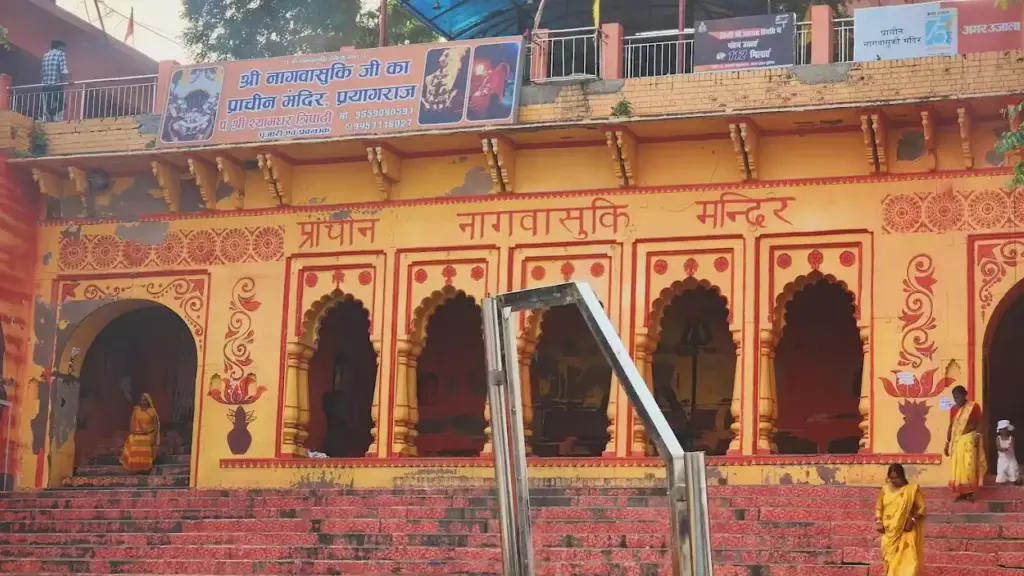
Chart read first
We confirm the type before anything is arranged
At the tirtha
Trimbakeshwar, Ujjain, Prayagraj or Haridwar
Or live online
Join by video, sankalp in your name and gotra
Nothing to carry
Samagri, pandit and arrangements included
Kaal Sarp Dosh forms when all seven planets — Sun, Moon, Mars, Mercury, Jupiter, Venus, and Saturn — are hemmed between the shadow planets Rahu and Ketu in your birth chart. The resulting imbalance creates persistent obstacles across career, marriage, finances, and health that ordinary remedies cannot fully address. Naag Vasuki Mandir in Daraganj, Prayagraj is one of only five sites recognized across India for performing authentic Kaal Sarp Dosh Puja — and uniquely, it is the only temple dedicated specifically to the serpent deity himself. The energy here is unmatched for this specific nivaran. Book Kaal Sarp Dosh Nivaran Puja — ₹15,000.
Start here
What Is Kaal Sarp Dosh?
In Vedic astrology, Kaal Sarp Dosh (also written Kalsarp Dosh) occurs when all seven visible planets — Sun, Moon, Mars, Mercury, Jupiter, Venus, and Saturn — fall between the Rahu-Ketu axis in the natal horoscope. Rahu occupies one side of the zodiac wheel, Ketu the opposite side, and when every planet is trapped within that arc, the person’s karma is said to be under the grip of the serpent.
The name breaks down precisely: Kaal means time or death (as in Mahakaal, the lord of time), Sarp means serpent, and Dosh means defect or affliction. Together, it describes a chart condition where the serpentine force of destiny tightens around all planetary energies simultaneously.
There are two major variants. Full Kaal Sarp Dosh occurs when all seven planets are strictly between Rahu and Ketu, with none outside the arc. Ardh (partial) Kaal Sarp Dosh occurs when one or two planets fall outside the axis — the effects are present but milder and more manageable through individual planet remedies.
Traditionally, Kaal Sarp Dosh is considered most potent and disruptive until the age of 47. After that, many practitioners observe a natural easing of its effects, especially if the person has engaged in sincere spiritual practice. The dosh is understood as a karmic debt from past lives — specifically, actions related to harming serpents, disturbing their habitats, or breaking vows connected to Naga worship. This is why Naga-specific puja is the most direct form of remedy.
Not everyone with this dosh experiences equal suffering. The house placement of Rahu and Ketu, the strength of other planets, and the overall chart configuration all determine severity. A proper kundli reading will clarify which of the 12 types you carry and how intensely it affects your life.
The basis of the remedy
The 12 Types of Kaal Sarp Dosh
The type is determined by the houses Rahu and Ketu occupy. Each type affects a specific area of life. Here is the complete reference:
| # | Name | Rahu House | Ketu House | Area Affected | Key Effects |
|---|---|---|---|---|---|
| 1 | Anant | 1st | 7th | Self & marriage | Identity confusion, late marriage, partner disputes |
| 2 | Kulik | 2nd | 8th | Wealth & family | Financial instability, family conflicts, speech problems |
| 3 | Vasuki | 3rd | 9th | Courage & fortune | Sibling issues, fortune delays, blocked higher learning |
| 4 | Shankhpal | 4th | 10th | Home & career | Property disputes, career stagnation, maternal health concerns |
| 5 | Padma | 5th | 11th | Children & gains | Difficulty conceiving, gains withheld, speculative losses |
| 6 | Mahapadma | 6th | 12th | Enemies & liberation | Hidden enemies, legal disputes, foreign settlement challenges |
| 7 | Takshak | 7th | 1st | Marriage & partnerships | Broken relationships, business partnership failures, marital discord |
| 8 | Karkotak | 8th | 2nd | Inheritance & secrets | Sudden losses, inheritance disputes, hidden debt accumulation |
| 9 | Shankhchur | 9th | 3rd | Dharma & communication | Blocked luck, father’s health, communication difficulties |
| 10 | Ghatak | 10th | 4th | Karma & profession | Career reversals, reputation damage, delayed professional recognition |
| 11 | Vishdhar | 11th | 5th | Gains & intelligence | Deferred income, blocked networks, difficulty in education |
| 12 | Sheshnag | 12th | 6th | Liberation & enemies | Moksha delays, health complications, hidden adversaries |
An experienced pandit will identify your specific type from your kundli and customize the sankalpa accordingly. All 12 types are addressed through the same core puja procedure at Naag Vasuki Mandir, with specific mantras emphasized for the relevant Rahu-Ketu placement.
Who it affects
Signs and Symptoms
Recognizing the dosh is the first step. The effects tend to be systemic — they cut across multiple areas of life simultaneously rather than manifesting as a single isolated problem.
Career: Repeated delays despite hard work, projects that almost succeed and then collapse, sudden job loss after promising starts, opportunities that appear solid and then evaporate without explanation. People often describe it as an invisible ceiling they cannot break through.
Marriage and relationships: Significant delay in finding a compatible partner, multiple broken engagements, recurring conflict in otherwise stable marriages, feeling emotionally isolated even within relationships.
Health: The most cited indicator across traditional texts and lived experience is recurring dreams of snakes — being chased, bitten, or surrounded by serpents. Chronic anxiety without clear cause, unexplained fatigue, and recurring illnesses that clear up and return are also commonly reported.
Financial: A feast-or-famine pattern where money arrives but never accumulates. Inability to save despite reasonable income. Losses that seem to arrive precisely when financial stability was within reach.
If three or more of these patterns are consistently present in your life, a kundli reading to check for Kaal Sarp Dosh is strongly recommended before pursuing other remedies.
Choose the sacred place
Where Kaal Sarp Nivaran Is Performed
Kaal Sarp Dosh is not tied to one tirtha. The nivaran puja is performed at several places, each with its own tradition, and the right one depends on where your family can travel and what else you want performed on the same visit.
- Trimbakeshwar, Nashik The best known of them all. Trimbakeshwar is one of the twelve Jyotirlingas and the Nashik region is where Narayan Nagbali, Tripindi Shradh and Kaal Sarp Nivaran are traditionally performed together. Families often travel here specifically for this rite. Our Trimbakeshwar guide covers the vidhi and what it costs.
- Ujjain Mahakaleshwar is another Jyotirlinga, and Ujjain is strongly associated with the shadow planets. Many families choose it when they are also having Mangal Dosh remedied at Mangalnath temple nearby. Our Ujjain guide sets out the cost, the vidhi and how to book.
- Prayagraj The Naag Vasuki Mandir at the Sangam is dedicated to the serpent king Vasuki himself, which makes it a natural place for a serpent-related rite. The Triveni Sangam is also the only one of these places where the puja can be combined with ancestral rites on the same visit.
- Haridwar Har Ki Pauri on the Ganga. The most accessible of the four by rail.
- Online, from anywhere The puja is performed in full by our pandits at the tirtha while your family joins by video call. The sankalp is taken in your name and gotra, and you receive the recording afterwards.
If you are unsure which to choose, send us your birth details on WhatsApp. The Acharya will confirm the type of Kaal Sarp Dosh in your chart first, and some types are traditionally addressed at particular places.
Naag Vasuki and the Sangam
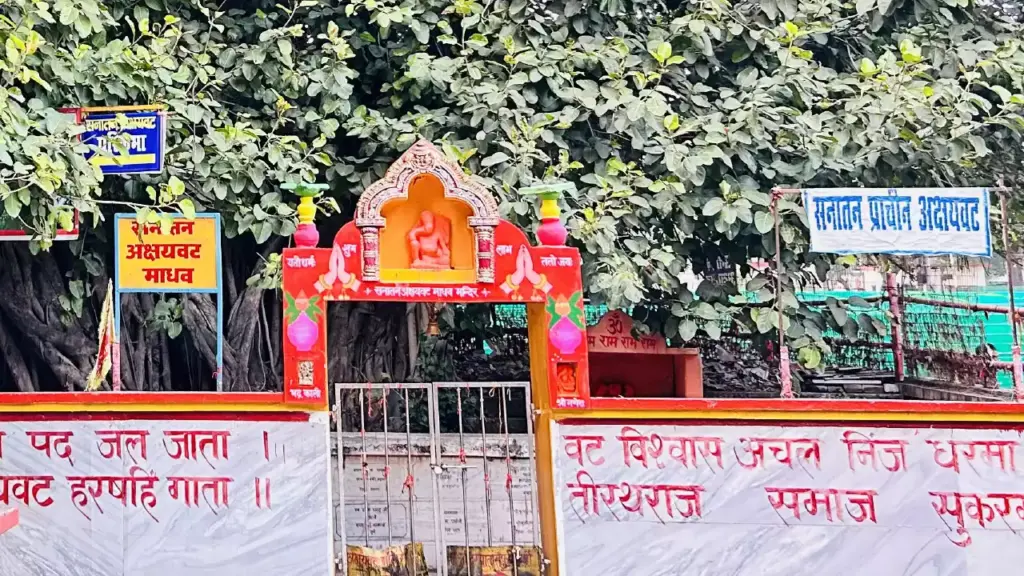
Why Prayagraj for Kaal Sarp Dosh Puja?
What is performed
The Puja Procedure, Step by Step
The Kaal Sarp Dosh Puja at Naag Vasuki Mandir follows a Vedic sequence that has been refined by generations of practicing pandits. The full ceremony runs 2 to 3 hours. Here is what happens:
- Sankalpa — The puja begins with a sacred vow (sankalpa) in which the pandit recites your full name, gotra (lineage), nakshatra (birth star), and the specific dosh being addressed. Five to seven sankalpas are taken in sequence, each directed to a different divine witness — from Brahma down to the presiding deity of the temple.
- Ganpati Puja — Lord Ganesha is invoked first, as is mandatory at the beginning of all Vedic rituals. His blessings remove obstacles that might interrupt the ceremony and ensure the puja reaches its intended outcome without interference.
- Punyahavachan — A purification ceremony in which the pandit consecrates water with Vedic mantras and uses it to purify the ritual space, the participants, and all samagri (ritual materials). This prepares the environment for higher-frequency energies to enter.
- Matruka Puja — Worship of the divine mothers, the protective shakti energies associated with the eight directions. Their invocation creates a sacred perimeter around the ritual.
- Naandi Shradha — A brief ancestral offering made to satisfy the pitrs (ancestors) and request their blessing for the ritual. Since Kaal Sarp Dosh is considered karmic in origin, ancestral appeasement is a necessary preliminary step.
- Navagraha Puja — All nine grahas (planetary deities) receive worship. This includes 108 chants directed to each graha and extended recitations of 2,100 mantras each for Rahu and Ketu specifically — the two shadow planets at the heart of the dosh.
- Serpent Idol Placement — Idols of snakes made from lead, copper, and silver are placed on the altar. Lead and copper represent the earthly serpent energy (tamas), silver represents the sattvic, elevated serpent energy. These idols absorb the doshas during the puja and are later immersed in the river.
- Rudrabhishek — Lord Shiva, as Nageshwar (lord of serpents), is worshipped with an abhishek using milk, honey, ghee, gangajal, and panchamrit. Since Shiva controls Rahu and Ketu, his specific propitiation strengthens the effect of the puja.
- Naag-Nagin Puja — The male (Naag) and female (Nagin) serpent deities are worshipped together with offerings of milk and flowers. The Naag Suktam from the Atharva Veda is chanted in full during this step.
- Havan — The fire ritual is the most powerful component of the ceremony. The sacred fire receives 1,100 to 11,000 recitations of the Mahamrityunjaya mantra and 18,000 Kaal Sarp Nivaran mantras. The number is calibrated to the severity of the dosh identified in the kundli.
- Purnahuti — The final, complete offering into the fire. This marks the formal completion of the havan and the transfer of accumulated punya to the yajman (the one for whom the puja is performed).
- River Immersion — All puja materials — the snake idols, flowers, ash from the havan, and remaining offerings — are taken to the Triveni Sangam and immersed in the Ganga. This completes the karmic cycle, as the serpent energies are returned to the water element from which they arose.
The entire ceremony takes 2 to 3 hours depending on the number of participants and the specific havan count chosen. Participants are requested to arrive on an empty stomach for the sankalpa. All samagri is arranged by the pandit team — you need not bring anything separately.
Ready to book? Kaal Sarp Dosh Nivaran Puja at Naag Vasuki Mandir, Prayagraj — ₹15,000. All samagri, pandit fees, and river immersion included.
Book Kaal Sarp Dosh Puja — ₹15,000
What it costs
Kaal Sarp Dosh Puja Cost
Prayag Pandits offers Kaal Sarp Dosh Puja at two sacred locations. Here is a transparent comparison:
| Prayagraj | Haridwar | |
|---|---|---|
| Cost | ₹15,000 | ₹15,000 |
| Location | Triveni Sangam — Tirtharaja | Har Ki Pauri — Gateway of Hari |
| Includes Rudrabhishek | Separate booking | Can be combined (₹5,100 additional) |
| Experienced Pandit | Included | Included |
| Complete Samagri | Included | Included |
| Havan | Included | Included |
Which location to choose? Both are equally effective. Haridwar is more accessible (well-connected by rail from Delhi, Mumbai, Kolkata). Prayagraj offers the added merit of Triveni Sangam — the Agni Purana states that rites performed here yield undecaying merits.
No hidden charges. The price covers the complete ceremony including pandit fees, all puja samagri, havan, and documentation. Over 2,263 families have trusted Prayag Pandits since 2019.
Need guidance? Call +917754097777 or message on WhatsApp. Our team will help you determine if Kaal Sarp Dosh Puja is the right remedy for your situation.
When to perform it
The Most Auspicious Days
While the puja can be performed any day of the year at Naag Vasuki Mandir, certain days carry significantly amplified energy for this specific ritual:
- Nag Panchami, in Shravan — The single most powerful day of the year for any serpent-related puja. The entire country is in a state of heightened Naga consciousness on this day, and the energy at Naag Vasuki Mandir is extraordinary. Highest recommended timing.
- Every Amavasya (no-moon day) — Monthly occurrence. Rahu and Ketu are shadow planets most active on Amavasya. Performing the puja on the new moon day targets these energies at their peak.
- Maha Shivratri — Lord Shiva, who wears serpents, receives maximum devotion on this night. Rudrabhishek during Shivratri for Kaal Sarp nivaran is particularly potent.
- Shravan Mondays — The entire month of Shravan is sacred to Shiva. Monday pujas during Shravan carry the combined blessing of Shiva and the serpent energies.
- Eclipse days (Surya Grahan / Chandra Grahan) — Solar and lunar eclipses are astronomically and astrologically Rahu-Ketu events. Puja performed during eclipse energy directly addresses the source of the dosh.
- Sundays and Tuesdays, year-round — These days are associated with Surya (Sunday) and Mangal (Tuesday), planetary forces that can counterbalance Rahu-Ketu influence in many chart configurations.
These occasions move each year with the tithi, so ask us and we will confirm the exact date against the panchang before you book travel. Nag Panchami and Amavasya fill quickly, particularly for families coordinating a trip from abroad.
Alongside the puja
Remedies That Support the Puja
The puja itself is the primary and most effective intervention. These supporting practices, maintained consistently after the puja, reinforce its effects and prevent the dosh from reasserting itself through daily karma:
| Remedy | Frequency | Notes |
|---|---|---|
| Nag Panchami fast + serpent worship | Annual | Offer milk to live or clay serpents; avoid harming any snake throughout the day |
| Om Namah Shivaya chanting | Daily, 108 times | Morning practice; use a rudraksha mala |
| Mahamrityunjaya mantra | Daily, 11 times minimum | Protects health, counters Ketu-related illness |
| 8 + 9 Mukhi Rudraksha | Continuous (wear daily) | 8 Mukhi for Rahu, 9 Mukhi for Ketu; wear together |
| Gomed (Hessonite) + Cat’s Eye | Continuous | Only after proper astrologer consultation — wrong stones can worsen effects |
| 11 coconuts immersed in river | Monthly, on Saturdays | Flowing river preferred; represents releasing Rahu-Ketu energy |
| Black sesame, black cloth, iron donation | Every Saturday | Donate to temple or those in need; strengthens Saturn to balance the dosh |
Afterwards
What to Expect After the Puja
Changes following Kaal Sarp Dosh Puja do not arrive in a single dramatic moment. They unfold progressively as the karmic weight lifts. Based on feedback from the 2,263+ families served by Prayag Pandits, here is a realistic timeline:
1 to 3 months: The most commonly reported early change is improved sleep — specifically, the recurring snake dreams that many people had experienced for years stop or significantly reduce. Mental clarity improves. Anxiety levels drop without any change in external circumstances. A sense of lightness is frequently described.
3 to 12 months: Career obstacles that had been stagnant for years begin to dissolve. Job opportunities arrive and, crucially, they convert — the pattern of near-miss success breaks. Financial stability improves. Savings begin to accumulate. Family relationships that had been strained by years of stress start to ease. For those with marriage delays, this is the period when compatible proposals tend to arrive.
Long-term: Professional recognition catches up with actual capability. For those with Ardh Kaal Sarp Dosh and marriage-related placements, the removal of the block creates space for partnership that was not available before. Legal disputes that had been dragging resolve. A general sense of protection and forward movement replaces the feeling of being held back.
These changes are supported — not guaranteed in isolation — by the puja. The daily remedies and the sincerity with which one practices after the ceremony significantly affect the depth of the result.
Who performs it
Why Choose Prayag Pandits?
Prayag Pandits has been serving families at Prayagraj’s sacred sites since 2019. Here is what distinguishes our service:
- 2,263+ families served across 11+ sacred cities — our pandits have performed Kaal Sarp Dosh Puja for families from across India and abroad
- Puja at Naag Vasuki Mandir — we do not conduct this puja at substitute locations; the ritual is performed at the recognized site with temple-affiliated pandits
- All samagri included — snake idols, flowers, gangajal, havan materials, puja thali — no separate shopping or sourcing required on your end
- Live video option for NRI families — participate in real time from anywhere in the world while the pandit performs the puja on your behalf in Prayagraj
- GST-registered, transparent pricing — ₹15,000. No hidden charges, no last-minute additions
- Direct contact: +91 7754097777 | +91 9115234555
Book Kaal Sarp Dosh Nivaran Puja
Naag Vasuki Mandir, Daraganj, Prayagraj
₹15,000 (samagri, pandit, river immersion)
Live video participation available for NRI families
Book Now — ₹15,000 Call: +91 7754097777
Voices from families
What families say about Kaal Sarp Dosh
Rated 4.8 out of 5
500+ reviews
Our pandits





- 2,263+ families served
- Serving since 2019
- GST registered
We came from Delhi specifically for this puja. The whole process was smooth and the pandit ji guided us patiently. Highly recommend.
Booked for my mother-in-law's shradh. The entire ceremony was conducted with great reverence. Thank you.
Booked this service on recommendation from a friend. Was not disappointed at all. The entire process from booking to ceremony completion was smooth. The pandit was very experienced.
We have used Prayag Pandits twice now for different ceremonies. Both times the service was excellent. The team remembers returning customers and gives personal attention. Highly recommended. Dhanyavaad.
Affordable and authentic poojan services. We compared several providers before choosing Prayag Pandits and we made the right choice. The quality of service matched what was promised.
Simple booking process. Good communication on WhatsApp. The pandit was punctual and well prepared. The ceremony was performed with devotion. Fair pricing. Would recommend to anyone looking for authentic poojan services. Jai Shri Ram.
The ceremony was conducted at the right muhurat time as promised. The pandit's knowledge of the shastras was evident. We received photos and a certificate after the poojan. Very professional.
प्रयाग पंडित्स से दूसरी बार पूजा करवाई। दोनों बार अनुभव शानदार रहा। उनकी टीम पुराने ग्राहकों को याद रखती है और व्यक्तिगत ध्यान देती है।
Before you book
FAQs
What is Kaal Sarp Dosh?
Kaal Sarp Dosh is an astrological condition in a Vedic birth chart where all seven visible planets — Sun, Moon, Mars, Mercury, Jupiter, Venus, and Saturn — are positioned between the shadow planets Rahu and Ketu. This configuration is believed to create persistent obstacles in one or more areas of life, including career, marriage, finances, and health. The severity depends on which houses Rahu and Ketu occupy and the overall chart strength.
How do I check if I have Kaal Sarp Dosh?
The definitive check is a Vedic kundli (birth chart) reading by an experienced astrologer — you need your date of birth, time of birth, and place of birth. If all seven planets fall between Rahu and Ketu in the chart, the dosh is present. A commonly reported early indicator, before a formal kundli reading, is recurring dreams of snakes — being chased, surrounded, or bitten by serpents. If this is combined with persistent life obstacles in career or marriage despite genuine effort, a kundli check is recommended.
How many types of Kaal Sarp Dosh are there?
There are 12 types, each named after a different serpent deity: Anant, Kulik, Vasuki, Shankhpal, Padma, Mahapadma, Takshak, Karkotak, Shankhchur, Ghatak, Vishdhar, and Sheshnag. The type is determined by which house Rahu occupies in the birth chart. Each type creates specific challenges in different areas of life. All 12 types are addressed through the puja at Naag Vasuki Mandir, with the pandit customizing the sankalpa and mantra emphasis based on your specific placement.
Is Kaal Sarp Dosh always harmful?
Not always. Several well-documented individuals with Kaal Sarp Dosh in their birth charts have achieved extraordinary success — Sachin Tendulkar and Dhirubhai Ambani are frequently cited examples. The dosh creates challenges but also, in certain chart configurations, a singular focus and drive that can produce exceptional results in a specific field. The effect depends on which houses are involved, the strength of the ascendant, and other chart factors. An astrologer can tell you specifically how the dosh operates in your unique chart rather than giving a generic verdict.
Can Kaal Sarp Dosh be removed permanently?
Performing the puja at a recognized site like Naag Vasuki Mandir in Prayagraj significantly reduces the dosh’s effects and, per temple tradition, addresses the karmic root. Many families report a marked and lasting change after the puja, particularly when combined with consistent daily practice — mantra chanting, the Nag Panchami fast, and the Saturday remedies. The dosh is karmic in origin, so the puja works as an accelerated karmic clearing rather than a mechanical switch. The depth of the result is directly linked to the sincerity of the ongoing practice.
How much does Kaal Sarp Dosh Puja cost at Prayag Pandits?
The Kaal Sarp Dosh Nivaran Puja at Naag Vasuki Mandir, conducted by Prayag Pandits, is priced at Rs 15,000. This covers all samagri (puja materials including snake idols, flowers, havan items), pandit fees, the ceremony at the temple, and the final river immersion at Triveni Sangam. There are no hidden charges or separate expenses. GST-registered, transparent pricing. You can book directly at +91 7754097777 or through the website.
Can the puja be done online or from abroad?
Yes. Prayag Pandits offers live video participation for NRI families and others who cannot travel to Prayagraj. The puja is performed at Naag Vasuki Mandir as normal, with the pandit performing your sankalpa with your name, gotra, and details. You participate via a live video call and witness the entire ceremony in real time. The puja materials are immersed in the Ganga at Sangam on your behalf. Results are equivalent to physical presence when the sankalpa is properly completed.
How long does the Kaal Sarp Dosh Puja take?
The standard ceremony runs 2 to 3 hours. The duration includes all 12 steps from sankalpa through to the havan and purnahuti. The final river immersion at Triveni Sangam takes an additional 30 to 45 minutes depending on ghat access and the number of participants. Plan for a half-day commitment if you are travelling to Prayagraj specifically for the puja.
Which is the best day for Kaal Sarp Dosh Puja?
Nag Panchami, which falls in Shravan, is the most powerful day of the year for this puja. The concentrated Naga energy across the entire country on this day, combined with the specific power of Naag Vasuki Mandir, makes it the strongest timing available. Other strong timings are Maha Shivratri, each Amavasya, the Mondays of Shravan, and solar or lunar eclipse days. These move each year with the tithi, so ask us and we will confirm the date against the panchang. Book early for Nag Panchami, when places are limited.
What details do I need to provide to book the puja?
To complete the sankalpa accurately, the pandit requires: your full name (as per tradition, not a short form), date of birth, time of birth, place of birth, and gotra (your ancestral lineage name — ask an elder family member if unsure). If you do not know your gotra, the pandit can use the default Kashyap gotra for the sankalpa. These details should be shared at the time of booking. For NRI families, also confirm your time zone for the live video coordination.
Still have a question?
Ask our team on WhatsApp and we will help you plan the ceremony.
We reply on WhatsApp within 1–2 hours.
Ask a pandit (opens WhatsApp)Speak before you book
Have Your Chart Checked First
Send your date, time and place of birth on WhatsApp. The Acharya confirms whether Kaal Sarp Dosh is present and which of the twelve types it is, and only then do we discuss the puja, the place and the cost. There is no charge for the reading.
- Clear package details before you book
- The ceremony in the language you choose
- 2,263+ families served
- Serving since 2019
- GST registered