
Sarva Pitru Amavasya 2026: 10 October, and What to Do on It
The last day of Pitru Paksha, and the one day that accepts shradh for every ancestor whatever tithi they died on. Prayag Pandits performs tarpan and pind daan at the Triveni Sangam on this day every year. If you are reading this close to the date, call or WhatsApp rather than booking online — a pandit will tell you in a minute whether a slot remains.
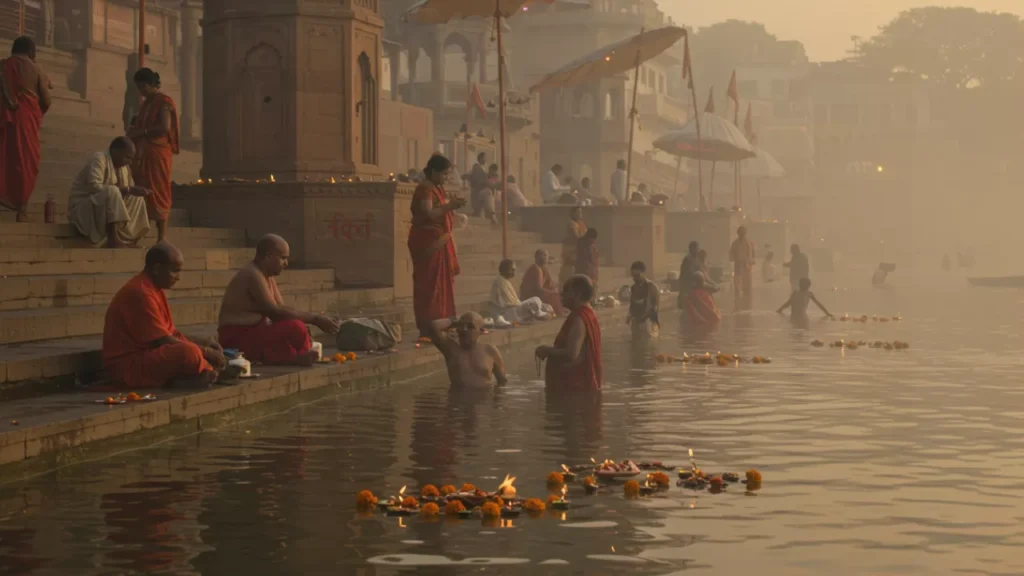
Sarva Pitru Amavasya falls on 10 October in 2026. It is the new moon that closes Pitru Paksha, and it is the one day in the year on which shradh can be offered to every ancestor at once — including those whose death tithi nobody remembers, those who died unnaturally, and those who died unmarried or childless. For most families it is the single most useful day in the ancestral calendar, and it is the one to use if you only keep one.
Why this day takes everyone
Ordinary shradh is tithi-bound: you perform it on the lunar date the person died on. That works while somebody remembers the date. Two or three generations back, almost nobody does.
Sarva Pitru Amavasya exists for exactly that gap. Sarva is all. The day accepts offerings for the whole line without requiring a tithi, which is why the tradition also calls it Mahalaya Amavasya — mahalaya, the great dissolution or the great abode, the point at which the fortnight’s individual observances are gathered into one. Three categories in particular are named as belonging to it:
- Ancestors whose tithi is unknown. The common case, and the reason most families are here.
- Those who died unnaturally — accident, violence, suicide, drowning. Chaturdashi the day before is reserved for them specifically, and this day takes them too.
- Those who died unmarried or childless, who have no descendant keeping an annual rite for them. See who performs their rites.
What is performed on the day
The sequence is the ordinary ancestral one, kept in a fixed order.
- Snan at first light — the ritual bath, before anything else. At the Sangam that means the confluence; at home, a bath with a little Ganga jal added.
- Sankalpa, naming the line and the purpose, facing south.
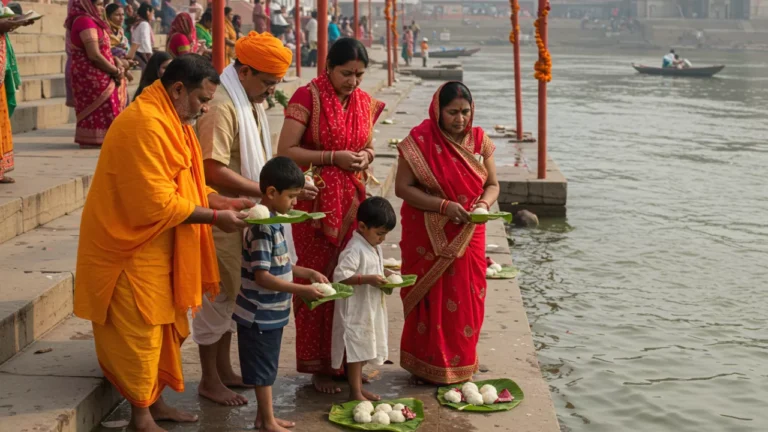
- Tarpan — water with black sesame, which is the minimum that counts as observing the day and is enough on its own. The method is in the tarpan vidhi.
- Pind daan, where a family is doing the fuller rite. Kept for the midday kutapa kala.
- Brahmin bhoj and daan, and food set out for a crow, a cow and a dog.
If you can only do one thing, do the tarpan. It takes fifteen minutes, it can be done at home, and the tradition treats it as a complete observance rather than a reduced one.
At Prayagraj on the day
The Sangam on Sarva Pitru Amavasya is the busiest ancestral day of the year at the busiest ancestral site in India, and that is worth planning around rather than discovering.
Expect crowds from before dawn, boats at a premium, and the ghat approaches closed to vehicles. Families who arrive without a pandit arranged usually end up negotiating at the ghat in the middle of all of it, which is the worst possible circumstance for agreeing a price. Book ahead, and arrive the evening before if you can.
What we perform, and what it costs
| Rite | From | What it covers |
|---|---|---|
| Tarpan at the Sangam | ₹5,100 | Boat to the confluence, the water offering with sesame, sankalpa in your gotra. The day’s minimum, and enough |
| Pind daan | ₹7,100 | The full ten-step vidhi with a Teerth Purohit, two to four hours, after the bath |
| Online, performed in your name | ₹11,000 | For families abroad — the rite at the tirtha with a live video link for the sankalpa |
| Group pind daan at Gaya | ₹1,155 | A separate family sankalp, up to five ancestors, ceremony record within 72 hours. Including GST |
Where it sits in the fortnight
Pitru Paksha 2026 ran from 26 September, with Chaturdashi on 9 October for those who died unnaturally and Sarva Pitru Amavasya closing it on 10 October. Sharad Navratri begins the following day, which is why the fortnight has the quality of a threshold — the ancestral observances finish and the festival season starts the morning after.
The full calendar with every tithi is on the shradh dates page, and the fortnight’s wider observances are in the Pitru Paksha guide. If the ancestor you are observing for died suddenly or violently, read akal mrityu too — the tradition prescribes a separate rite in that case, and Chaturdashi rather than Amavasya is the day set aside for it.
Families abroad have the whole thing performed in their name with a video link for the sankalpa — NRI puja services sets out how that works and what arrives afterwards.
Keep reading

Pitrupaksha
8 min read
Pitrupaksha Complete Ritual Guide
Book Your Sacred Ritual
Authentic ceremonies performed by Veda-trained pandits at sacred sites across India.
- Clear package details before you book
- The ceremony in the language you choose
- 2,263+ families served
- Serving since 2019
- GST registered