Key Takeaways
- Getting to Gaya from Odisha
- What to bring from home
- Why an Odia-familiar panda
- What a panda is, and why it matters here
In This Article
Gaya is an overnight train from most of Odisha, and the ritual package starts at ₹7,100. Families travelling from Bhubaneswar, Puri or Cuttack usually give the trip two nights and three days, and the one thing worth arranging before anything else is a pandit who conducts the rite in Odia. Current inclusions are on our Pind Daan in Gaya page.
Getting to Gaya from Odisha
Gaya Junction is on the main line and is reached overnight from most of the state. Rail is what nearly every family uses.
| From | Sleeper fare | Journey |
|---|---|---|
| Bhubaneswar | ₹400 to ₹600 | 12 to 14 hours direct |
| Puri | ₹400 to ₹650 | about 14 hours direct |
| Cuttack | ₹400 to ₹600 | as Bhubaneswar, plus about 40 minutes |
| Rourkela | ₹300 to ₹500 | via Dhanbad or Ranchi |
3AC runs roughly ₹1,000 to ₹1,400 and 2AC ₹1,800 to ₹2,500 on the same routes. Flights go via Kolkata or Delhi and are seasonal. Driving from Bhubaneswar is 11 to 13 hours through Jharkhand and is not a good idea with elders in the car.
What to bring from home
- A new white dhoti and gamcha for whoever performs the rite.
- The family gotra. This is the detail families most often cannot supply.
- Names across three generations on the side you are performing for.
- The date of death, or the tithi, if you have it.
- A photograph of the departed, if your family observes that.
Puja samagri is included in the package and arranged at Gaya. There is no need to carry rice, sesame, barley or flowers from Odisha.
Why an Odia-familiar panda
The Gaya rite is the same rite everywhere, but the way a family observes it is not. The Odia shraddha paddhati has its own sequence, its own expectations about who performs which part, and its own vocabulary. A family that observes the rite as their tradition sets it should say so when booking, and the pandit will follow it rather than the North Indian default.
Language matters for the same reason. Instructions during the rite are given quickly, and a family that has to translate them loses the thread of what is happening. Our pandits for Odia families conduct the rite in Odia, and the coordination before the trip is done in Odia too.
What a panda is, and why it matters here
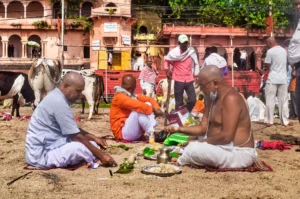
A panda at Gaya is not the same as a pandit elsewhere. The Gayawal pandas are hereditary priests whose families have conducted ancestral rites at Gaya for generations, each holding rights at particular vedis. The role passes down the family line, and with it the records.
The bahi-khata, your family’s record at Gaya
Panda families maintain bahi-khata, handwritten ledgers recording which families performed rites, when, and for whom. If your grandfather or great-grandfather came to Gaya, there may be an entry in your family name, with the gotra and the village written down at the time.
Families who find their entry often describe it as the most affecting part of the visit. If you know roughly when an earlier generation came, and from which village, tell us when you book and we will ask the panda to look.
The rite, step by step
- Before you travel. We confirm the date, the gotra and the ancestors to be named, and assign your panda.
- Snan. The purification bath at the Falgu or at the temple, early, before the rite.
- Sankalpa. The vow, spoken with your gotra, the ancestors’ names and the purpose of the offering.
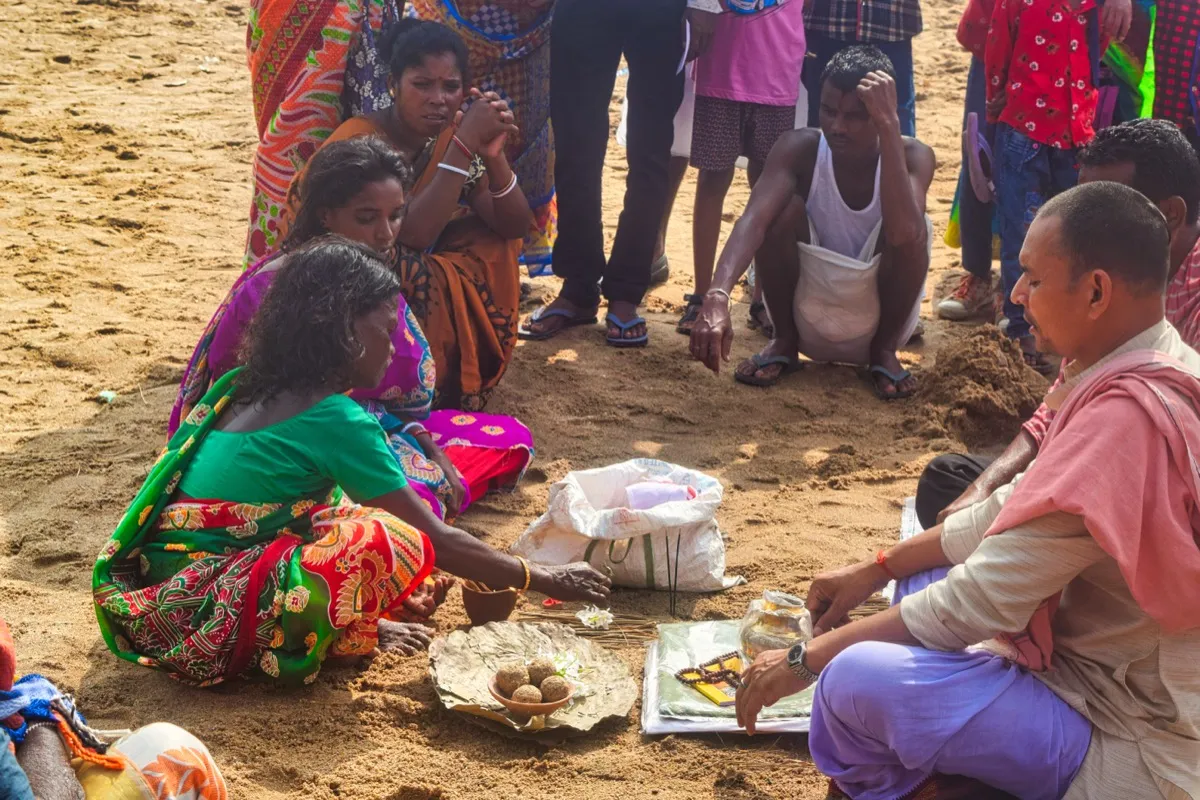
- Pinda offering. Rice balls with sesame and barley offered at the vedi.
- Tarpan. The water offering at the Falgu, made by the family.
- Brahmin Bhoj. The feeding, where it is part of your package.
- Prasad and close. The circuit ends and the panda records the visit.
Shraddha barsika, and finding the tithi
Shraddha barsika is the annual observance on the death anniversary, and in Odia families it is reckoned by tithi, not by the English date. The rite falls on the same tithi, in the same paksha and month of the lunar calendar, every year. So a death on Kartik Krishna Ashtami is observed on Kartik Krishna Ashtami, whatever the calendar says.
Families who only have the English date can have the tithi worked back from it. Send us the date and year and we will calculate it before you fix the trip.
When to come
- Pitru Paksha. The fortnight in September or October, when most families come and the town is at its busiest.
- The shraddha barsika tithi. If it falls inside Pitru Paksha, the two coincide and many families use that.
- Kartik Purnima. Significant in Odisha, and a date some families choose for the rite when Pitru Paksha was not possible.
There is no waiting period after the dashkriya and sapindikaran performed at home. Families commonly come to Gaya after the first annual observance, performing the rite for the newly departed and for earlier generations who never received tirtha shradh in the same visit.
Packages
| Package | Price | What it covers |
|---|---|---|
| Pind Daan for Odia pilgrims | ₹7,100 | The rite at Vishnupad and the Falgu in Odia paddhati, pandit and samagri included |
| Platinum | ₹11,000 | The above with Brahmin Bhoj |
| Platinum with Gau Daan | ₹25,000 | Platinum with the cow donation |
| Online Pind Daan | ₹11,000 | Performed on your behalf, live video, recording after |
| Online with Brahmin Bhoj | ₹14,500 | The above with the feeding |
🕉️ Pind Daan at Gaya for Odia Pilgrims
- Pandit who conducts the rite in Odia
- Odia shraddha paddhati followed
- Sankalpa in your family gotra
- All puja samagri included
Our Gaya Pind Daan cost guide sets out each package against the travel, stay and meal budget around it.
Where to stay
Staying near Vishnupad matters because the rite starts before dawn. Budget hotels on Vishnupad Road run ₹800 to ₹2,000 a night. Some Odia community organisations maintain dharamshalas in Gaya, though rooms are limited and effectively unavailable during Pitru Paksha. We arrange accommodation as part of the full-service package if you would rather not book it yourself.
The 45 vedis and the Odia circuit
Gaya kshetra holds 45 vedis. The standard package covers the principal ones, which the texts treat as sufficient. Odia families commonly add Pretshila, where the rite is performed for those who died by accident or before their time, and Akshayavat, where the circuit closes.
If you cannot travel
The rite can be performed at Gaya on your behalf, with the Sankalpa spoken in your gotra and the family joining by video. Odia families living outside India use this most, and our guide to arranging Gaya rites from abroad covers how it works.
Common questions
Will the pandit actually speak Odia?
Yes. Tell us at booking and we assign a pandit who conducts the rite in Odia and follows the Odia paddhati. The pre-trip coordination is in Odia too.
We do not know our gotra. Can the rite still be done?
Yes. Ask the panda to check the bahi-khata first, since an earlier generation’s visit may record it. Where it cannot be established at all, the pandit proceeds using the accepted substitute.
Can we combine Gaya with Prayagraj?
Yes, and many Odia families do, performing Pind Daan at Gaya and Asthi Visarjan or tarpan at the Sangam. Tell us at the enquiry stage so the dates and pandits are arranged in the right order.
Is shradh at home not enough?
Shradh performed at home with the proper vidhi is valid. The tradition distinguishes it from tirtha shradh and treats the Gaya rite as reaching ancestors across generations rather than the one named. Our note on why Pind Daan is done in Gaya sets out the reasoning.
Arranging it
Send us the gotra, the ancestors’ names and either the tithi or the English date of death, and we will confirm the date and the panda before you book travel. Packages and inclusions are on our Pind Daan in Gaya page.
Book Your Sacred Ritual
Authentic ceremonies performed by Veda-trained pandits at sacred sites across India.