
Key Takeaways
- What Brahma Kapal is
- Why Brahma grew five heads
- The Devas go to Shiva
- The Kapala that would not come off
In This Article
Brahma Kapal takes its name from the skull of Brahma. Tradition holds that Shiva severed Brahma’s fifth head, that the skull fastened itself to his hand as the Brahmahathi Dosha, and that he carried it from place to place until it was finally filled. This is the story of how that happened, and of why the platform at Badrinath became one of the places Hindus come to perform rites for the dead.
What Brahma Kapal is
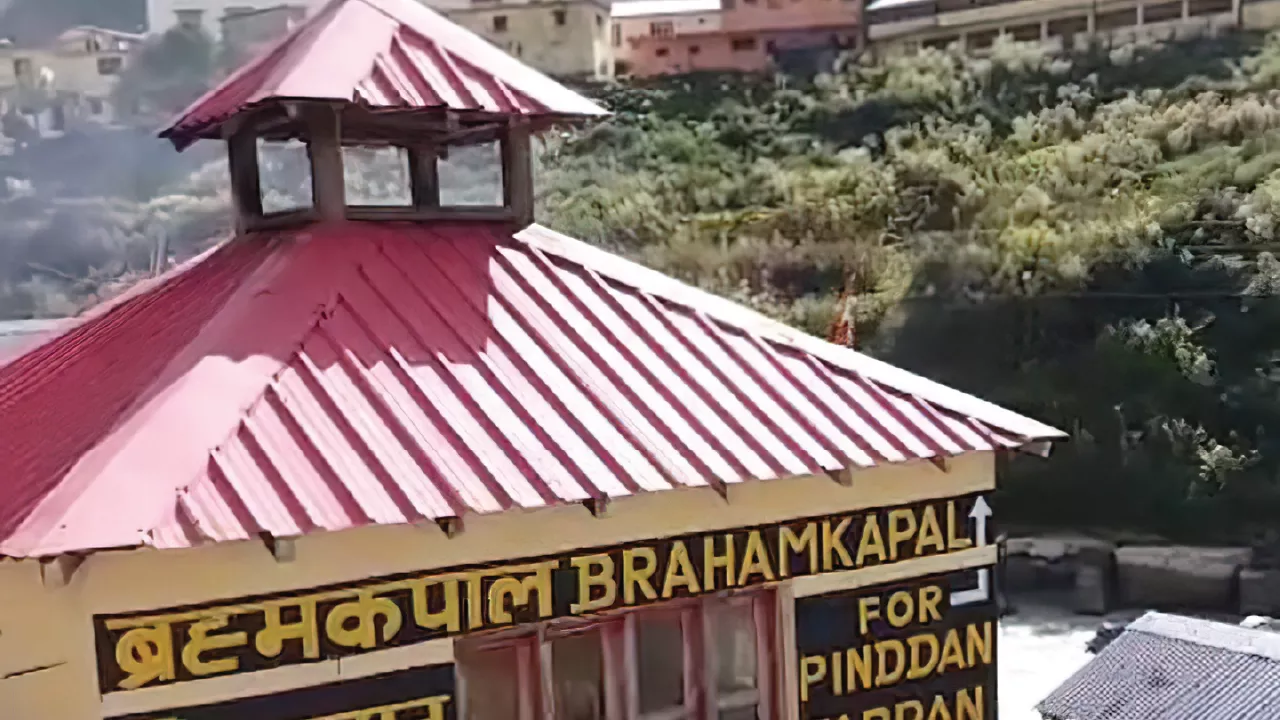
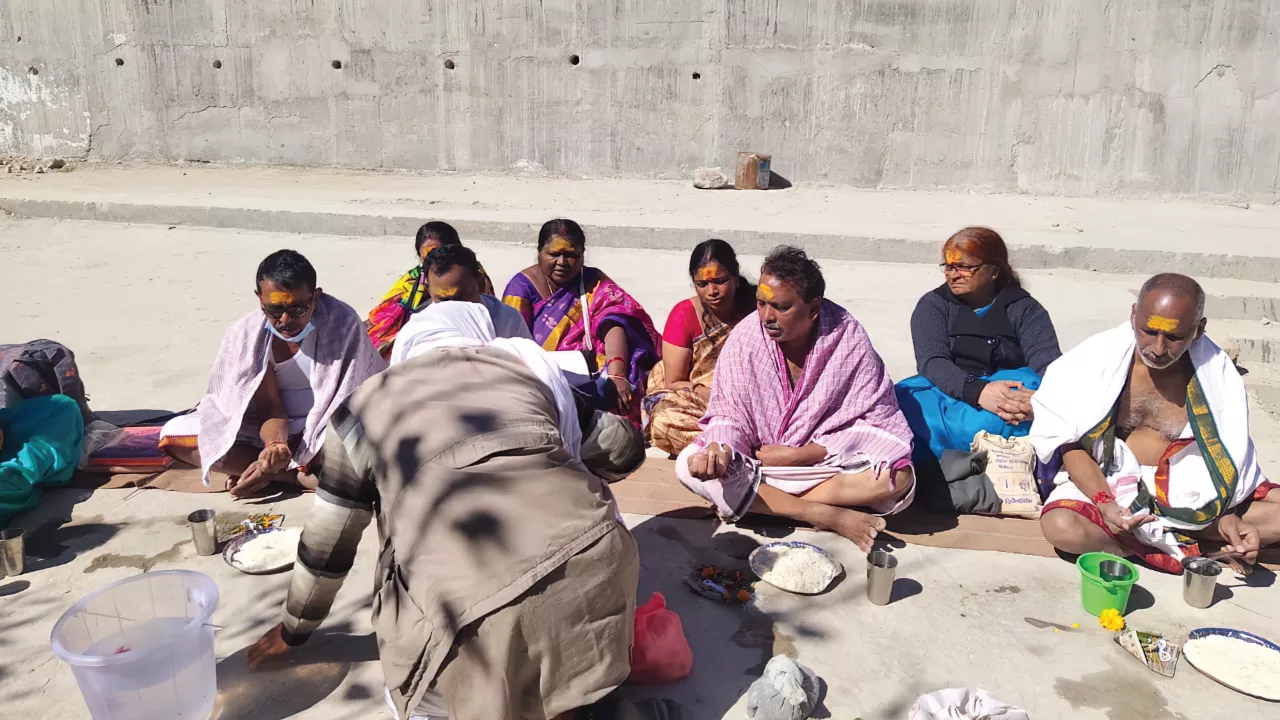
A flat stone platform on the bank of the Alaknanda, roughly 200 metres from the Badrinath temple and about 500 kilometres from Delhi. Pandits sit here with their samagri, and families come to perform shradh karma and Pind Daan for their ancestors. Badrinath itself is dedicated to Vishnu and is the principal shrine of the Sapta Badri group as well as one of the four Char Dham sites.
What makes the platform distinctive is the belief that Brahma is present here, and that rites performed at this spot carry particular weight for the departed. It is one of the few sites in the Himalayas where the ancestral rites and a Char Dham darshan can be done on the same journey.
Why Brahma grew five heads
Brahma was born with one head. When he brought Saraswati into being from his own body he was at once taken with her, and she, out of modesty, moved away from him. So he grew four more heads, one facing each direction and one looking upward, so that he could follow her wherever she went.
With five heads and the whole of creation to his name, Brahma grew proud. He began to speak slightingly of the Devas and of the other two of the Trimurti, and in time the Devas could no longer stand it.
The Devas go to Shiva
They came to Shiva together and asked him to put an end to it. Shiva, knowing already, told them it would be settled. The Devas then made their own simple plan: send Brahma to Kailash, and let his mouth do the rest.
Brahma went willingly, expecting a long and friendly conversation. Shiva was away on his round of the cosmos and Parvati was alone. Seeing a figure approaching in the distance she took him for her husband, came out with the water and offerings for the paada puja, and began washing his feet without looking up. Brahma said nothing and let the honour be paid to him.
Shiva returned at that moment. One look at Brahma’s face was enough. Parvati looked up, understood, and withdrew. “Because she did not see your face and offered the paada puja to you,” Shiva said, “does that mean you accept it without a word?” Brahma hung his heads and was silent for the first time. “Since it was your five heads that began all this, may you be without them.” And Shiva severed the fifth head, keeping the promise he had made to the Devas. Brahma has had four ever since.
The Kapala that would not come off
That was the beginning of Shiva’s own trouble, not the end of it. For harming Brahma — the foremost of brahmanas — he was marked with the Brahmahathi Dosha, and Brahma’s skull, the kapala, fastened itself to his hand and would not be shaken loose.
He called on Agni, who purifies everything, to burn it from his grasp. Agni could not, and took the dosha himself in the attempt. Shiva went across the world looking for a remedy. It was Parvati who told him where it lay: only Vishnu could release him. He was to go from place to place receiving bhiksha into the kapala, and where the kapala overflowed, the dosha would end.
So he walked as Bikshadanar, the one who begs, with the skull in his palm. Whatever alms he was given vanished the moment they touched it, and the kapala stayed empty.
Where the curse ended
Moving from one place to the next he came at last to Thirukkandiyur, in Tamil Nadu. There the Perumal of that shrine sent Mahalakshmi out to give him bhiksha. She came in her full state and began pouring it into the kapala, and all at once the skull overflowed and fell to the ground. Some accounts tell it differently: that Vishnu opened his own chest and let the blood pour into the skull.
Shiva was freed, and praised Vishnu for coming to his aid. Vishnu took the name HaraSaabaVimochanar — the one who released Hara from the curse — and Shiva remained there as Brahma Sira Khandeeshwarar. The two temples stand opposite one another.
The other version of the story
In another telling it is not Saraswati but Satarupa, Brahma’s own feminine aspect, and Brahma is struck by one of Manmadh’s arrows. Manmadh was Brahma’s devotee, and after a long tapas was given three arrows that raise desire in whoever they strike; he tried the first on Brahma himself. Shiva, seeing Brahma drawn to Satarupa — who stood to him as a daughter — rebuked him for it.
The details differ and the point does not. In every version it is Shiva who calls Brahma to account, and in every version Shiva then has to answer for what he did in doing so. These stories are a way of putting the law of karma plainly: not even the Trimurti stand outside it.
Rites at Brahma Kapal
The platform is used for Pind Daan, tarpan and shradh karma. Any Hindu may perform them — daughters, wives, nephews and more distant relatives included. Pandits are present at the site and the samagri is available from the shops around it, so families do not need to bring anything.
Brahma Kapal is also named specifically for ancestors who died by accident, violence or any form of akal mrityu, untimely death, where Narayan Bali is performed alongside the Pind Daan. Our Narayan Bali guide explains what that involves.
| Package | Price | What it covers |
|---|---|---|
| Pind Daan in Brahmakapal Badrinath | ₹10,999 | In person at the platform, pandit and samagri included |
| Online Pind Daan at Brahmakapal | ₹10,999 | Performed at the tirth on your behalf, streamed live |
| Pind Daan at Badrinath and Brahmakapal | ₹11,000 | Pandit arrangements at both the platform and the temple |
| Pitrudosh Nivaran at Brahmakapal | ₹21,000 | The extended rite, where pitra dosh has been read |
🕉️ Book Pind Daan at Brahma Kapal
- Performed on the Alaknanda platform
- Sankalp in your family gotra
- All samagri arranged at the site
- Live video for families who cannot travel
Planning the rites
Pitru Paksha is the window families ask for most, followed by the amavasya dates through the open season, but the rites can be performed on any day the site is accessible. For the procedure, the route from Delhi, the temple’s opening dates and the remote option, see our full guide to Pind Daan at Badrinath. The Brahma Kapal packages page has the current inclusions.
Common questions
Why is it called Brahma Kapal?
Kapal is skull. The name refers to the skull of Brahma’s severed fifth head, which the tradition says Shiva carried until it was filled.
How far is it from the Badrinath temple?
About 200 metres, on the bank of the Alaknanda. It is an easy walk from the temple.
Can the rites be performed without travelling?
Yes. The pandit performs the full vidhi at the platform on your behalf and it is streamed to you, which is how most families abroad arrange it.
When is Brahma Kapal accessible?
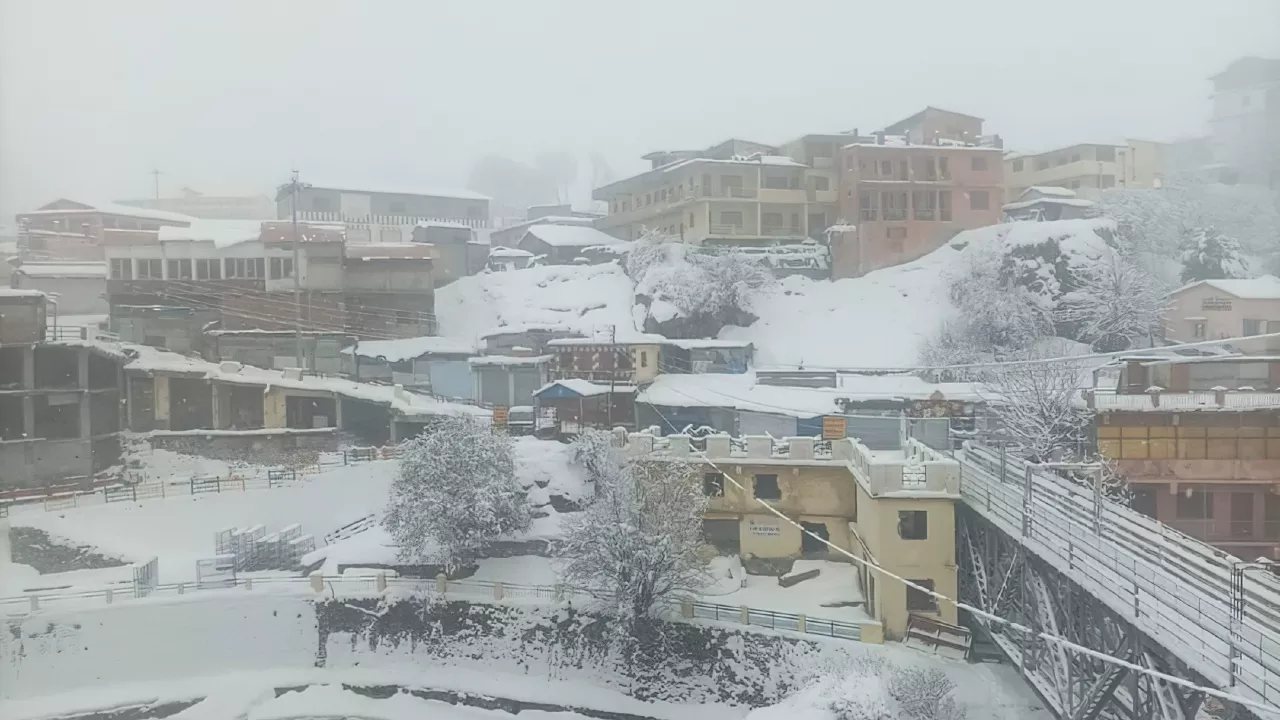
Through the Badrinath season, roughly May to November. The shrine closes for the winter and the exact dates are set each year.
Arranging it
Tell us your family’s gotra, the ancestors the rites are for, and when you can travel — or that you would rather it were performed on your behalf — and we will confirm the pandit, the date and the total before anything is paid.
Book Your Sacred Ritual
Authentic ceremonies performed by Veda-trained pandits at sacred sites across India.



