Key Takeaways
- The ghats that matter, and what each is for
- What is performed here
- Practical notes
In This Article
Varanasi’s ghats run some six kilometres along the west bank, and what happens on them changes completely through the day — bathing before dawn, rites through the morning, aarti at dusk, cremation around the clock at two of them. This page is a practical guide to which ghat does what, and when to be where.
The ghats that matter, and what each is for
| Ghat | Best for | What to know |
|---|---|---|
| Dashashwamedh | Ganga Aarti | The main ghat and the evening aarti everybody comes for. Crowded from late afternoon; arrive an hour early or watch from a boat |
| Assi | Morning calm | The southern end. Subah-e-Banaras at dawn, far quieter than Dashashwamedh, and the easier choice with children or elderly relatives |
| Manikarnika | Cremation | Burning continuously. Not a sightseeing stop — photography is intrusive and resented, and families are grieving a few metres away |
| Harishchandra | Cremation | The second cremation ghat, smaller and older. The same restraint applies |
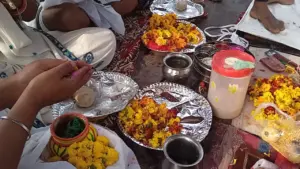
| Panchganga | Ancestral rites | Where five streams are held to meet. Tarpan and pind daan are performed here |
| Kedar | Shiva worship | South of the centre, with its own temple and a distinctly local congregation |
| Pishach Mochan | Narayan Bali | Not on the river but a kund inland — the site specifically associated with releasing trapped souls |
What is performed here
Varanasi’s standing in the ancestral rites comes from the Kashi Khanda’s claim that dying or being cremated here grants liberation. In practice families come for three things: asthi visarjan, immersing ashes on the Ganga, which is the most common; pind daan, often combined with the immersion on the same visit; and Narayan Bali at Pishach Mochan where a death was unnatural.
| Rite | From | Where |
|---|---|---|
| Asthi visarjan | ₹5,100 | On the Ganga, with the boat. First, where the ashes are outstanding |
| Pind daan | ₹7,100 | At the ghats, usually combined with the immersion |
| Shradh | ₹10,999 | The fuller ceremony with brahmin bhoj |
| Narayan Bali | ₹25,000 | At Pishach Mochan. Only where a death was unnatural |
Practical notes
- Boats are the best way to see the ghats and the only way to see them all. Agree the price and the duration before stepping in; sunrise and aarti hour cost more, and that is normal rather than a swindle.
- The lanes behind the ghats are a maze and no vehicle enters them. Expect to walk the last stretch with your luggage.
- Steps are steep and often wet. Worth knowing before bringing an elderly relative; some ghats are much easier than others and we will tell you which.
- During monsoon the lower steps are underwater and the river runs fast. Rites continue, but from higher up, and immersion needs more care.
🙏 Asthi Visarjan and Pind Daan at Varanasi
- Ghat and boat arranged, and we will say which ghat and what hour
- All samagri, dakshina and the ghat included — nothing added on the day
- Ashes couriered to us where the family cannot travel
- Live video link and a written record afterwards
For the city beyond the ghats see Kashi, and for which tirtha suits which rite, the five tirthas compared.
Book Your Sacred Ritual
Authentic ceremonies performed by Veda-trained pandits at sacred sites across India.